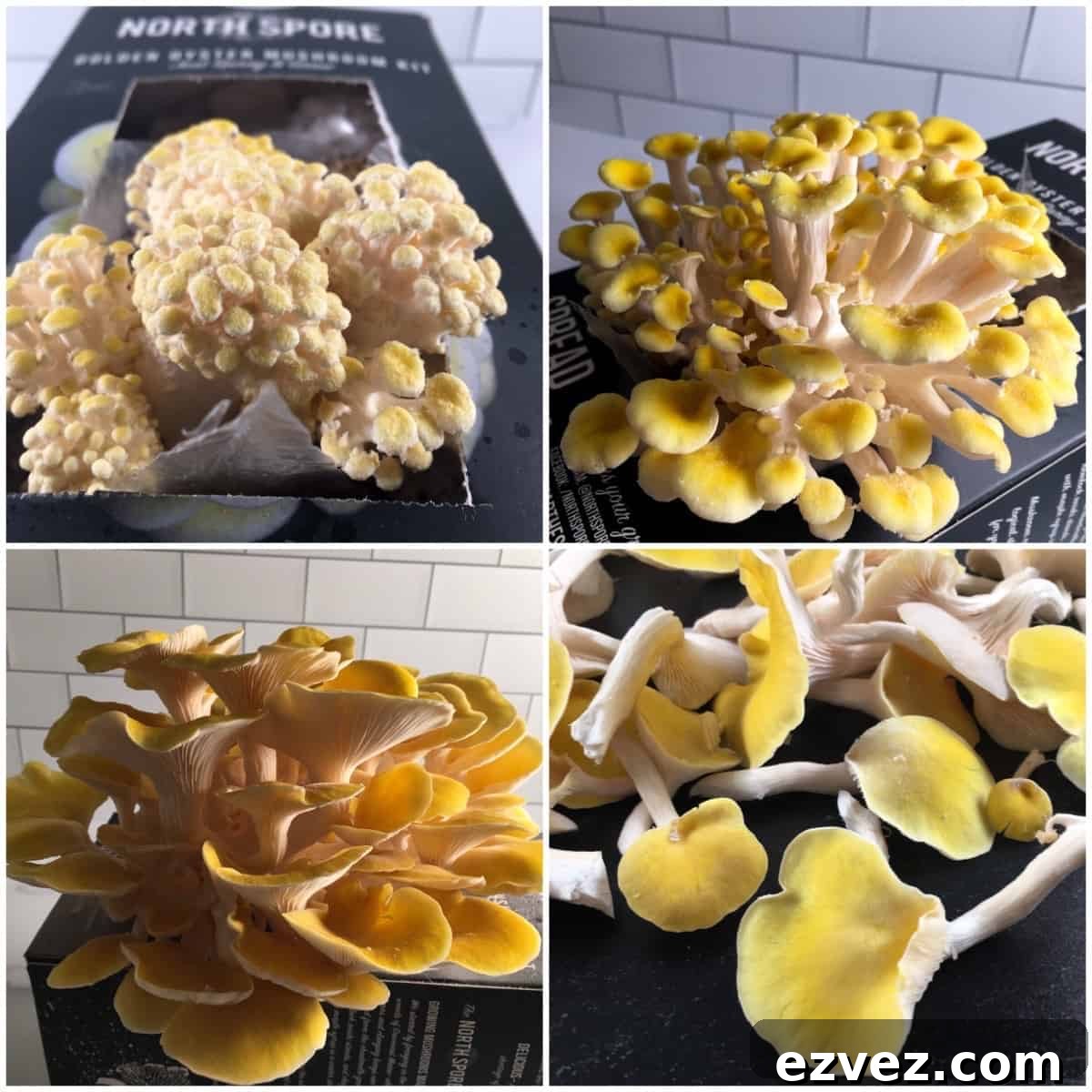
Learn when to harvest golden oyster mushrooms (also called yellow oyster mushrooms, Pleurotus citrinopileatus) and how to grow them at home. This guide covers harvest timing, growing with a kit, storage and shelf life, simple care tips, recipe ideas, and the benefits of these tasty fungi. With a spray-and-grow oyster mushroom kit I had ready-to-cook mushrooms in about a week—kits are an easy way to grow fresh mushrooms without foraging or worrying about look-alikes.
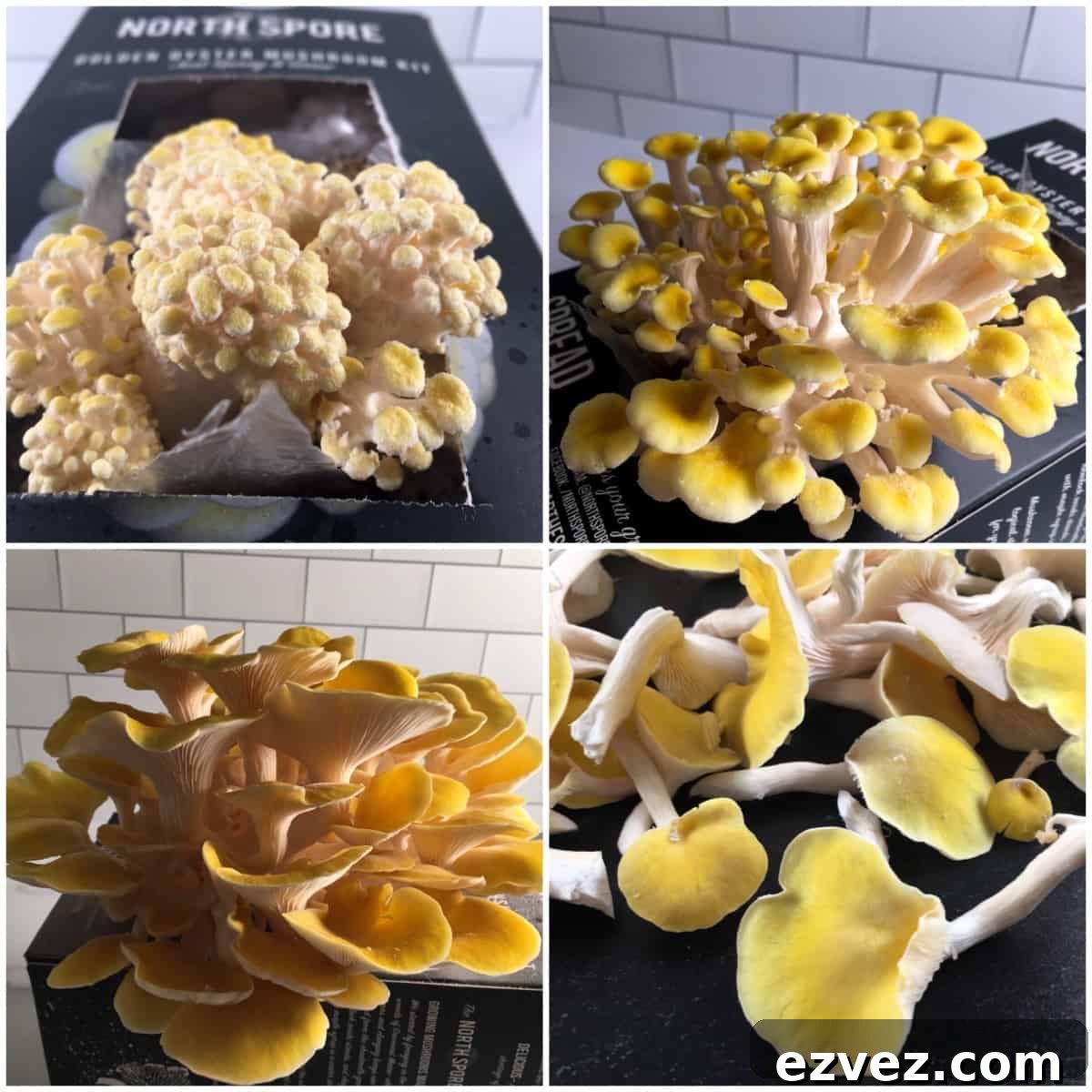
When to Harvest Golden Oyster Mushrooms
Many spray-and-grow kit instructions estimate up to two weeks before visible pins appear, but in practice you may see baby mushrooms much sooner. In one kit I noticed initial growth in two days and fully developed pins by day four. From first exposure of the block, mature fruiting clusters can appear anywhere from a week to two weeks depending on temperature and humidity.
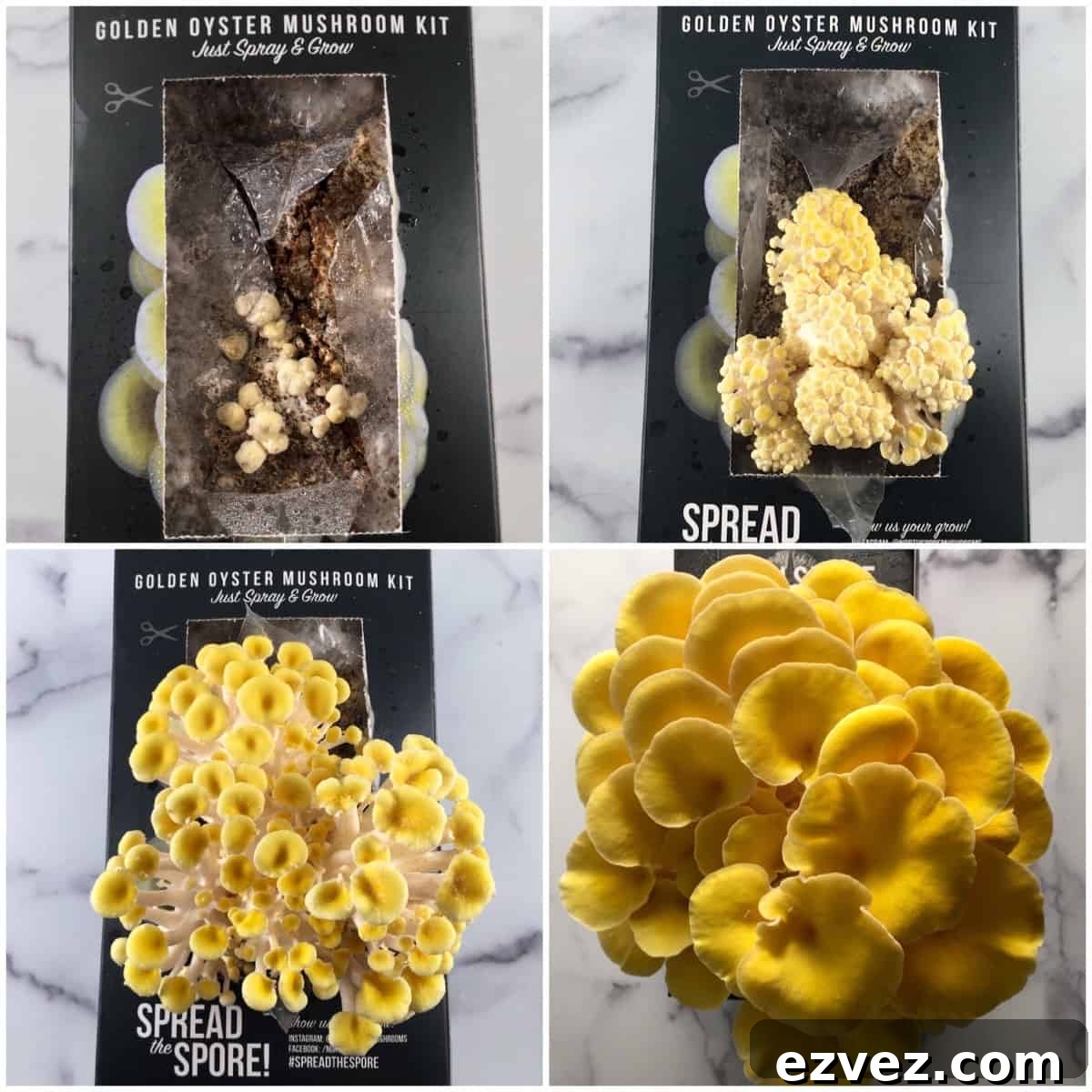
Golden oyster mushroom growth stages (clockwise from top left):
- Initial emergence (around day 2)
- Developed pins (around day 4)
- Rapid growth (days 5–6 and onward)
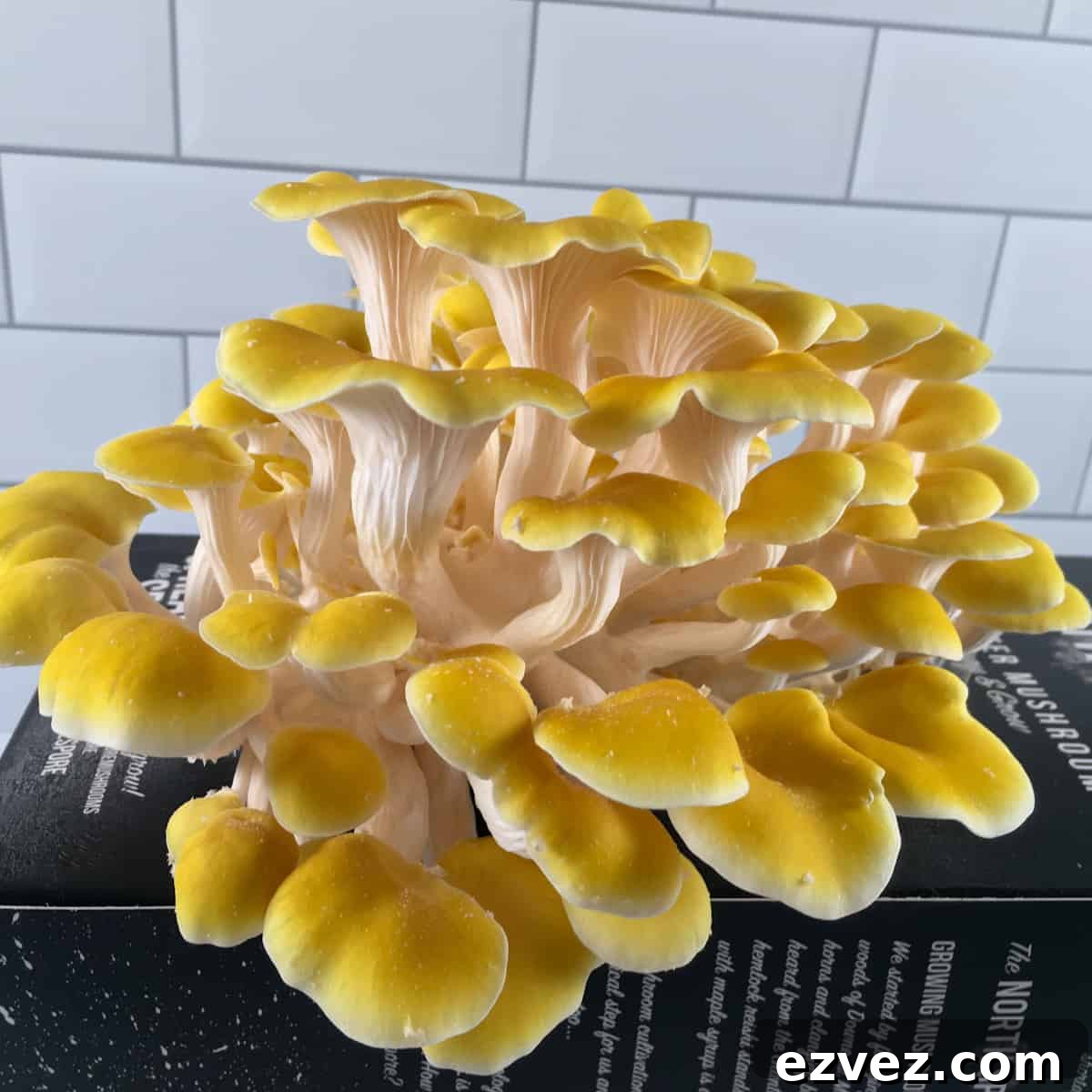
- Ready to harvest (typically days 7–14, depending on conditions)
How do you know when golden oyster mushrooms are ready to pick?
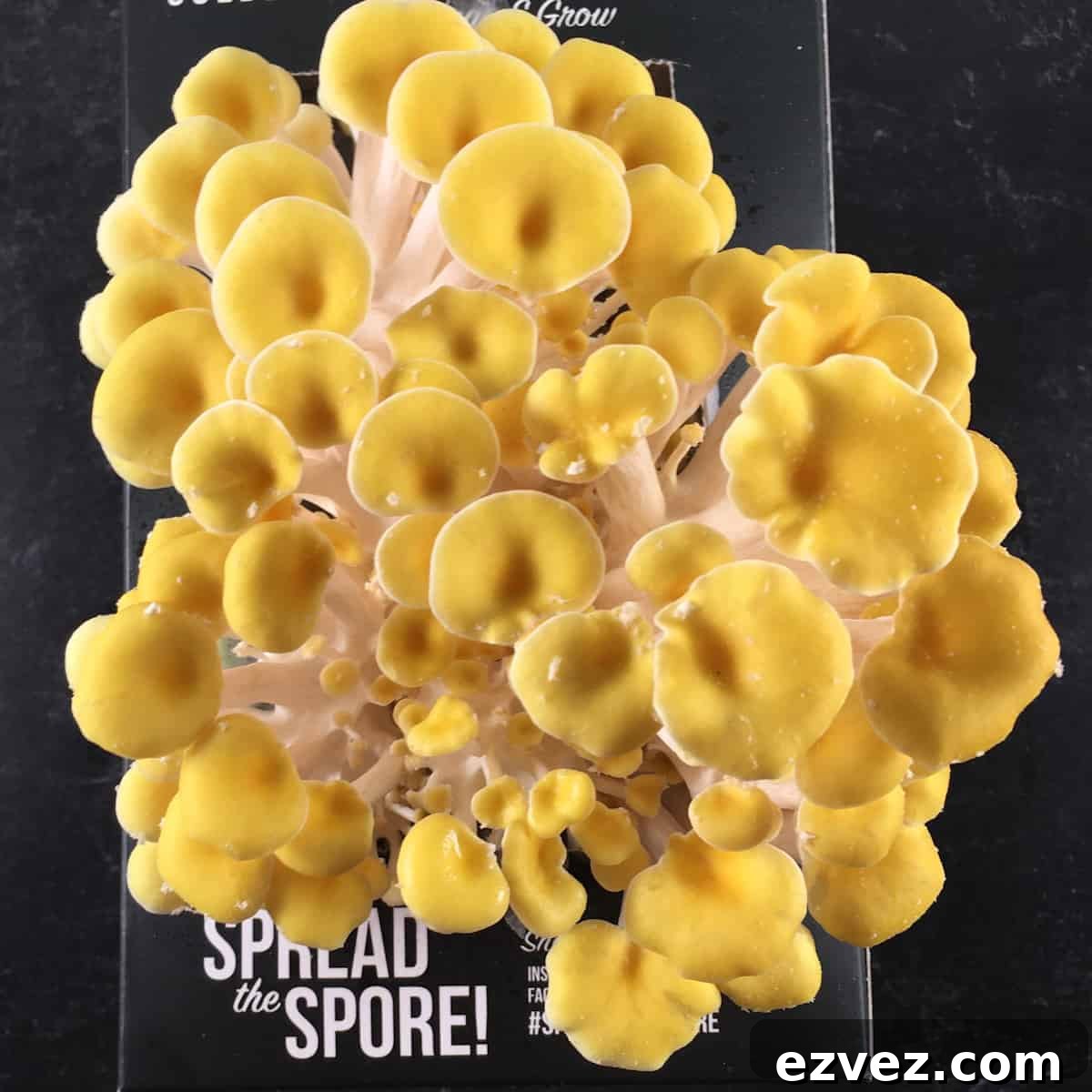
Pick golden oyster mushrooms about 2–5 days after pins appear, before the caps flatten and become concave. If you harvest at the right stage the caps will be well formed but still slightly cup-shaped. In a warm, humid indoor environment a full cycle from opening the kit to the first harvest can be as short as seven days; cooler or drier homes can extend that to two weeks or more.
How big can golden oyster mushrooms get?
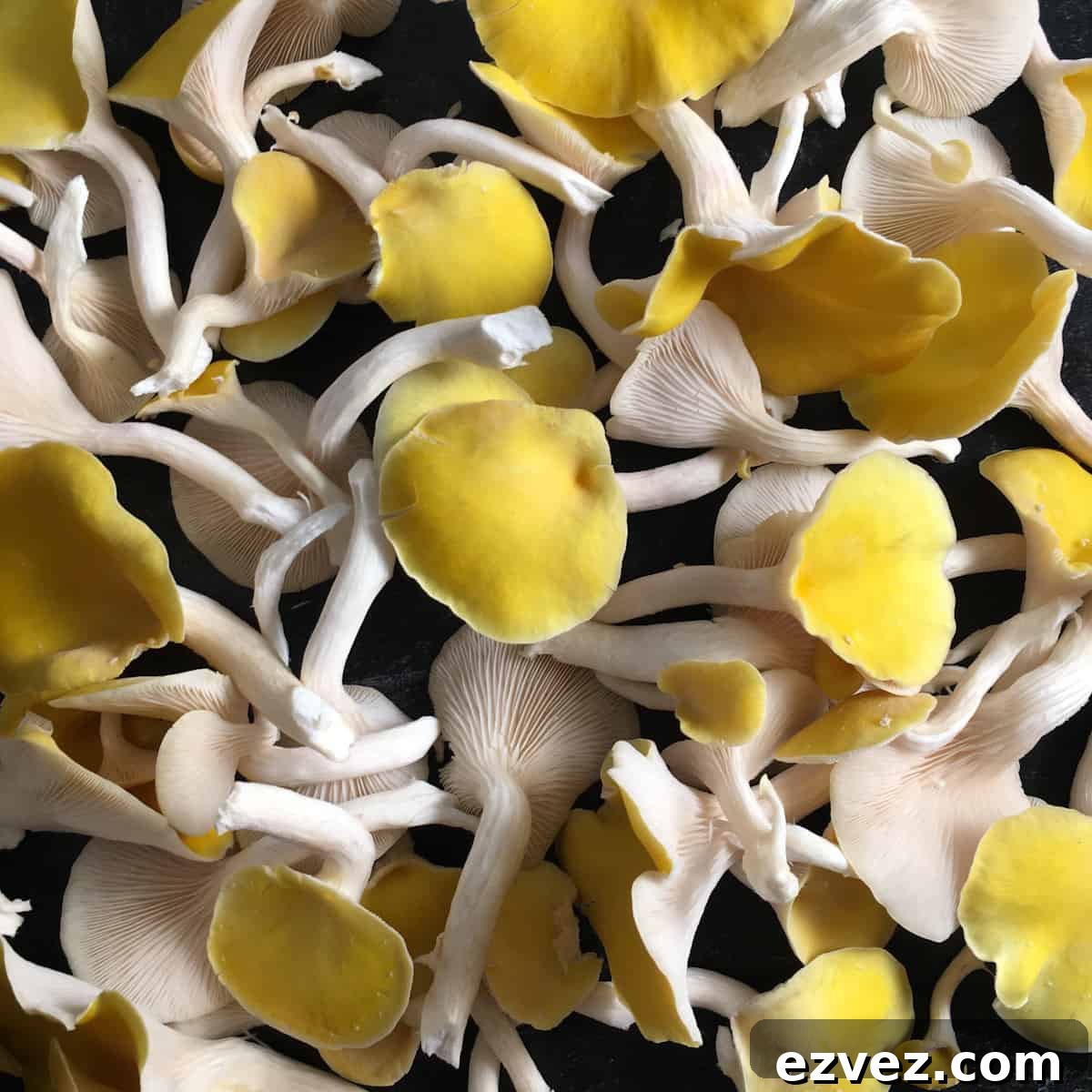
Typical caps range from about 0.8 to 2.4 inches (2–6 cm) across, and stems around 0.8–2 inches (2–5 cm). They may grow larger, but this size range is ideal for harvesting while the texture and flavor are best.
What happens if you wait too long to harvest oyster mushrooms?
Waiting too long risks quality loss: mushrooms can become slimy, develop an off odor, or show mold. Harvesting at the right time preserves texture and taste and helps encourage future flushes from the same block.
When to Use a Mushroom Grow Tent
If your growing conditions are too dry, a simple humidity tent helps. Use a clear plastic bag draped over the block with many small (about ½-inch) holes for fresh air exchange—mushrooms need both humidity and airflow. Mist the inside of the tent frequently, and remove the tent or open it once pins form, while continuing to mist the developing mushrooms.
A humidity tent also helps if the block is damaged in transit: press the substrate back together as well as you can, keep it moist, and maintain a humid microclimate until recovery and pinning occur.
How to Harvest Golden Oyster Mushrooms
To harvest, cut clusters from the substrate with a clean knife at the base or gently twist and pull them off. Cutting is often neater and reduces damage to the fruiting block. After harvesting, keep misting the block to encourage additional flushes—many kits produce more than one harvest.
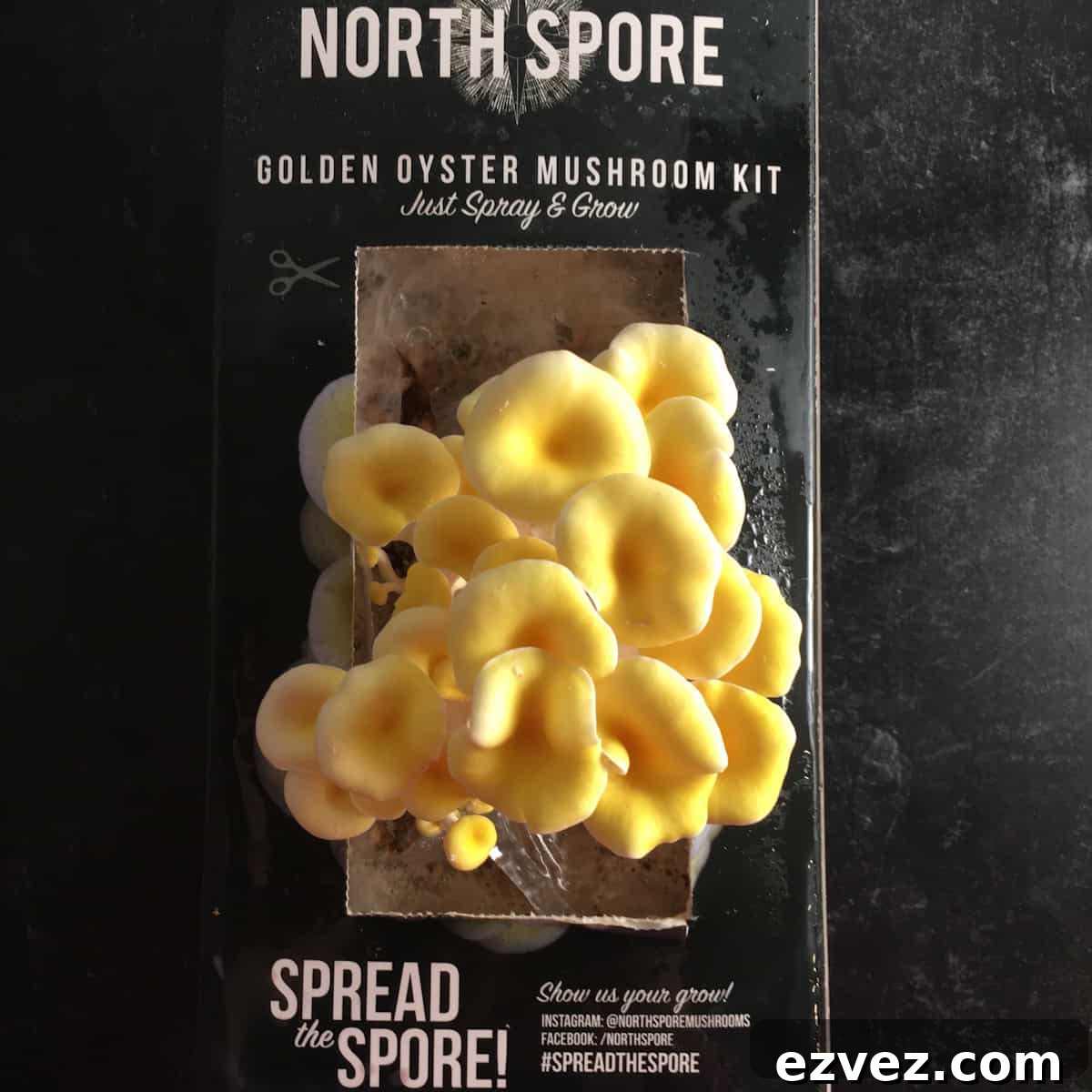
How many times can you harvest golden oyster mushrooms?
Flush count varies by kit and growing conditions. Some kits yield just one harvest, while others produce multiple flushes over weeks. In one example a second, smaller flush arrived about two weeks after the first. Proper care—consistent humidity and fresh air—improves the chances of additional harvests.
Oyster Mushroom Storage
Fresh oyster mushrooms have a short shelf life. Store unwashed mushrooms in a small paper bag in the refrigerator (not the crisper drawer) to keep them for about 5–7 days. Use them as soon as possible for best flavor and texture.
How to Grow Oyster Mushrooms
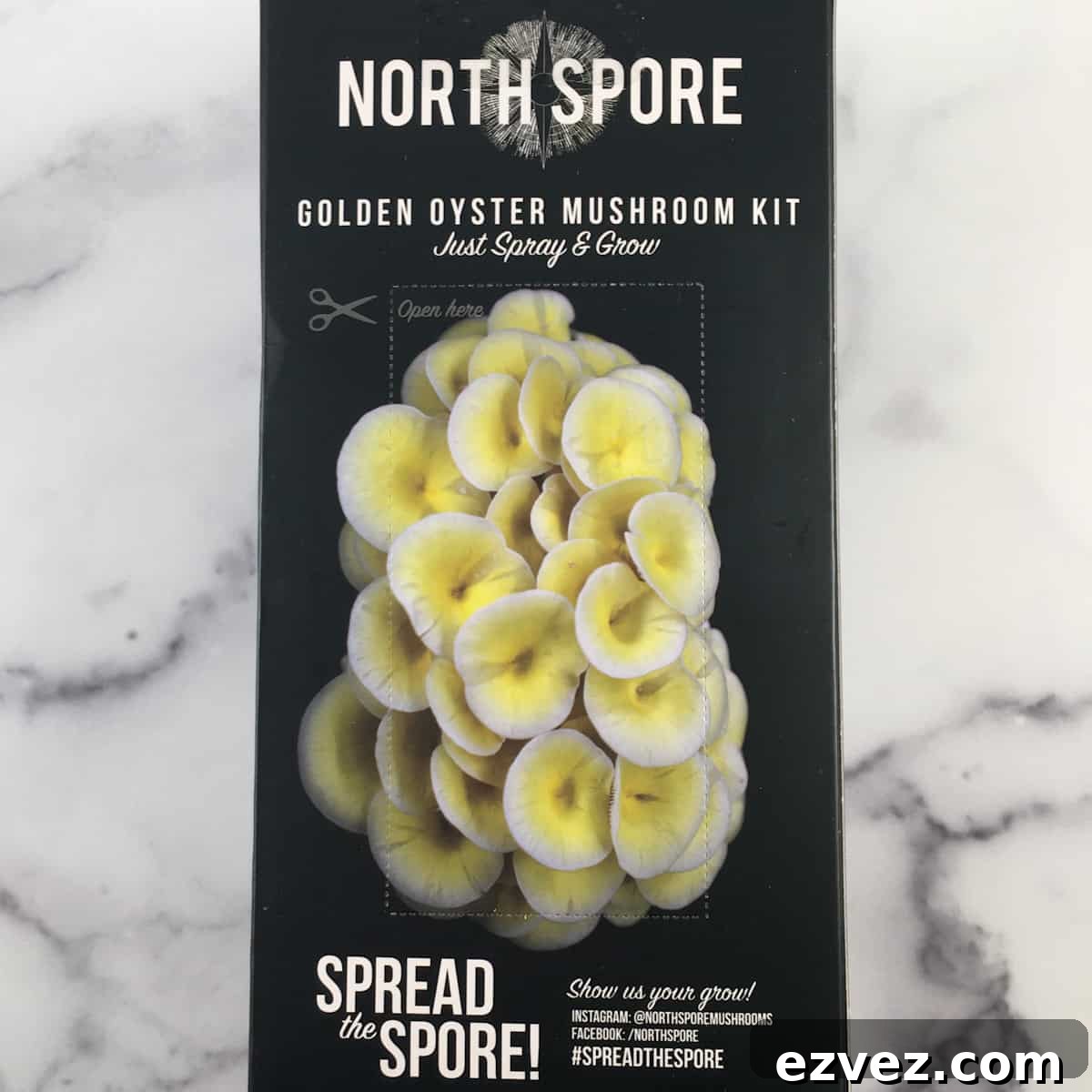
Mushroom kits are beginner-friendly: a boxed kit typically contains an amended sawdust block colonized with mycelium. Follow the kit instructions—most spray-and-grow kits require you to open a perforated area, cut an X in the plastic flap, place the box in indirect light at room temperature (roughly 65–80°F / 18–27°C), and mist the exposed area at least twice daily.
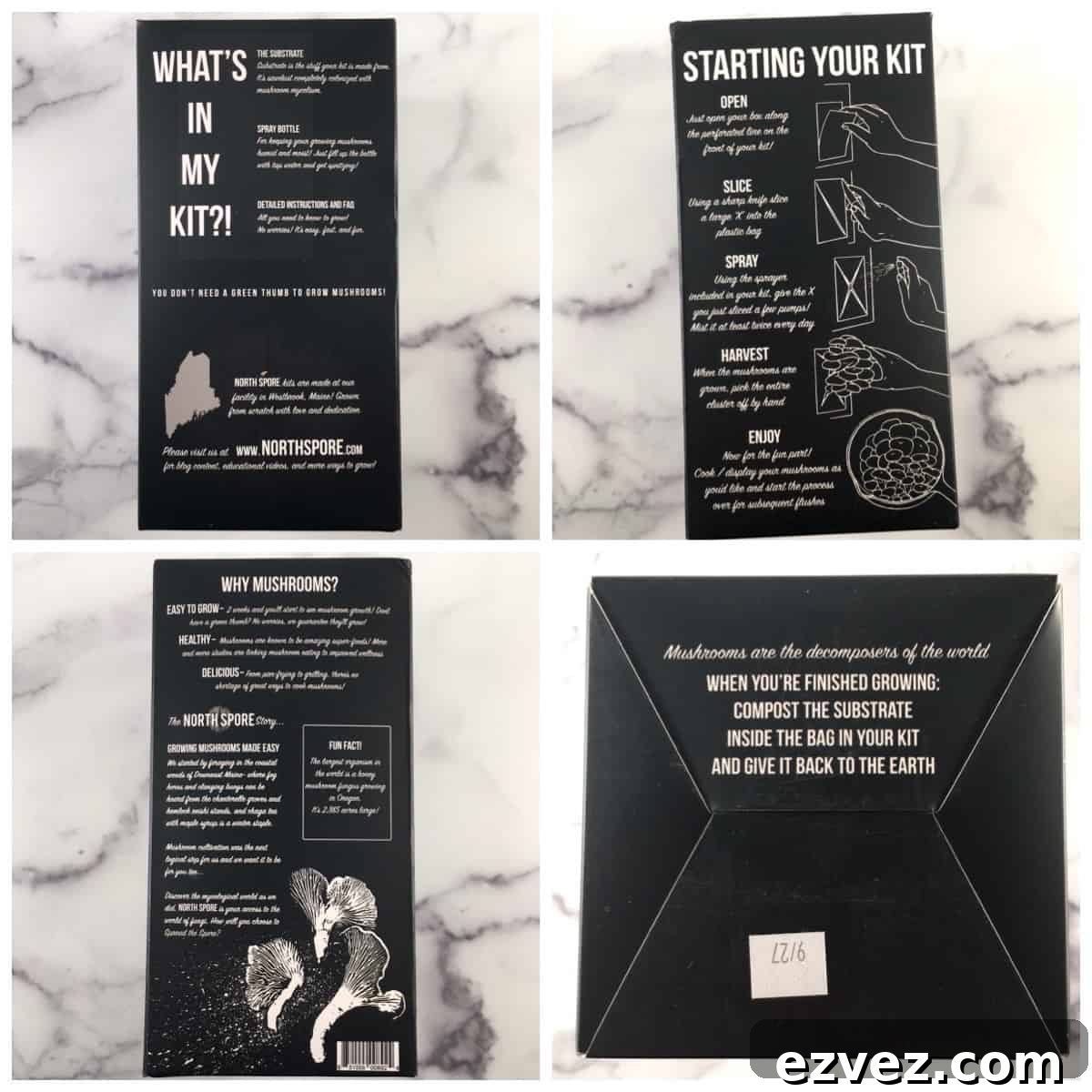
I misted once in the morning and once in the evening; drier climates may need more frequent misting. Keeping the block in a naturally humid area of the home or using a humidity tent improves results. Kits offer access to varieties that aren’t commonly available in stores, such as blue, pink, golden, and pearl oysters.
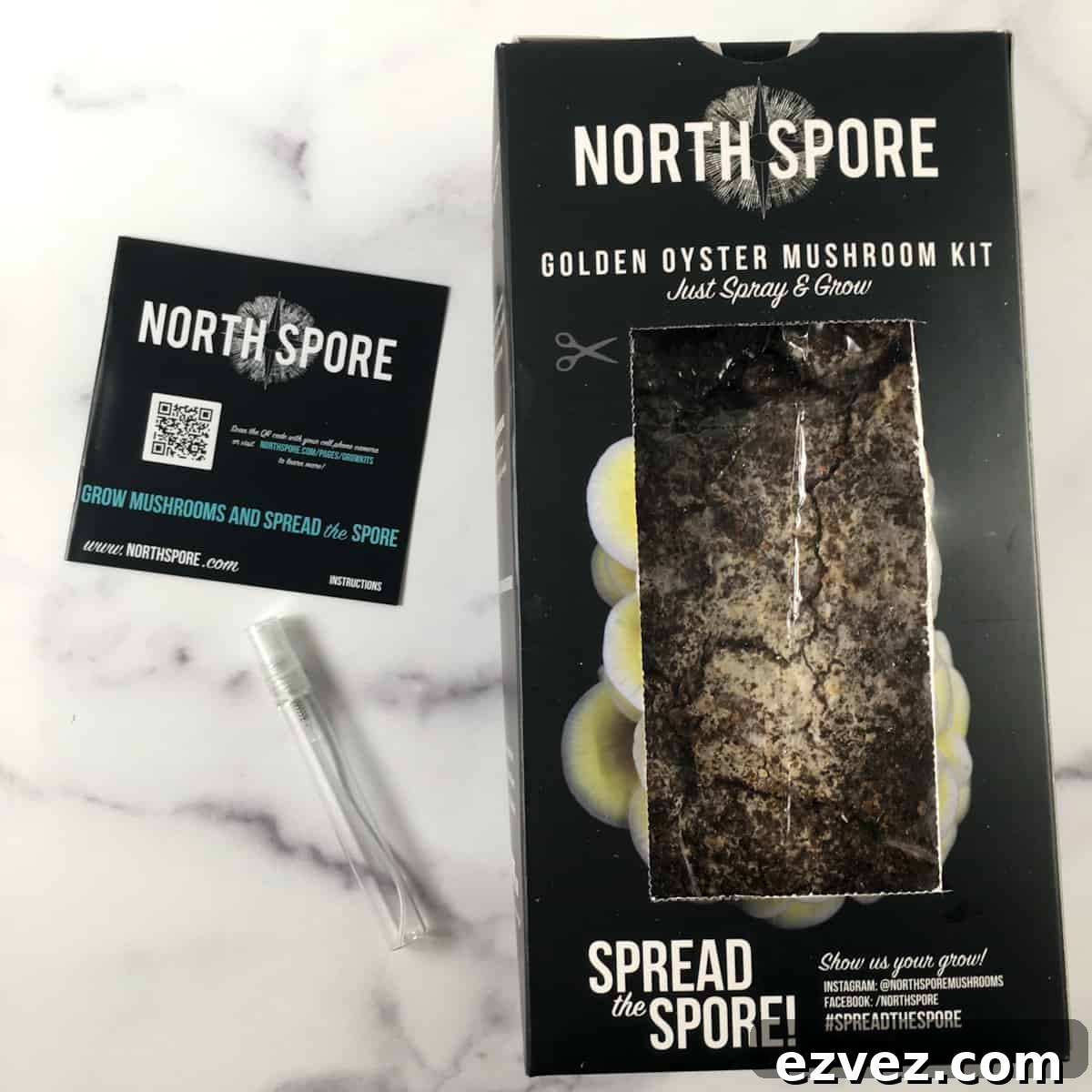
For more advanced growing, sawdust spawn or plug spawn can be used to inoculate straw, beds, or logs. Log kits typically require a 24-hour soak before fruiting, while spray-and-grow kits need no soaking and are easier for casual growers.
How to increase oyster mushroom yield?
Control the growing environment: maintain high humidity, ensure good fresh air exchange to avoid elevated carbon dioxide levels, and avoid dry conditions. Kit quality also matters—some kits are formulated to yield more. With optimal care, yields can be substantial; one kit produced over 13 ounces in a single flush.
Do mushrooms need sunlight?
Mushrooms lack chlorophyll and do not require direct sunlight. They grow well in low or indirect light. However, some light helps fruit bodies form correctly; complete darkness can cause misshapen growth.
Why do mushrooms prefer the dark?
Avoiding direct light helps mushrooms retain the moisture they need, but they still benefit from indirect light to guide proper fruit body formation. Aim for bright, indirect light rather than full sun or total darkness.
Oyster Mushroom Recipes
Simple pan-fried oyster mushrooms with butter or olive oil, garlic, and herbs are delicious. For a richer dish add a splash of white wine and a touch of cream. Other uses include topping pizza, tossing into stir-fries, or making mushroom jerky in an air fryer. Oyster mushrooms also pair well in pasta dishes, soups, and sauced entrees like tempeh bolognese.
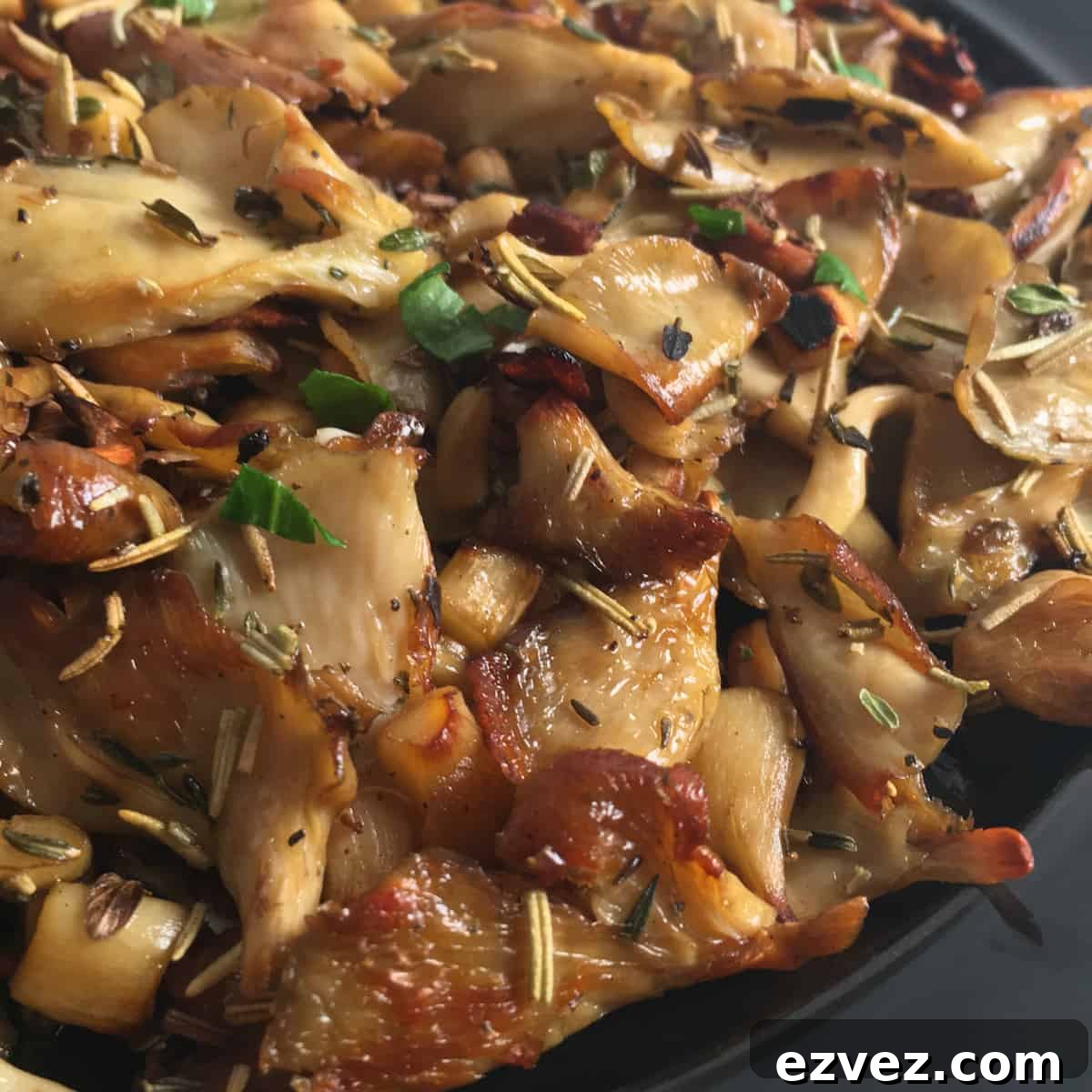
Cook golden oyster mushrooms for the best flavor and texture. If you’re trying them for the first time, start with a small amount to gauge your personal tolerance and preference.
What do yellow oyster mushrooms taste like?
Many describe golden oyster mushrooms as mildly sweet and nutty with a slight citrus note and a pleasant, tender texture. Taste is subjective; some people detect a mild bitterness. Cooking enhances flavor and softens texture.
Golden Oyster Mushroom Benefits
Mushroom kits are suitable for many diets—vegan, keto, low-carb, gluten-free, Paleo, and dairy-free. Golden oyster mushrooms also offer nutritional benefits:
- Boost vegetable intake: Although fungi, mushrooms are commonly counted with vegetables and add volume and nutrients to meals.
- B vitamins: Oyster mushrooms provide riboflavin and niacin and smaller amounts of thiamin, pantothenic acid, and folate.
- Vitamin D: Depending on growing conditions, mushrooms can be a natural source of vitamin D, useful in diets low in this nutrient.
- Low calorie: Around 33 calories per 100 grams, they work well in high-volume, low-calorie meals.
- Essential minerals: Oyster mushrooms contribute minerals like potassium and phosphorus that support overall health.
Watch them grow!
Growing golden oyster mushrooms at home is fast, rewarding, and approachable for beginners. With the right moisture, fresh air, and patience you can enjoy multiple harvests of a unique, flavorful ingredient that’s versatile in the kitchen and supportive of many diets.