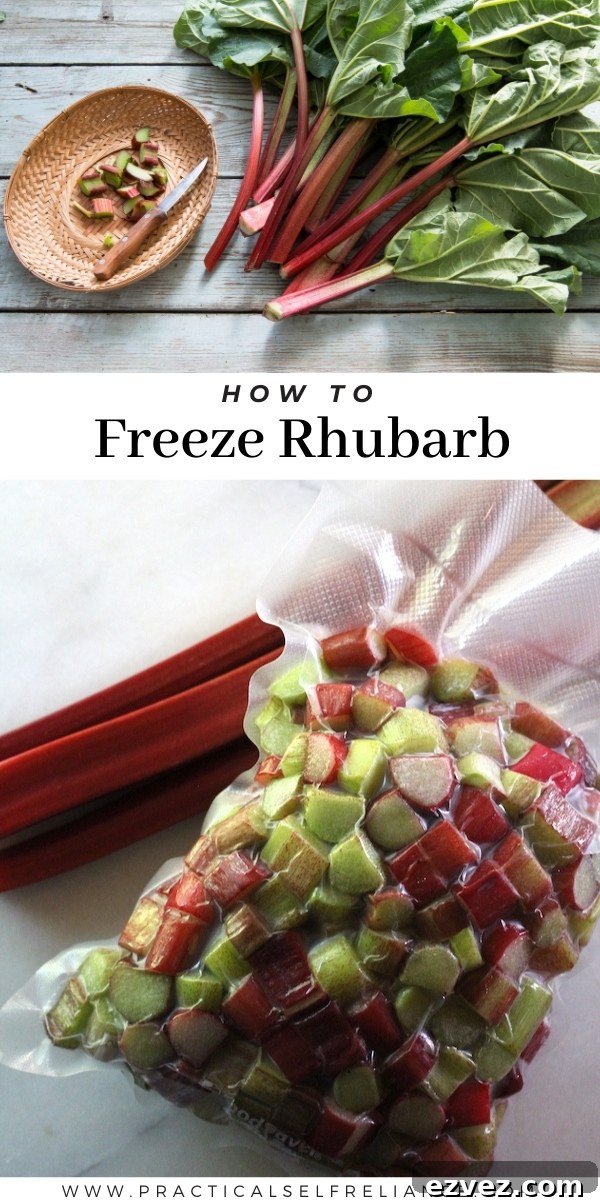
Freezing rhubarb is the easiest way to preserve rhubarb.
If you grow rhubarb in your garden, you’ve probably experienced the seasonal surplus. Like zucchini, rhubarb often comes in abundance — more than a household can use during its short prime. One or two crowns can multiply quickly when divided every few years, and if seed stalks are left on plants, seedlings spread even faster.
Because most neighbors also grow rhubarb, many of us are deluged with stalks for a few weeks each spring. The harvest window is limited: once the season passes, stalks become stringy and bitter. That’s why freezing rhubarb when it’s fresh is such a useful preservation method — it lets you enjoy pies and sauces in winter months when fresh rhubarb is long gone.
So, can you freeze rhubarb? Yes — and it freezes very well, whether raw or cooked. With a little preparation you can preserve its texture and flavor so it defrosts ready for pies, compotes, and sauces.
Can you Freeze Rhubarb?
Rhubarb freezes beautifully and can be stored either raw or cooked. Technically you can freeze it without any special steps, but a couple of simple tricks improve quality after months in the freezer: blanching extends shelf life by slowing enzyme activity, and flash freezing single pieces on a tray prevents them from sticking together into a lump.
How to Freeze Rhubarb
Vegetables contain enzymes that remain active at low temperatures and gradually degrade texture and flavor. Blanching before freezing helps stop that process. If you only plan to keep rhubarb for a few weeks to a couple of months, skipping blanching is fine. For storage beyond three months, blanching is recommended.
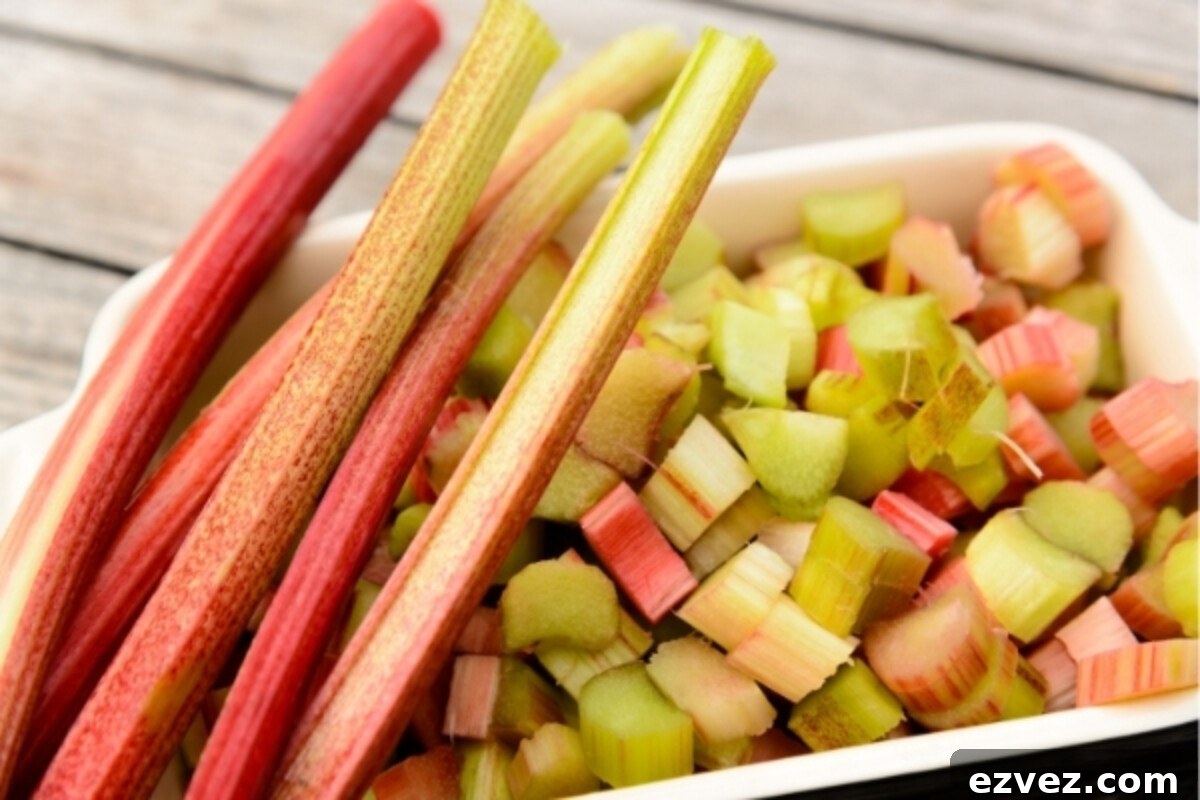
Begin by removing the leaves and trimming the stalks. Chop into pieces that suit your future use — 1/2-inch slices work well for pies and compotes.
To blanch: place the cut rhubarb in boiling water for 1 minute, then remove with a slotted spoon and plunge immediately into ice water to halt the cooking. This brief blanch prevents the stalks from falling apart and preserves texture. If you prefer short-term storage, you can skip this step and proceed to flash freezing.
After cooling, drain and pat the pieces dry on a paper towel or kitchen cloth for 20–30 minutes. Excess moisture increases the risk of freezer burn and ice buildup, so drying is an important step.
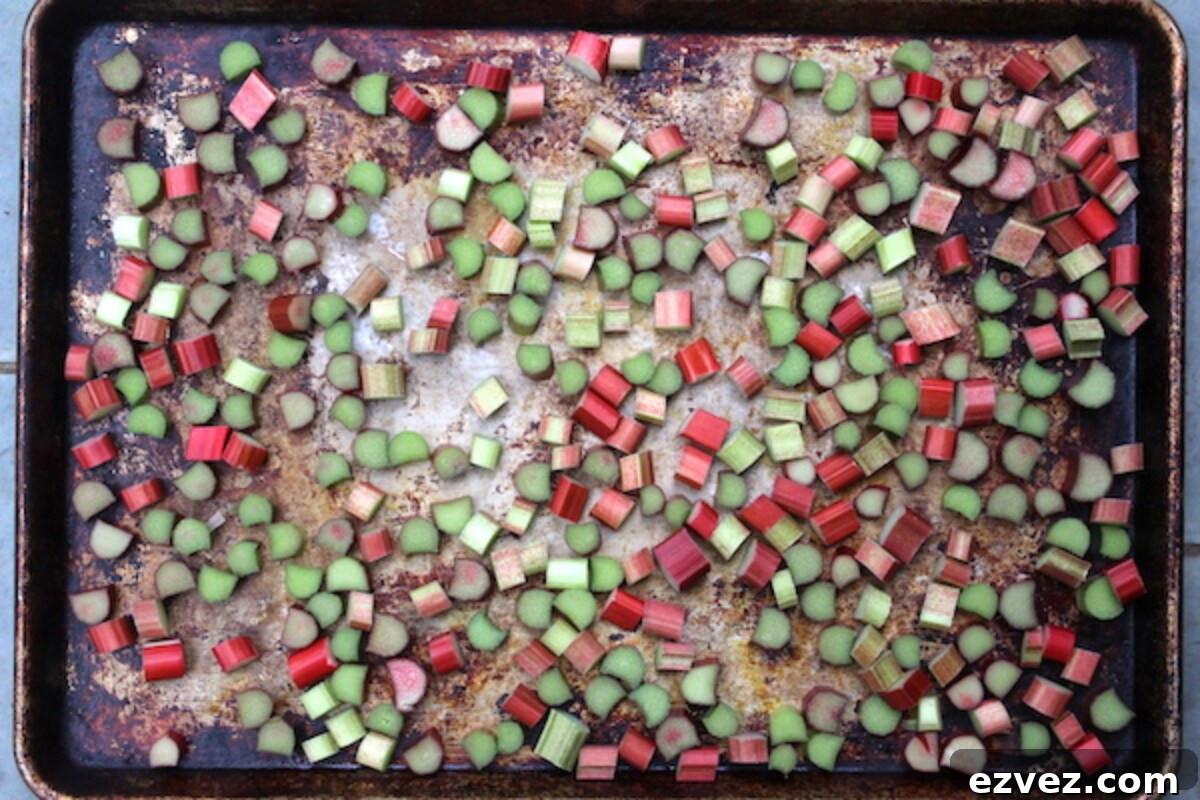
Spread the dry pieces in a single layer on a baking tray and place it in the freezer until the rhubarb is solid. Six hours may be enough, though leaving it overnight ensures it’s fully frozen. Flash freezing keeps pieces separate so you can remove just what you need later.
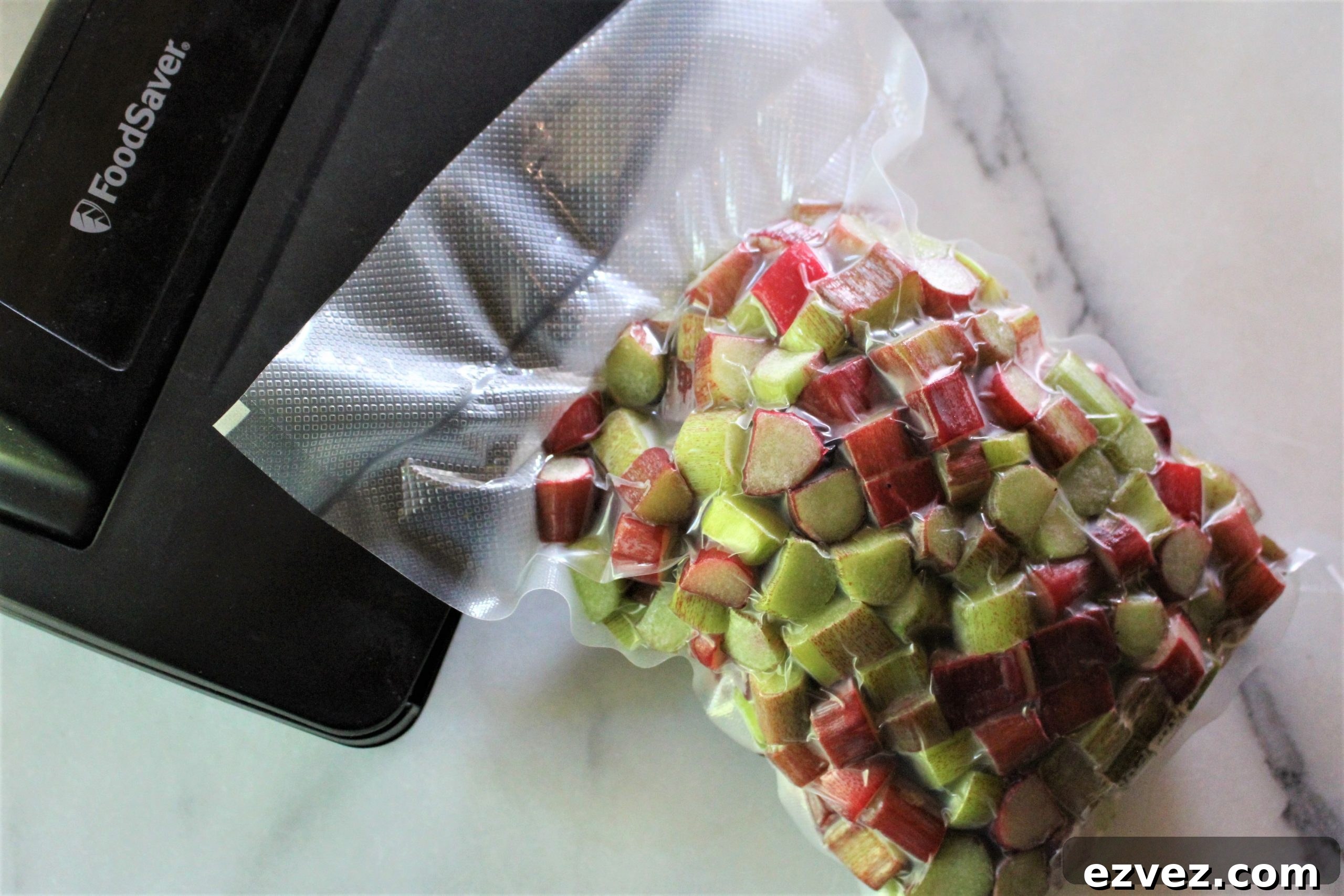
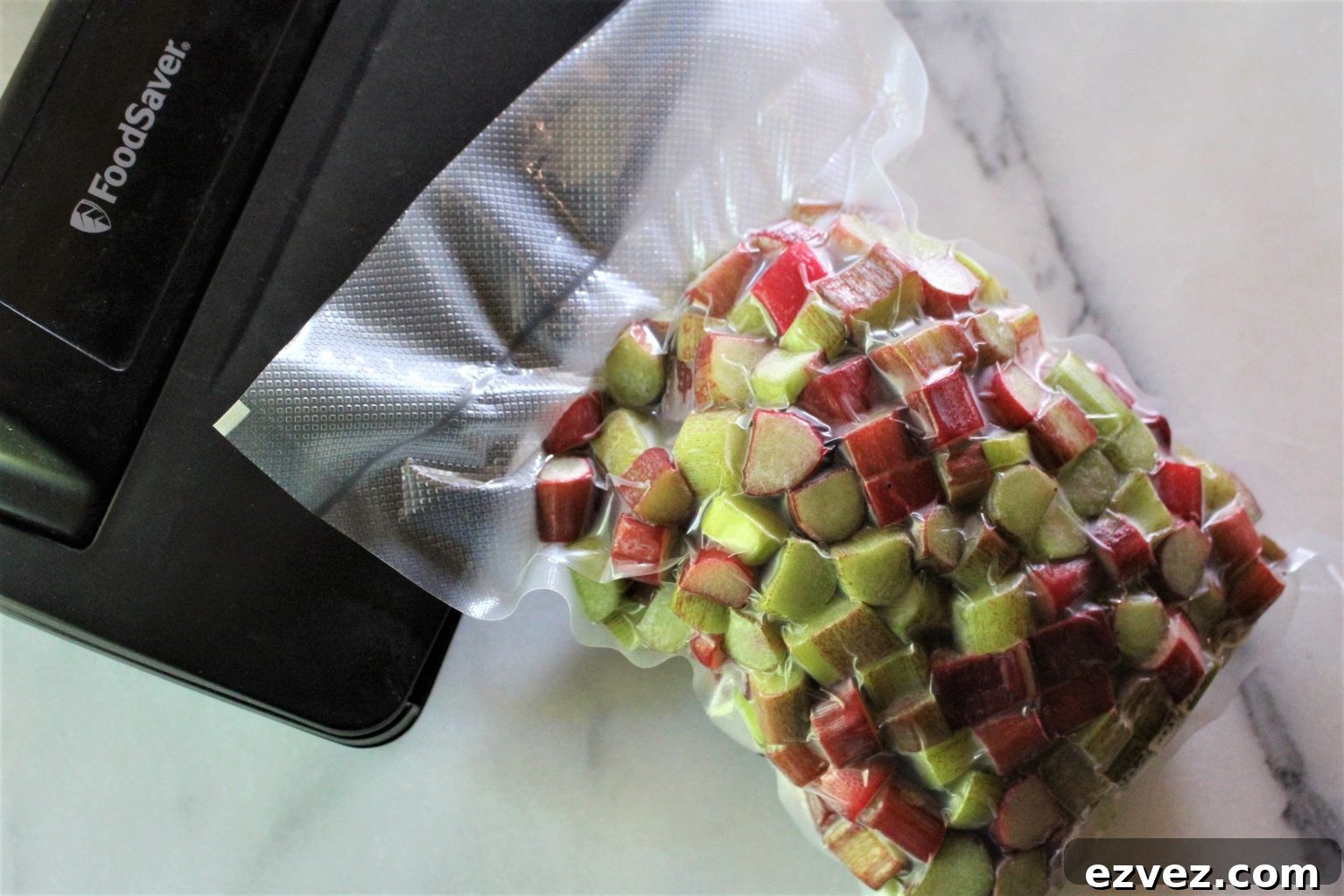
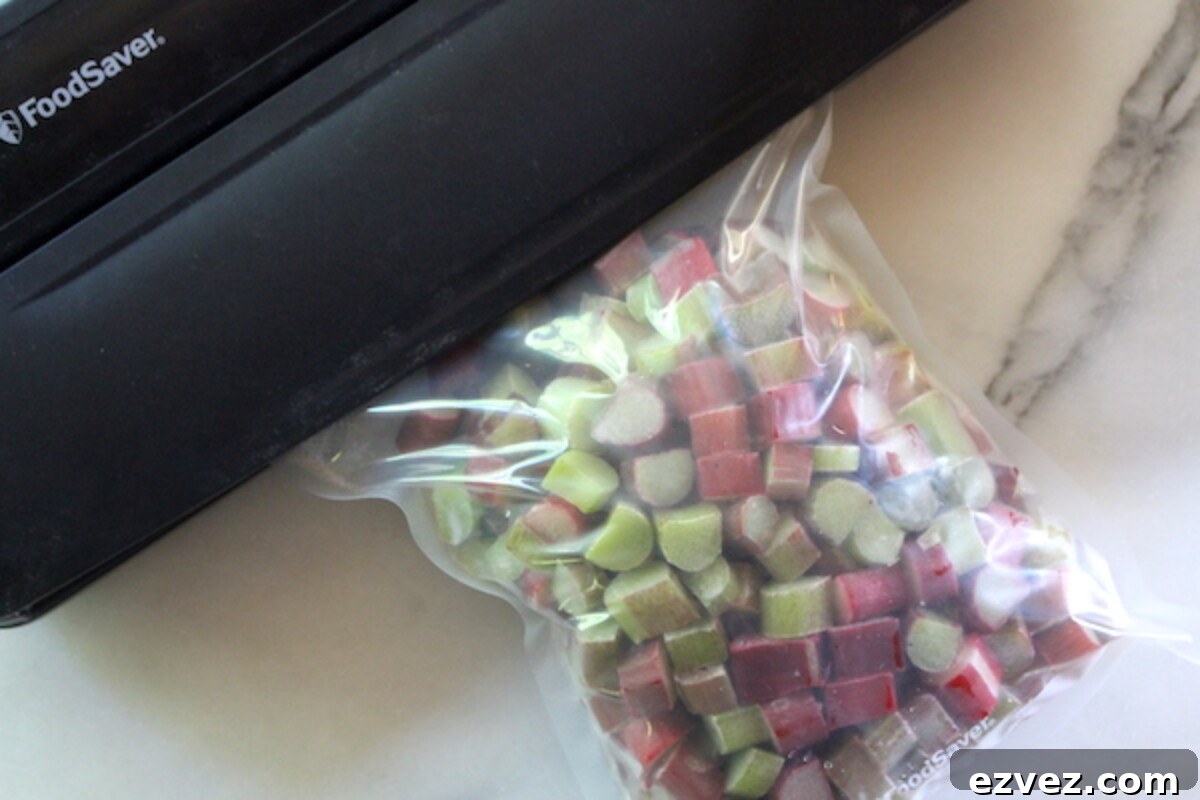
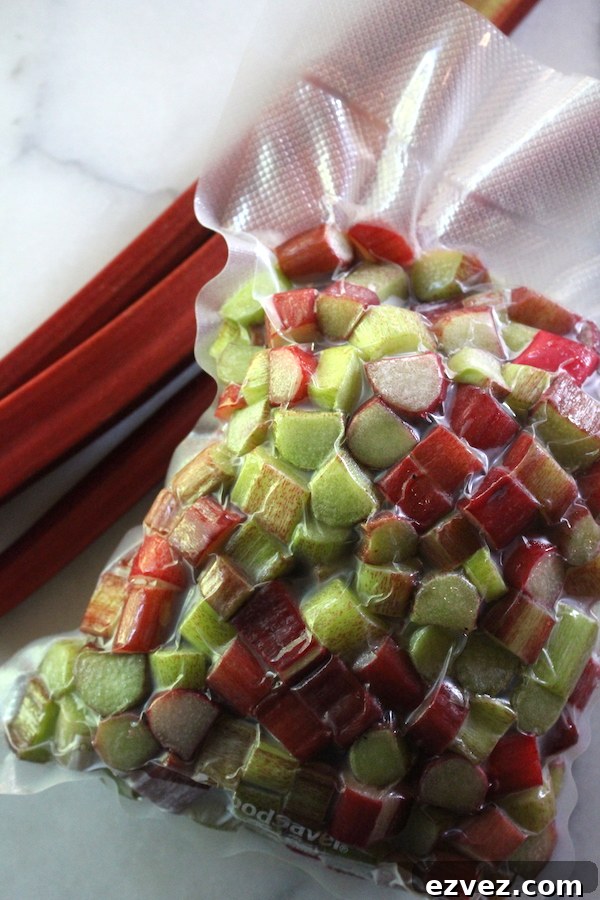
Once frozen, transfer the pieces into your chosen storage containers. Common options include heavy-duty freezer bags, vacuum sealer bags, freezer-safe plastic containers, or freezer-rated mason jars (ensure jars are labeled safe for freezing). Vacuum sealing provides the best protection against freezer burn and preserves quality longest.
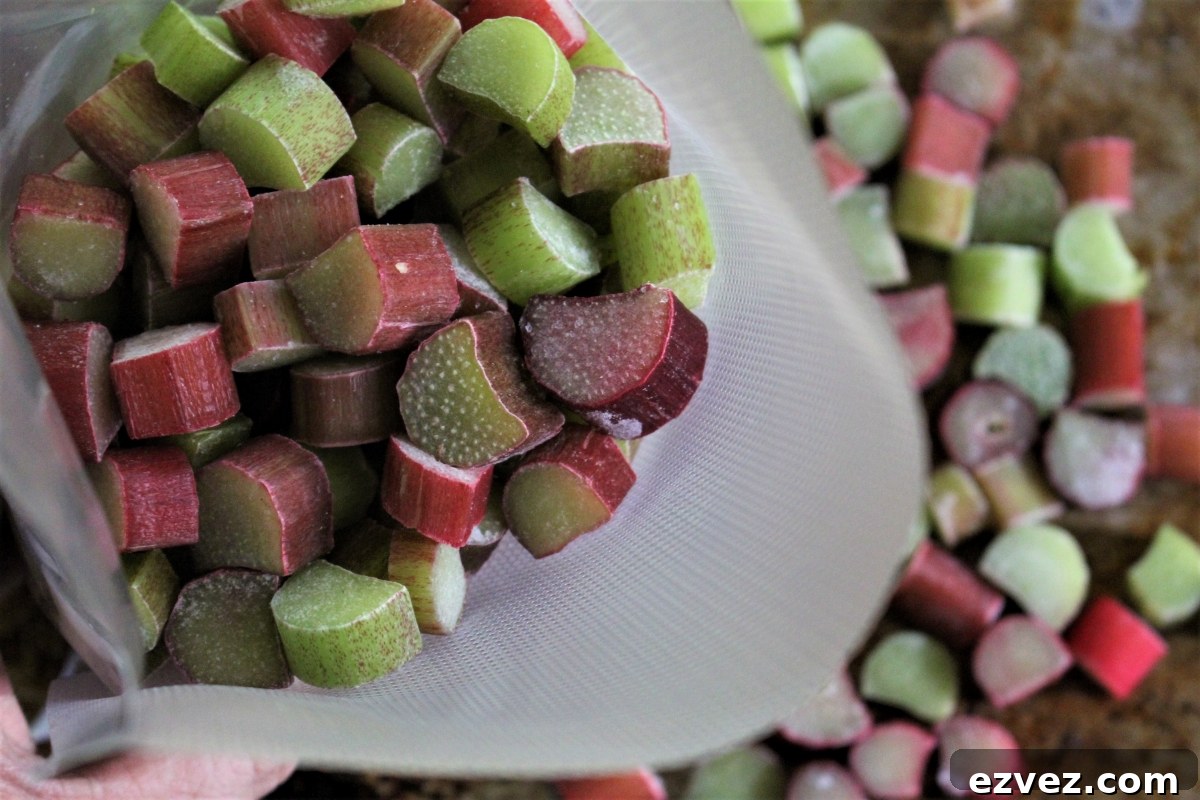
Fill the bags or containers with frozen pieces, remove as much air as possible, and seal. Label with the date so you can track storage time.
How Long Does Rhubarb Last in the Freezer?
Properly blanched and well-packed rhubarb will keep quality for up to one year when stored in airtight containers or vacuum-sealed bags. If packed loosely in standard freezer bags, pieces may suffer freezer burn and typically remain good for about eight months.
Raw rhubarb frozen without blanching degrades faster and is best used within about three months for acceptable texture and flavor.
For the best results: blanch quickly for one minute, dry the pieces, flash freeze on baking trays, and store in vacuum-sealed bags or other airtight, freezer-safe containers.
Ways to Preserve Rhubarb
Freezing is the most versatile method for preserving rhubarb, but there are other delicious options if you’d like variety in your pantry. Consider making jams, jellies, or combining rhubarb with strawberries for classic preserves. Fermented or alcoholic preserves like rhubarb wine and mead are also possibilities for longer-term storage and unique flavors.
- Rhubarb jam
- Rhubarb jelly
- Strawberry-rhubarb jam
- Rhubarb wine
- Rhubarb mead (honey wine)
Freezing your excess rhubarb when it’s fresh ensures you’ll have bright, tart goodness on hand throughout the year for pies, sauces, and baked goods.