You will need:
A dozen eggs
Either one packet of commercial Easter egg dye or the skins from about 15 yellow onions
Vinegar
A pair of old pantyhose (clean)
A few small leaves from herbs or garden plants
I used, starting at the top and going clockwise in the photo: cilantro, parsley, bamboo, geranium, Japanese maple, and dill. In the very center are a couple of vetch leaves. My best results came from cilantro and dill; Japanese maple and vetch also produced pleasing patterns. Experiment with different small leaves and herbs to see what prints you like best.
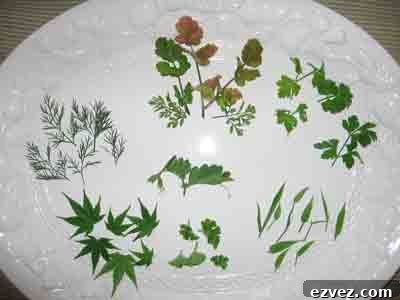
If you choose a commercial dye packet, begin by hard-boiling the eggs according to the package directions. Many packets simply instruct you to boil the eggs, then cool them before dyeing.
If you decide to make natural onion skin dye, simmer the yellow onion skins in 4–6 cups of water with a few tablespoons of vinegar for at least 30 minutes. Allow the liquid to cool to room temperature and strain out the solids before using. This creates a rich, reddish-brown dye that works wonderfully for creating traditional-looking decorated eggs. Using natural dyes takes a little more time but produces warm, earthy tones and is a great option if you prefer chemical-free colorants.

Tie a knot in one leg of the pantyhose, then cut about 6 inches from the knot. If you are starting at the foot of the stocking, simply cut about 6 inches from the toe—no knot is necessary. You’ll use these short nylon tubes to hold the leaves snugly against each egg while it soaks in the dye.
Dear Mama,
Today I took a pair of scissors and cut up all your pantyhose.
I’m very sorry.
Love,
Lulu

Tuck an egg inside the pantyhose segment along with one or two small leaves. Arrange the leaves so they lie flat and fan out over the egg’s surface; this helps create a clear, recognizable print. Don’t crowd the egg with too many leaves—a couple of well-placed pieces give the best contrast between the leaf shape and the background color. If you put in too many leaves, the leaf shapes can blur together and you’ll lose the crispness of the design.
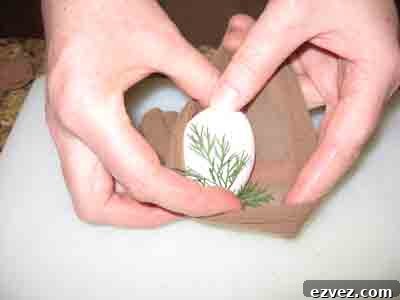
Once the egg and leaves are positioned, twist the open end of the nylon so the contents are snug, then tie off the end. As you tighten and tie, the leaves may shift—carefully reopen the nylon and reposition the leaves as needed until they sit where you want them. This step can take a little patience, but the payoff is a distinct leaf silhouette on each egg.
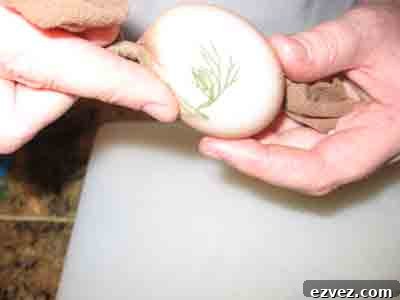
Here are the eggs all wrapped and ready for dyeing:
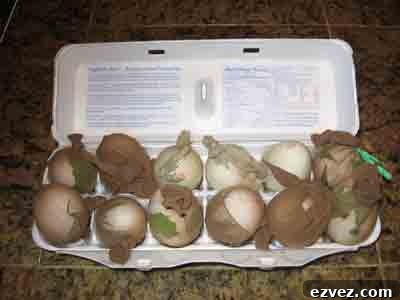
For onion skin dye: place the wrapped eggs in a pot so they form a single layer and are fully covered by the dye liquid. Bring the pot to a gentle boil and continue boiling for about 10 minutes. Some people extend the boil longer, but a shorter boil helps keep the eggs safe to eat while still imparting good color. After boiling, turn off the heat and let the eggs cool in the dye; you can also leave them to soak in the cooled dye for several hours or overnight to deepen the color.

For commercial dye packets: follow the package instructions and be sure to add vinegar if the directions call for it. Vinegar helps the color adhere to the eggshell and intensifies the shade. Most commercial dyes only require a few minutes of exposure to achieve a vivid color, so watch the eggs and remove them when you’re satisfied with the hue.
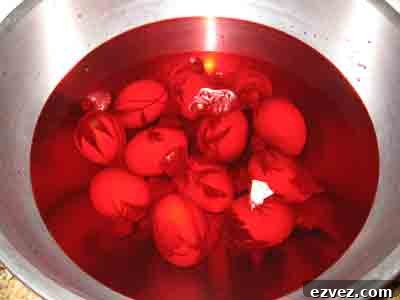
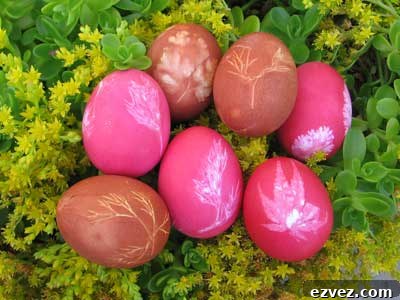
After the dyeing time is complete, remove the eggs carefully from the liquid and let them dry on paper towels. Once dry, cut or untie the nylon and peel it away to reveal the leaf prints. Some prints may appear soft or slightly blurred, while others will show a crisp silhouette—both results are attractive in their own way. Below is a selection of finished eggs: the brown tones are from onion skin dye and the bright red tones came from a commercial dye packet.
Tips: try different leaves, herbs, or small garden flowers for a variety of patterns; use white or light-colored eggs for the most contrast; and practice on a few test eggs to refine your technique. Whether you prefer natural dyes or commercial packets, this method produces charming, nature-inspired Easter eggs with unique, delicate prints.