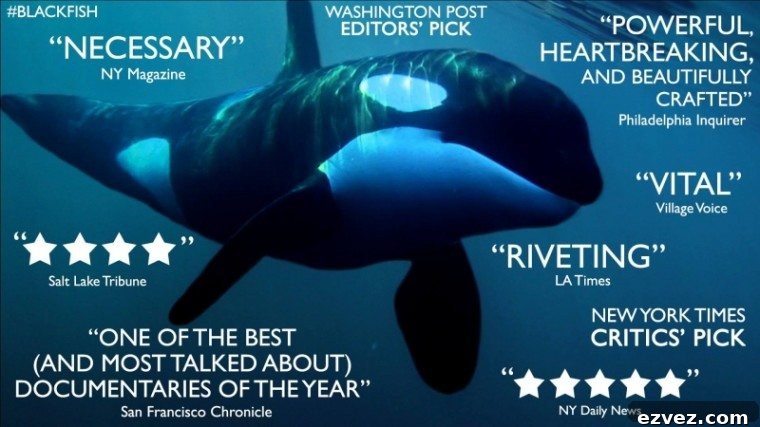
BLACKFISH has been on my mind for some time. Should it be included in a family film review? After thinking it over, I decided it is exactly the kind of film that belongs in that conversation — a documentary that sparks debate, prompts reflection, and can change how we view the world.
To be clear up front, this is not a movie for young children. BLACKFISH contains disturbing images and intense emotions. I would not recommend anyone under 13 watch this film unless they are notably mature for their age or have a particular interest in the topic.
BLACKFISH explores the reality of killer whales taken into captivity and trained to perform in marine parks like SeaWorld. Many people who have enjoyed these shows likely haven’t considered what happens behind the scenes: how animals are captured, how calves are separated from their families, and how these intelligent animals must adapt to a confined, artificial environment.
BLACKFISH is a strong example of how film can not only entertain but also enlighten, educate, and challenge viewers.
A large portion of the film comprises interviews with former trainers and others involved in the capture and handling of orcas who now express regret about their roles. These firsthand accounts are emotional and often painful: people describe, sometimes tearfully, the separation of calves from their mothers and the methods used to force animals to perform for large audiences unaware of the toll taken on the animals.
The film centers on an orca named Tilikum, whose interactions with trainers culminated in the death of senior SeaWorld trainer Dawn Brancheau. BLACKFISH examines the events leading up to that tragedy. The documentary includes footage of orca attacks and interviews with witnesses and those affected. Watching these sequences, I felt less anger toward the animals and more frustration with the human decisions that put them in such situations.
BLACKFISH demonstrates the power of documentary film to raise awareness and provoke meaningful conversation. Personally, visiting zoos and marine parks always carries a note of sadness when I see animals confined away from their natural habitats. This film lays bare the consequences of removing calves from their mothers and reveals the social and psychological risks orcas face in captivity — from interactions with humans and from strained relationships with other captive whales.
My primary critique is that the film gives little voice to those who defend captivity or present an opposing viewpoint. For a subject this charged, hearing both sides would strengthen the film’s credibility. I wanted to hear from experts and staff who believe captivity can be managed humanely or who argue the educational and conservation benefits of marine parks. The documentary states that SeaWorld employees repeatedly declined to be interviewed, which likely limited the filmmakers, but the absence of more robust counterarguments is still noticeable.
Despite that shortcoming, BLACKFISH is well worth seeing, especially for anyone who cares about animals. The film contains strong language only briefly and uses clinical terms related to breeding that may require explanation for younger viewers. Some interview segments include Spanish with English subtitles, so younger children who read slowly might need assistance.
This is an important, thoughtfully made film that addresses a difficult topic with honesty and sensitivity. It’s not light entertainment, but it can lead to valuable family discussions and a deeper understanding of the ethical questions surrounding animal captivity.
So, until next time, see you at the Redbox…
Have you seen BLACKFISH? What did you think?
If you haven’t seen it yet, do you plan to watch it?
Jeff is a musician, humorist, gardener, and uncle. He’s a longtime family friend and a regular contributor who brings personal perspective to movie discussions.