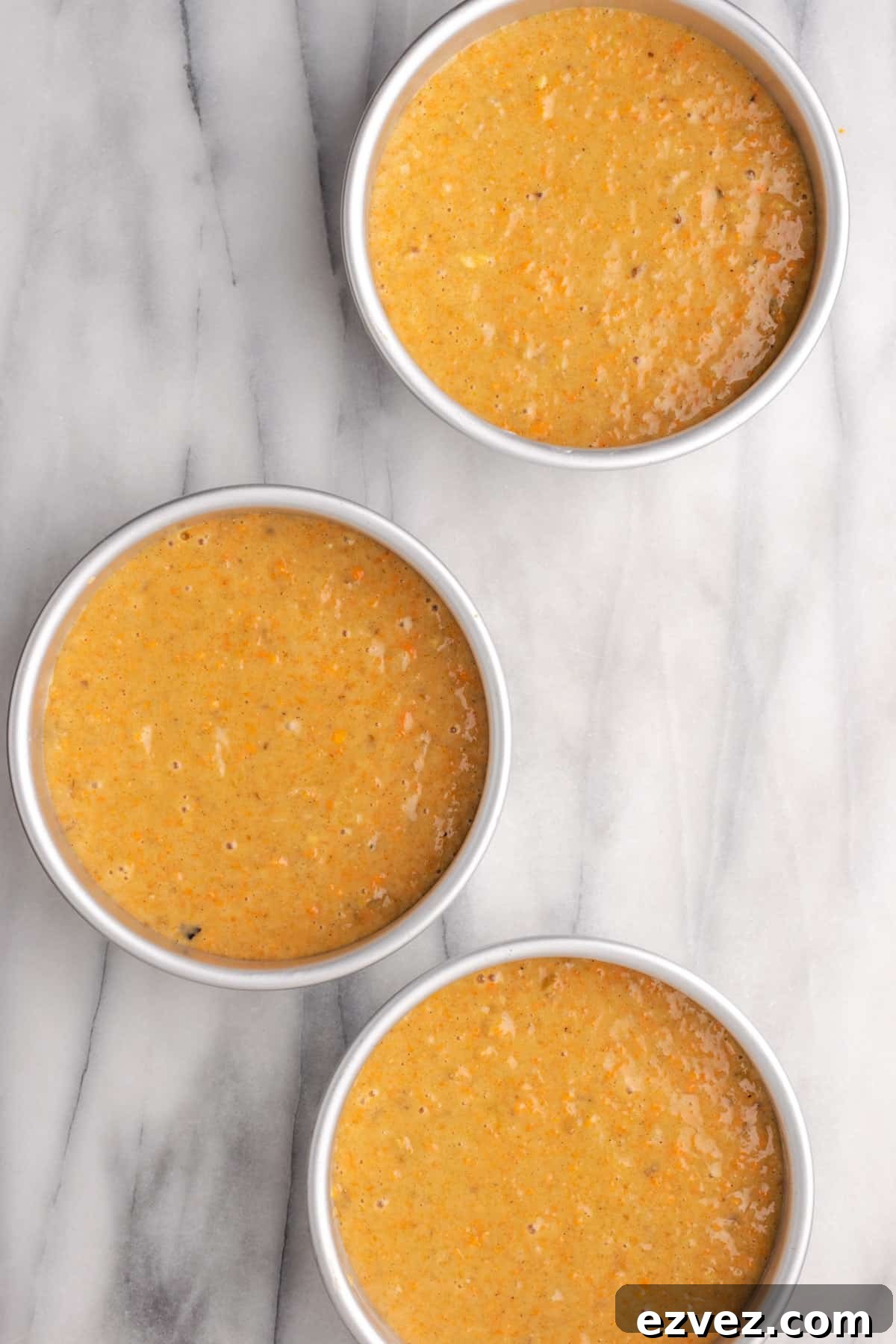
If you’ve ever spent time baking a cake from scratch or from a mix, you know how disappointing it is when the cake sticks to the pan. I’ve baked many cakes, so here is a clear guide on how to grease a pan so your cake releases cleanly every time.
[feast_advanced_jump_to]
What to use to grease a pan
Several options work well for greasing a pan. My top choice is vegetable shortening because it has a higher melting point, so it stays in place while the cake bakes instead of melting and running to the bottom of the pan.
If you don’t have vegetable shortening, alternatives include palm shortening, vegetable oil, bacon fat or butter.
Nonstick cooking spray is essentially aerosolized vegetable oil and can be used—be sure to coat the entire interior surface since sprays often don’t adhere as evenly as solid shortening. Some commercial “cake release” sprays combine oil and flour for easy release; they can be convenient but note that any spray containing flour is not suitable for gluten-free baking.
Note that sprays with flour are not gluten free, so not suitable for use with gluten free baking.
How to grease a cake pan
- Start with a clean, dry metal baking pan.
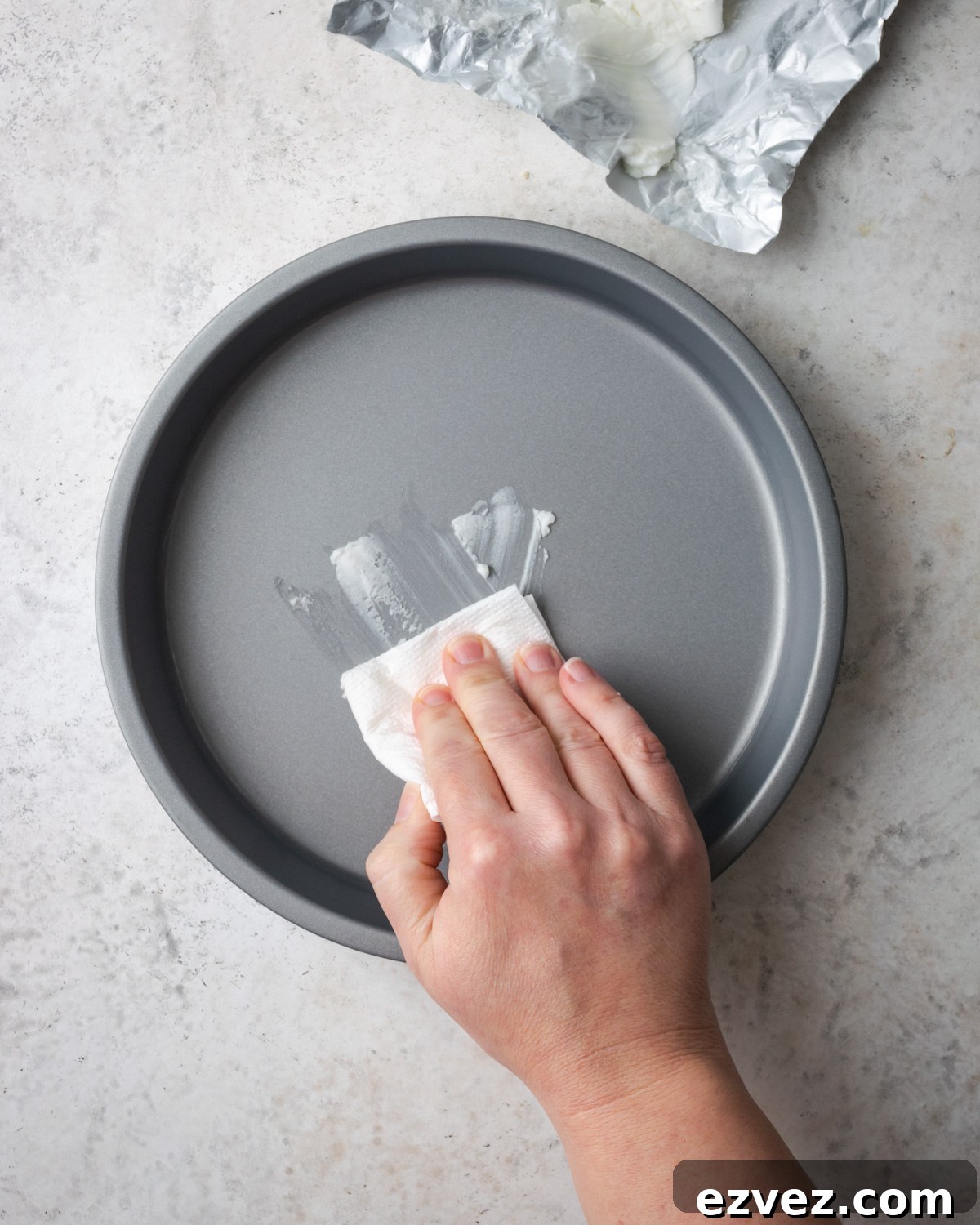
- Fold a paper towel into a small pad.
- Scoop about 1 tablespoon of shortening onto the paper towel and rub it over the bottom and sides of the pan so a thin, even layer of fat coats the surface.
You can also use a pastry brush or your fingers to spread the fat. After greasing, either flour the pan or line it with parchment paper, depending on the recipe and pan type.
How to line a cake pan with parchment paper
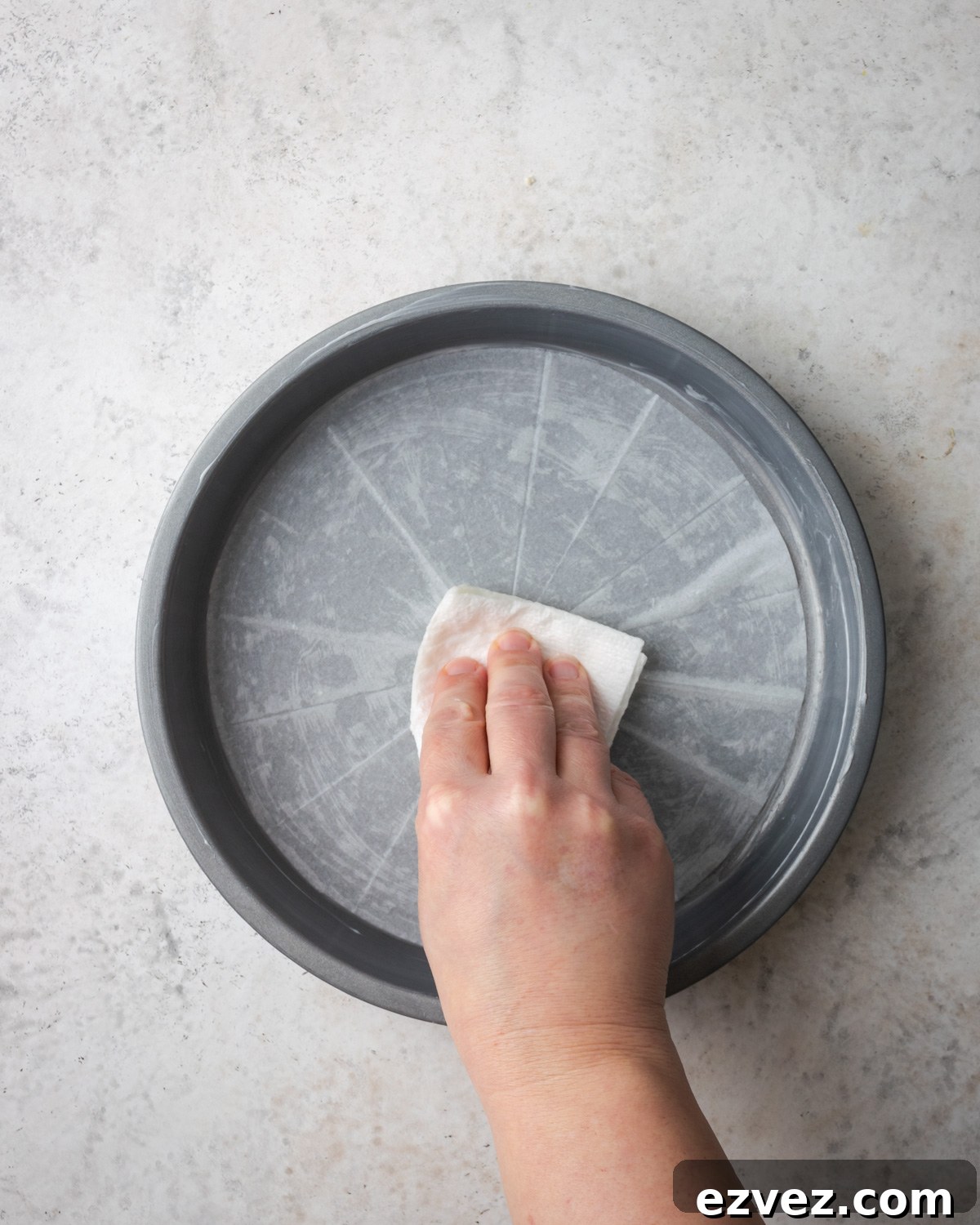
For layer and sheet cakes I prefer parchment paper rather than relying on flour alone. Do not use wax paper. Cut a piece of parchment to fit the bottom of the pan, or use precut parchment rounds sized for your pans.
- Place a sheet of parchment large enough to cover the pan on the counter and set the pan on top.
- Trace around the bottom edge to mark the outline.
- Cut along the inside edge of your tracing to create a parchment circle or square that fits the pan bottom.
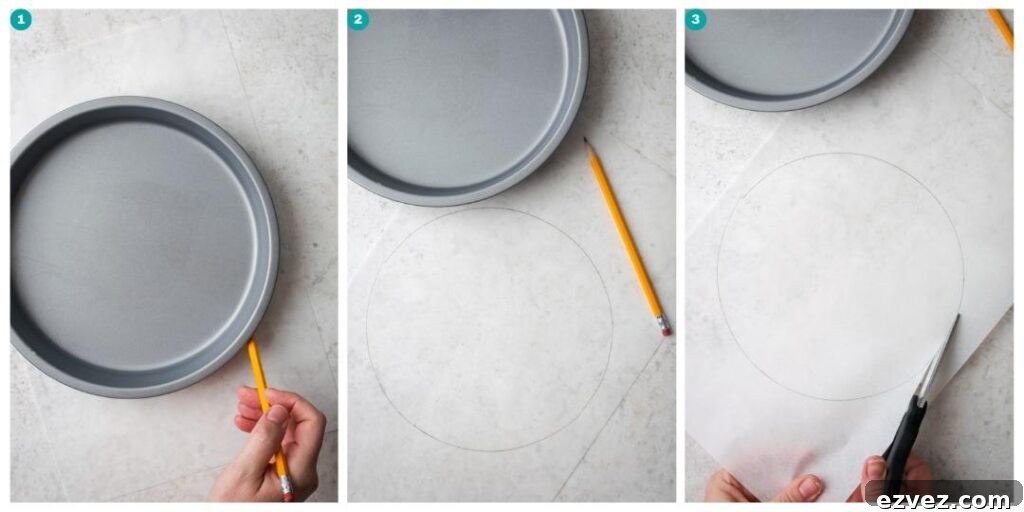
Grease the pan first, press the parchment into the bottom, then lightly grease the top of the parchment to help it stay in place and prevent batter from seeping underneath.
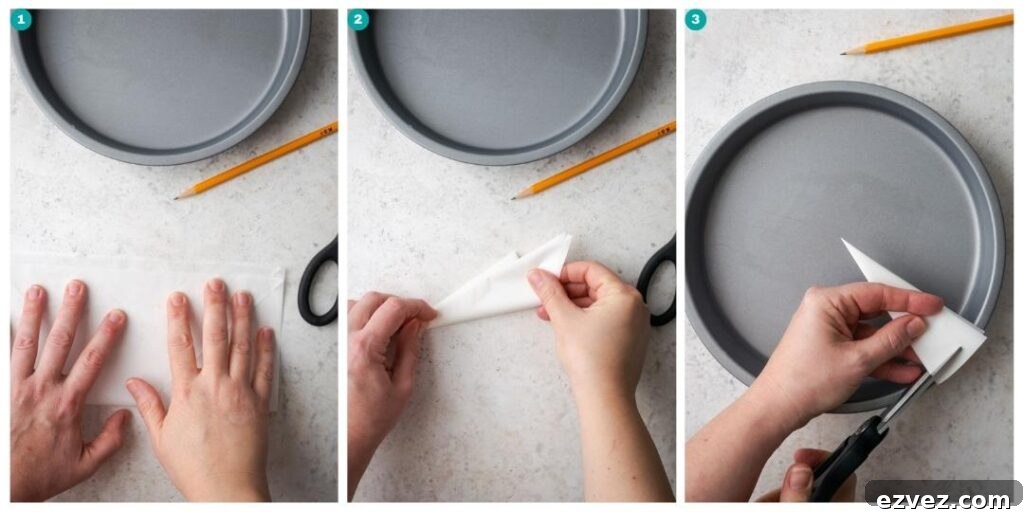
Another way to cut a round is to fold the parchment into quarters or into a triangle and trim the outer edge. Open it up to check the fit and trim as needed for a perfect circle.
How to flour a cake pan
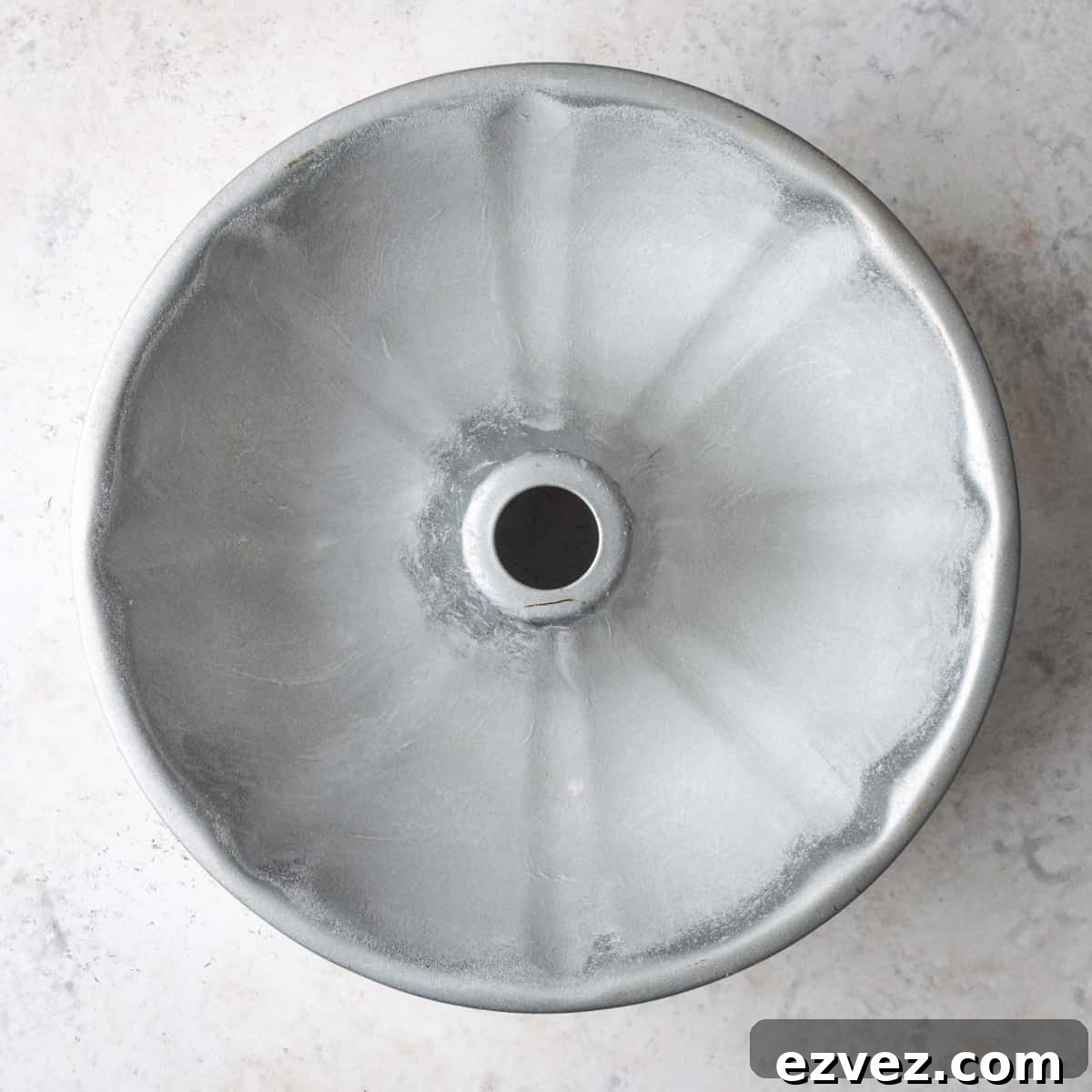
Greasing and flouring is often the best approach for certain cakes, especially those baked in bundt pans.
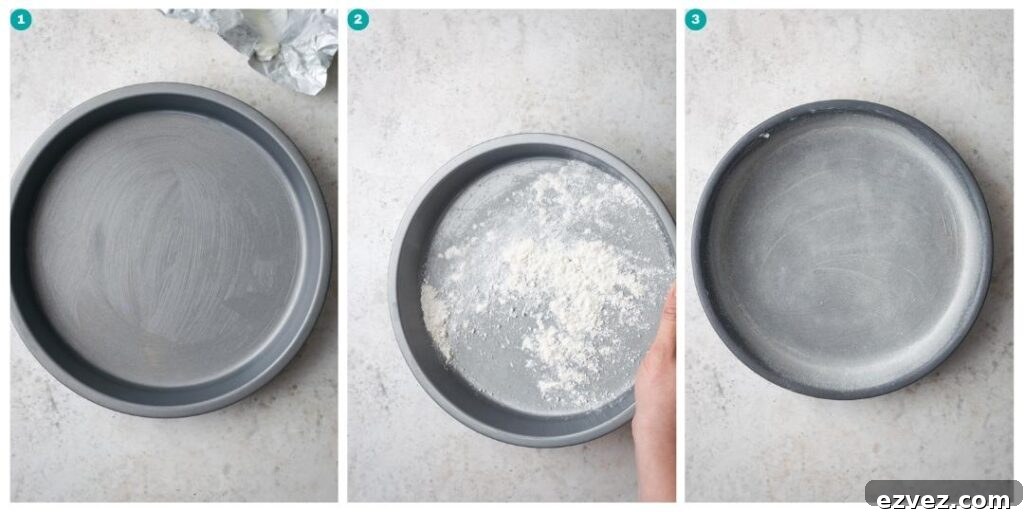
- Grease the pan as described above.
- Spoon about a tablespoon of flour into the pan. All-purpose or a suitable gluten-free flour will work.
- Gently tilt and tap the pan so the flour coats the greased surface. Shake the pan while tapping to distribute the flour evenly.
- Tap the pan on the counter to remove excess flour so only a thin layer remains; this prevents a dusty white finish on the cake exterior.
- Discard any leftover flour.

Baking Tip
For chocolate cakes, use unsweetened cocoa powder instead of flour to avoid pale or white spots on the cake surface.
How to grease a bundt pan
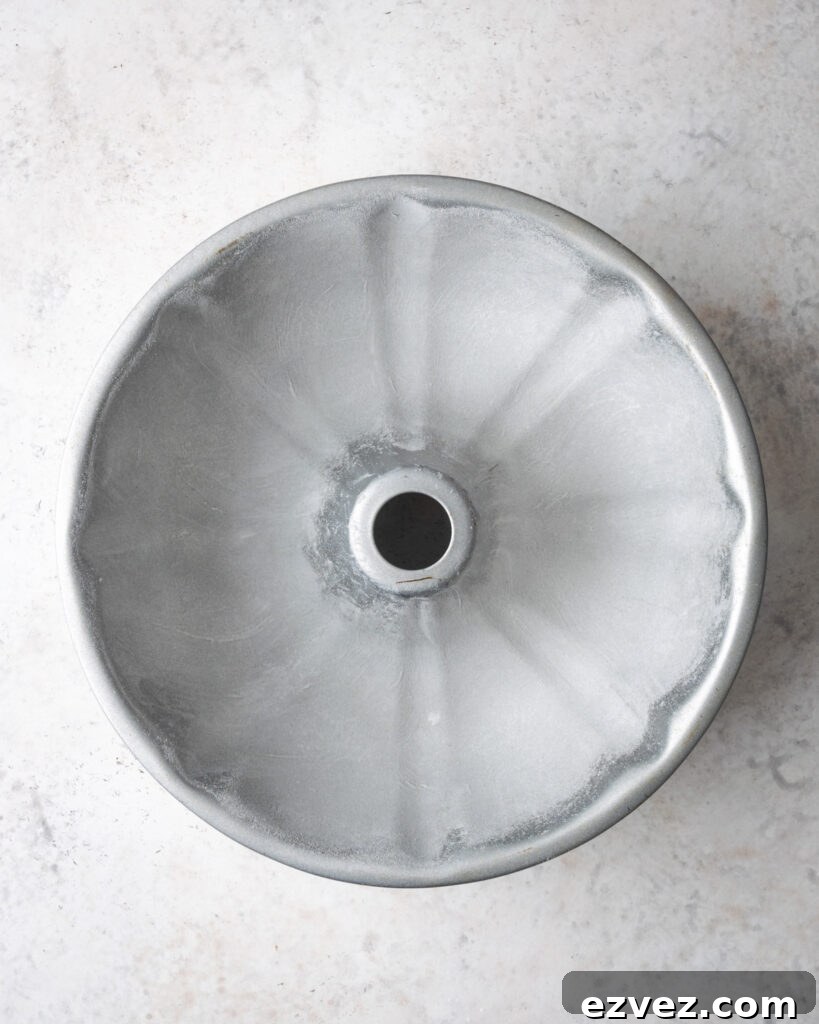
For a simple bundt pan, greasing and flouring as described above usually works well.
For pans with detailed patterns, melt a small amount of shortening and brush it into every crevice with a pastry brush. Chill the pan in the freezer for about 15 minutes so the fat firms up and doesn’t run to the bottom. Once set, dust with flour or cocoa (for chocolate cakes) and tap out excess.
Tips to get the perfect cake
Preparing the pan correctly is the first step, but how you cool and remove the cake matters too.
When to take a cake out of the pan
As the cake nears the end of its bake time, the edges will typically pull away from the pan—this is a good sign. Remove the cake from the oven and set the pan on a cooling rack, keeping the cake in the pan. Let it cool for no more than 15 minutes; the hot cake is fragile, so avoid trying to unmold it immediately.
How to get cake out of the pan
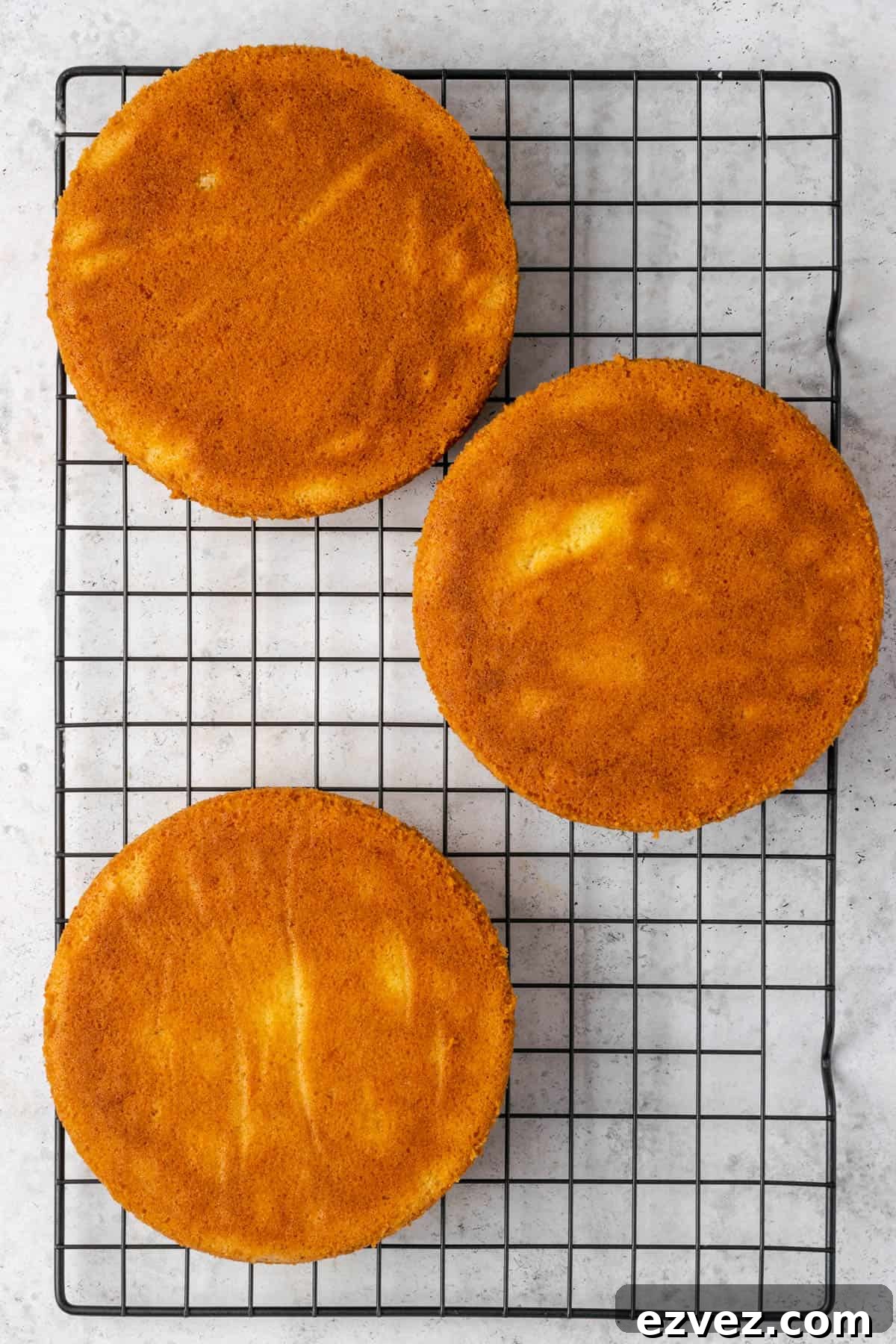
After 15 minutes, loosen the edges with a knife or spatula. For bundt cakes, be sure to loosen around the center tube. Place a wire rack on top of the pan, wear oven mitts or use a towel, and invert both pan and rack together. The cake should release onto the rack.
How to get a stuck cake out of the pan
If the cake doesn’t release right away, gently jiggle the pan. If that doesn’t work, return the pan upright and, while wearing mitts, tilt one side and tap the bottom edge on the counter a few times, rotating and tapping around the pan. Try inverting the pan again. Once released, continue cooling the cake on the rack until it reaches room temperature, usually about an hour.
FAQs
Is it better to grease a pan with butter or oil?
Do you grease the sides of a cake pan?
How do you grease a pan for brownies?
How do you grease a baking sheet?
Here are some cake recipes to test your new skills:
- Gluten Free Strawberry Cupcakes
- Gluten Free Chocolate Cake
- Funfetti Sugar Cookie Cake
- Sour Cream Chocolate Chip Pound Cake