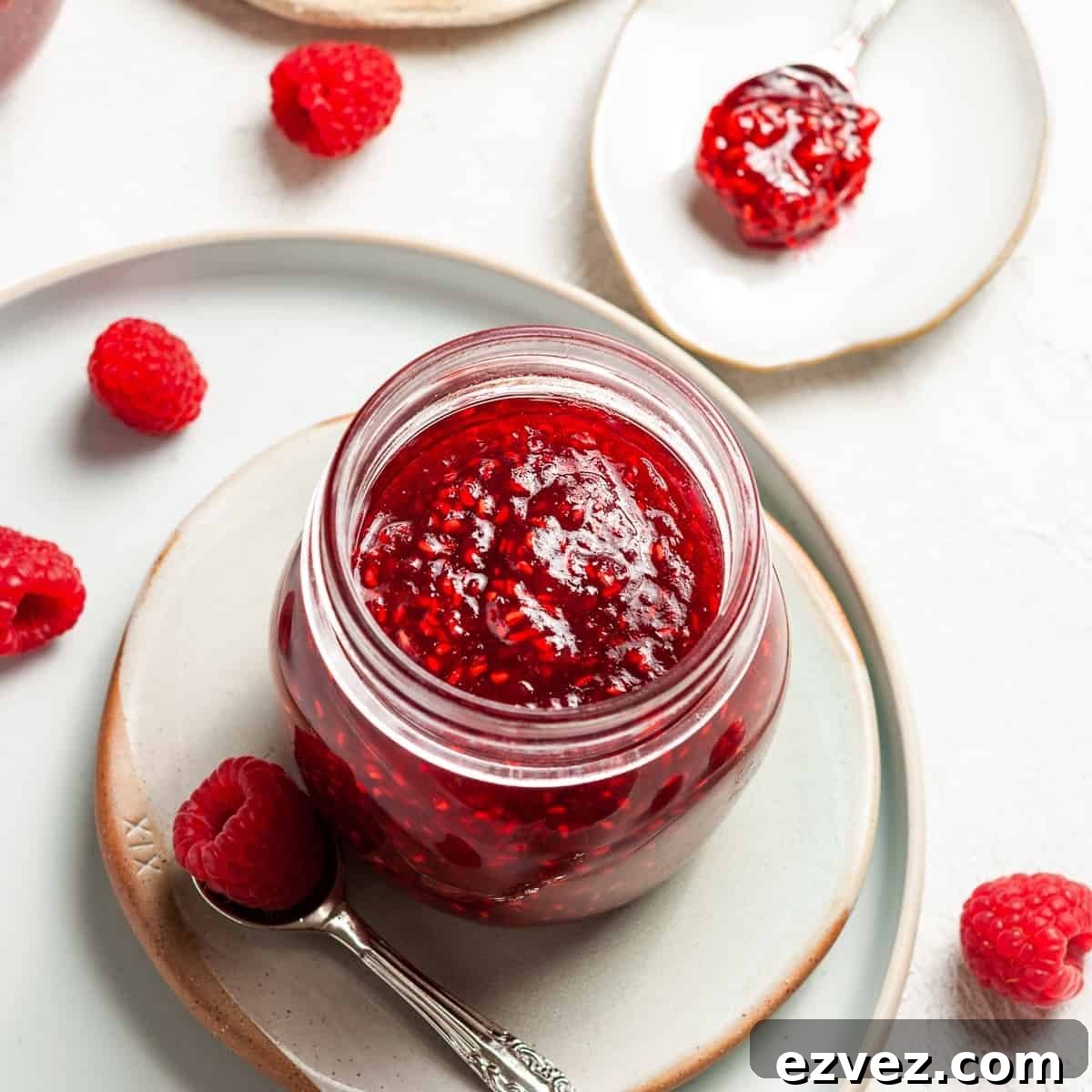
You will love this classic Raspberry Jam recipe made with ripe, aromatic berries at the peak of their season. The bright raspberry flavour is preserved in a simple, three-ingredient jam—no added pectin—so you can enjoy summer’s fruit well beyond its season.
“I had always imagined jam to be difficult, an art from a bygone era. I’m so grateful I found this clear, simple method — my first batch was amazing and delicious!”
– Kylie
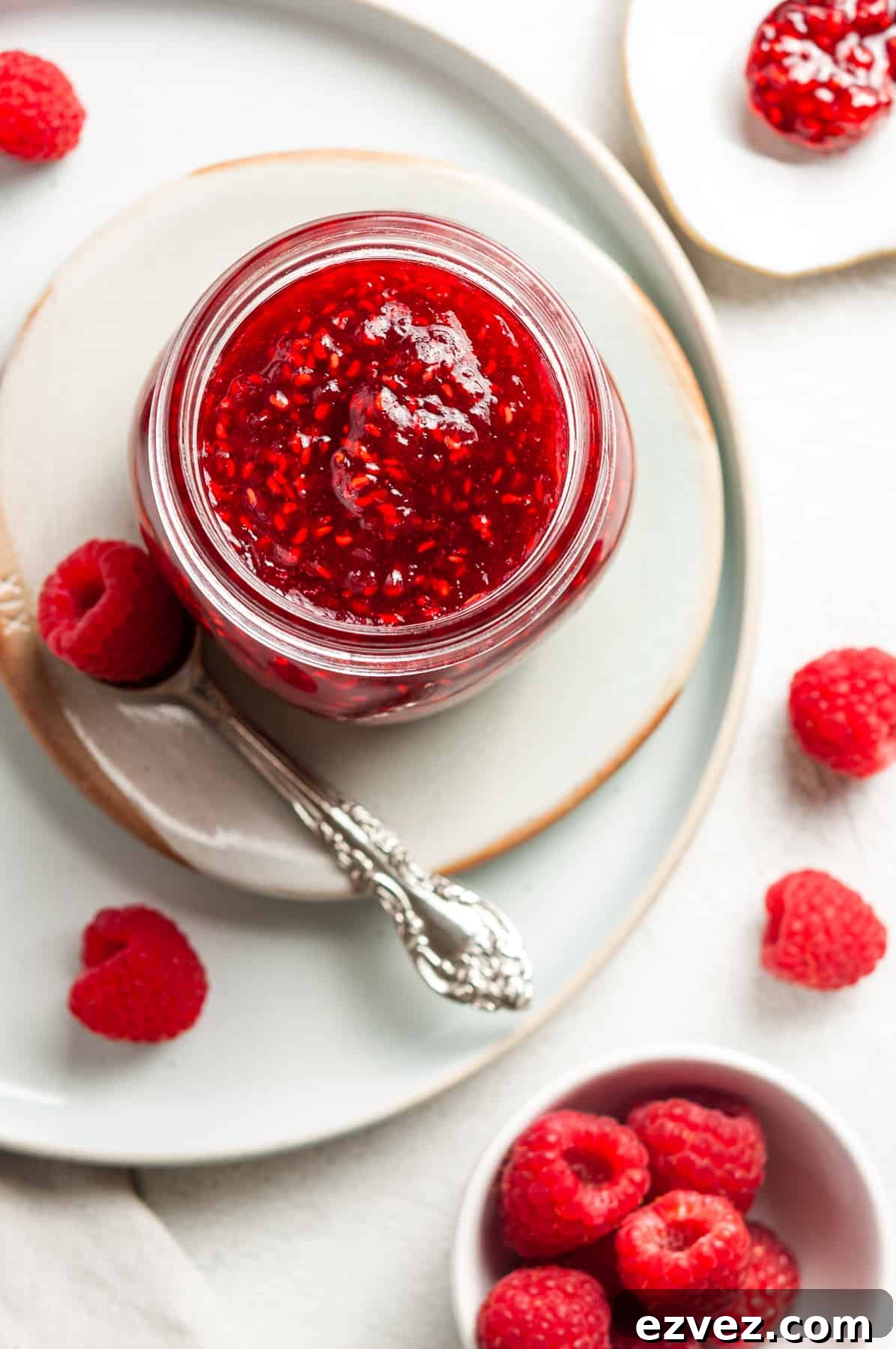
Why you’ll love this recipe:
- Homemade raspberry jam is incredibly easy to make. A few jars in the pantry let you enjoy the taste of summer long after fresh berries are gone. Clear step-by-step instructions make this straightforward for beginners.
- This traditional recipe uses just three ingredients—raspberries, sugar and lemon—so there’s no need for added pectin. It’s a small-batch family recipe passed down through generations.
- Because the batch is small the cooking time is short, helping the jam retain a fresh, vibrant berry flavour.
- Homemade jam tastes far better than most store-bought varieties and contains no artificial additives or preservatives.
- It makes a lovely edible gift—cover the lid with a circle of paper or cloth and tie with a ribbon for an attractive presentation.
Recipe Inspiration: This is the jam my Nanna and Great Aunt Edie made each summer. They taught my mum, and now we make it together every year.
Ingredients and Substitutions:
Please see the recipe card below for exact ingredient quantities and the full method.
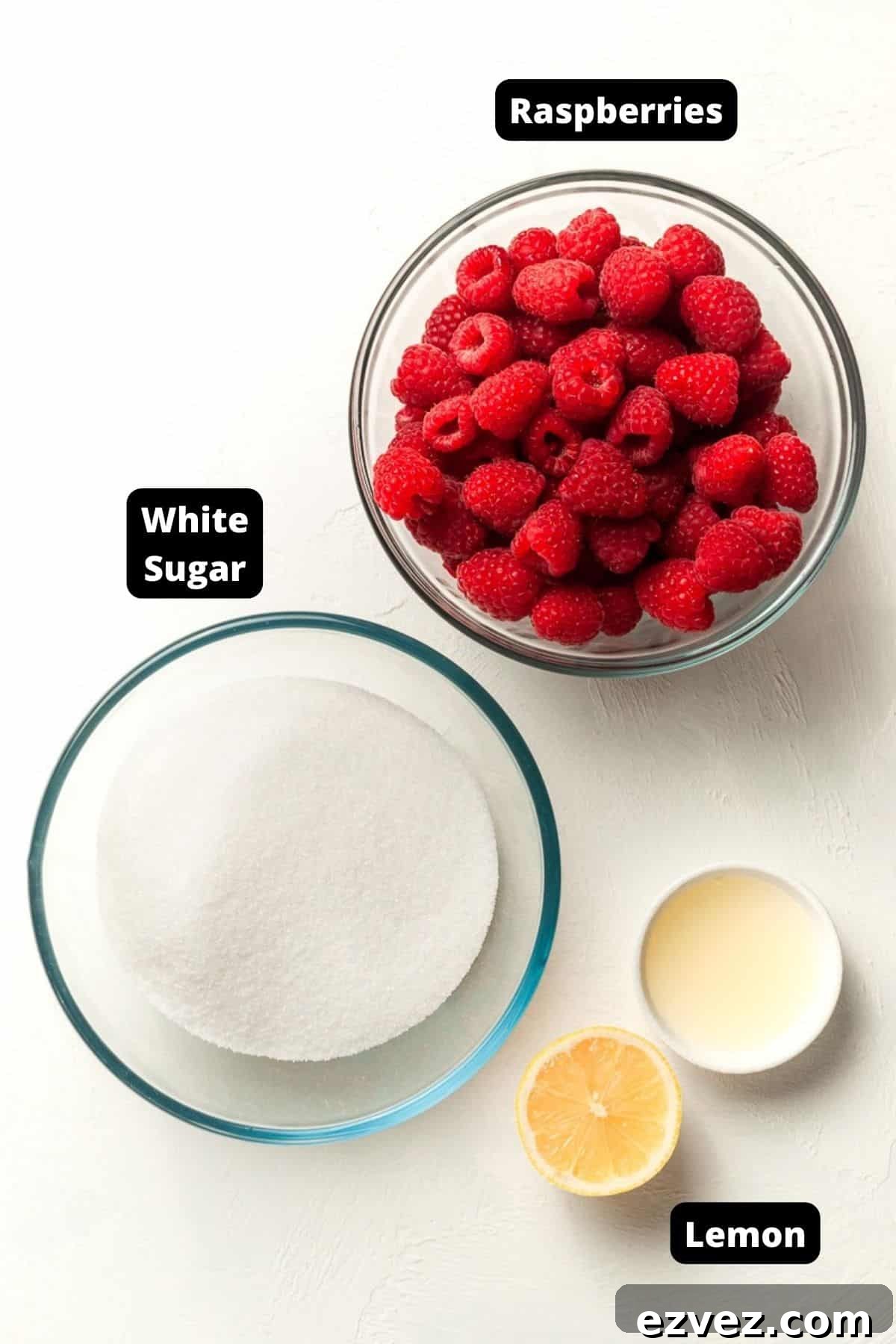
- Fresh raspberries: Use clean, firm berries that are ripe but not overripe or bruised. Raspberries contain natural pectin which helps the jam set; slightly underripe fruit can actually improve setting because it tends to be more acidic.
- Lemon juice: Fresh lemon juice adds acidity and pectin, balances sweetness and helps with setting and preservation.
- Sugar: Regular white granulated sugar sweetens, interacts with acid and pectin to form the gel, and acts as a preservative to keep the jam shelf-stable.
Variations:
Spices: A pinch of ground cinnamon, nutmeg or ginger, or a little vanilla, can add an interesting twist. Adjust to taste; some spices may slightly change the jam’s colour.
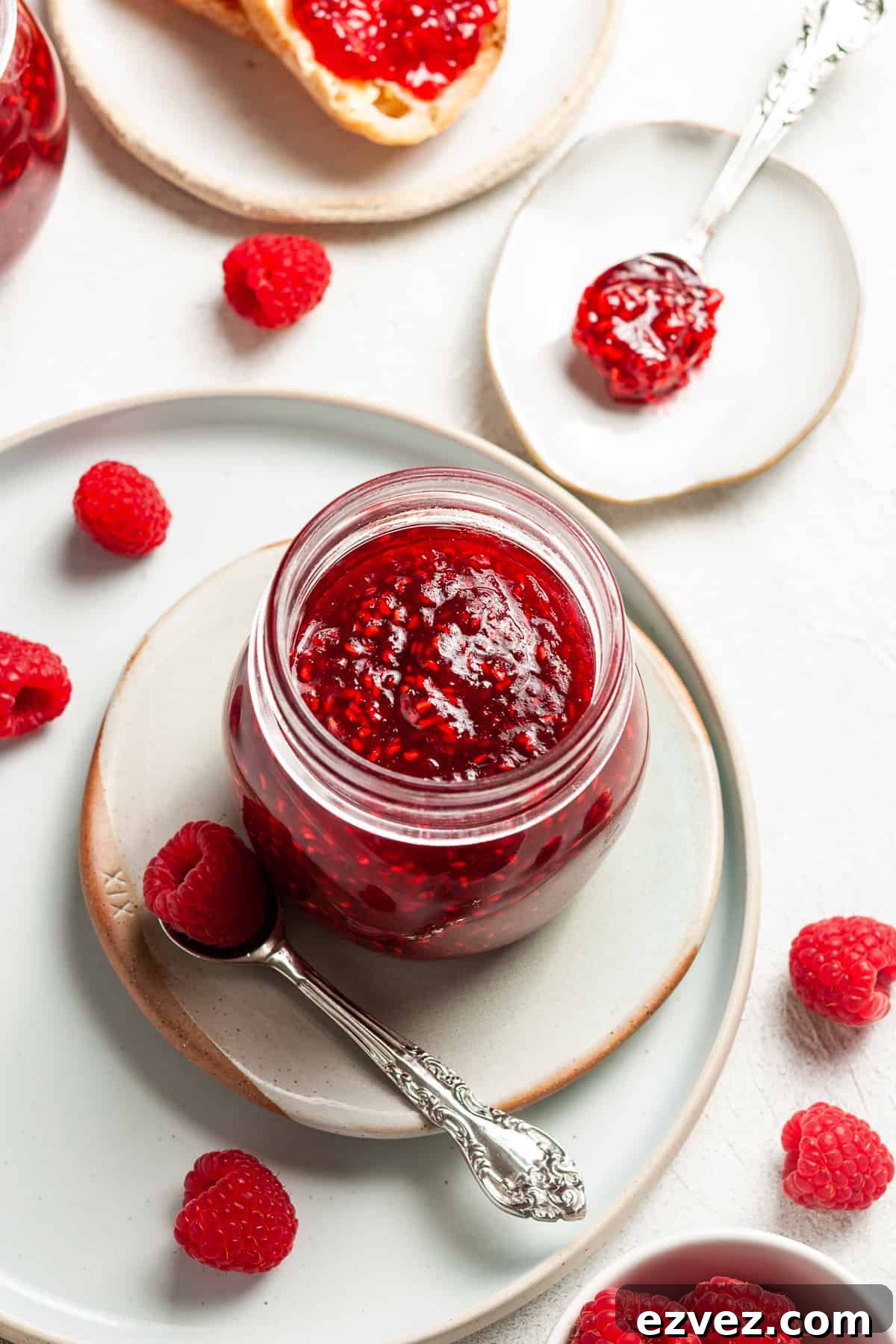
How To Make Raspberry Jam:
Please see the recipe card below for exact quantities and full timings.
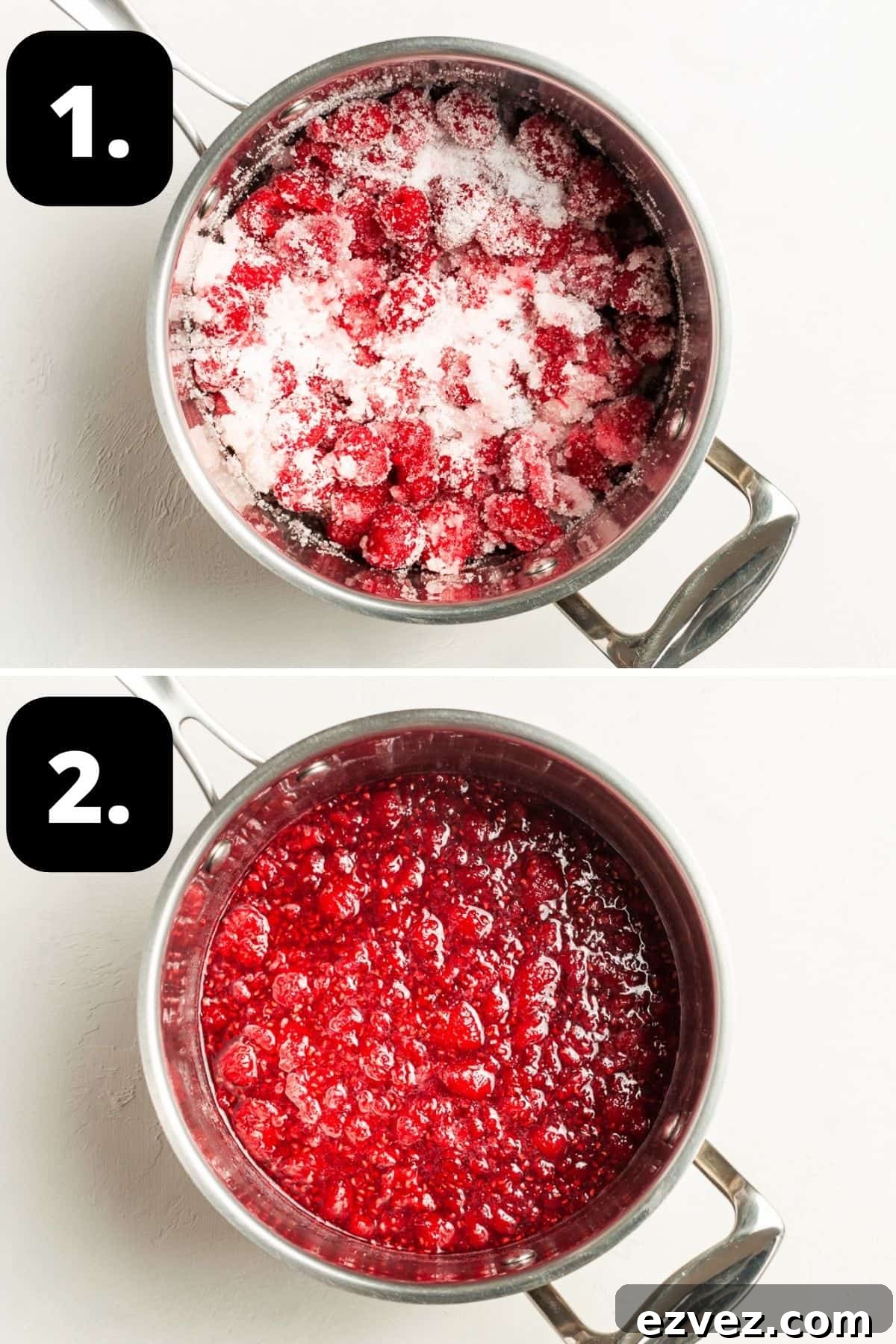
1 – Prepare the fruit:
Place two small saucers in the freezer for setting tests. Gently wash the raspberries, remove any blemishes and drain. Combine the raspberries, sugar and lemon juice in a large saucepan and stir with a long-handled wooden spoon.
2 – Soften the fruit and dissolve the sugar:
Heat gently on low, stirring until the sugar dissolves (about 5–8 minutes). Then increase the heat to reach a rolling boil; the fruit will release juice which helps the sugar incorporate.
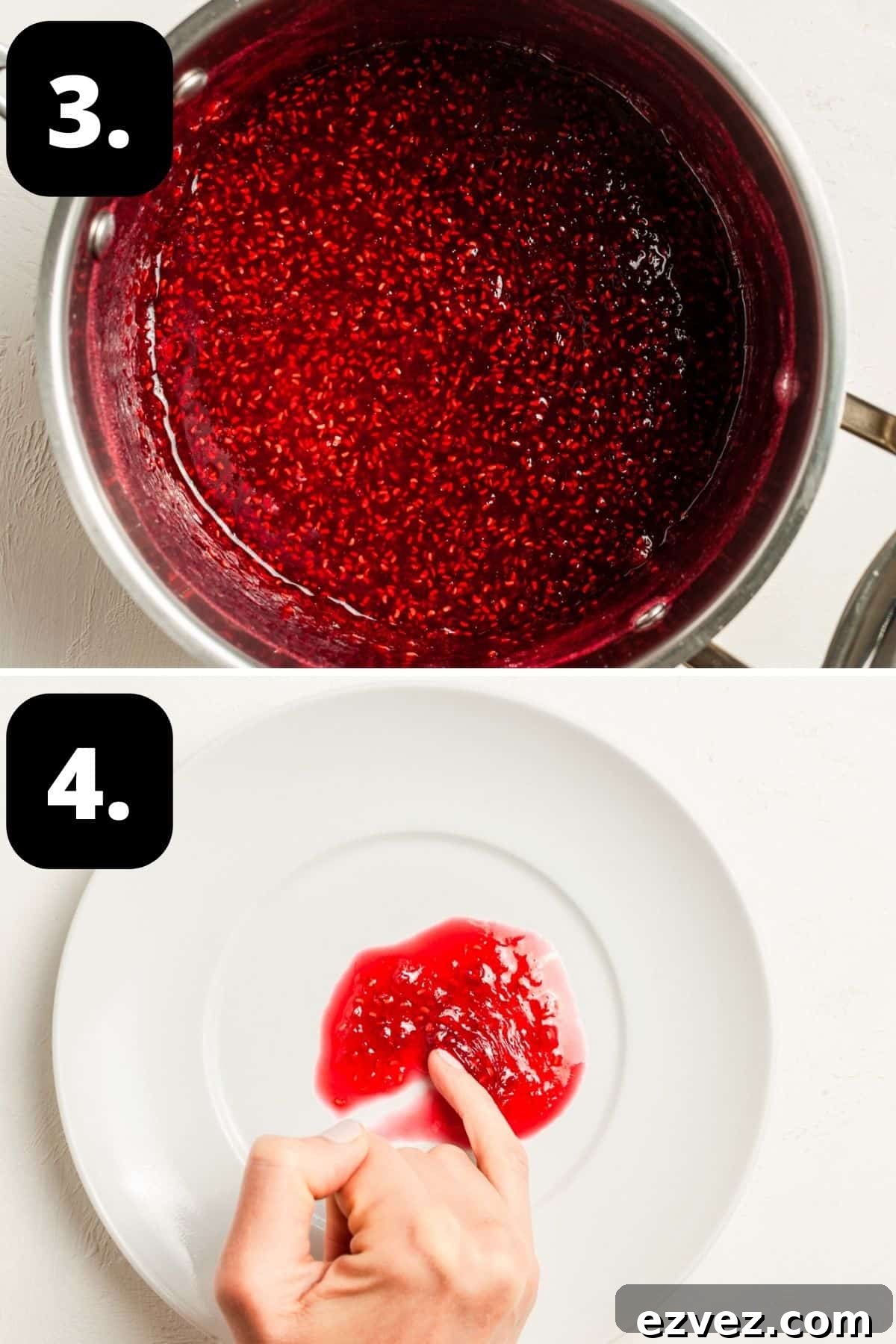
3 – Cook to setting point:
Keep the jam at a steady boil, stirring frequently so it doesn’t stick. After about 8 minutes of vigorous boiling begin testing for set.
4 – Test for setting point:
Turn off the heat and spoon a small amount onto a frozen saucer. Let it cool 30 seconds, then run your finger through it—if the surface wrinkles slightly, it’s ready. If not, return to the heat and test again. Alternatively, use a thermometer: setting point is about 105°C (220°F).
Let the jam rest briefly before jarring.
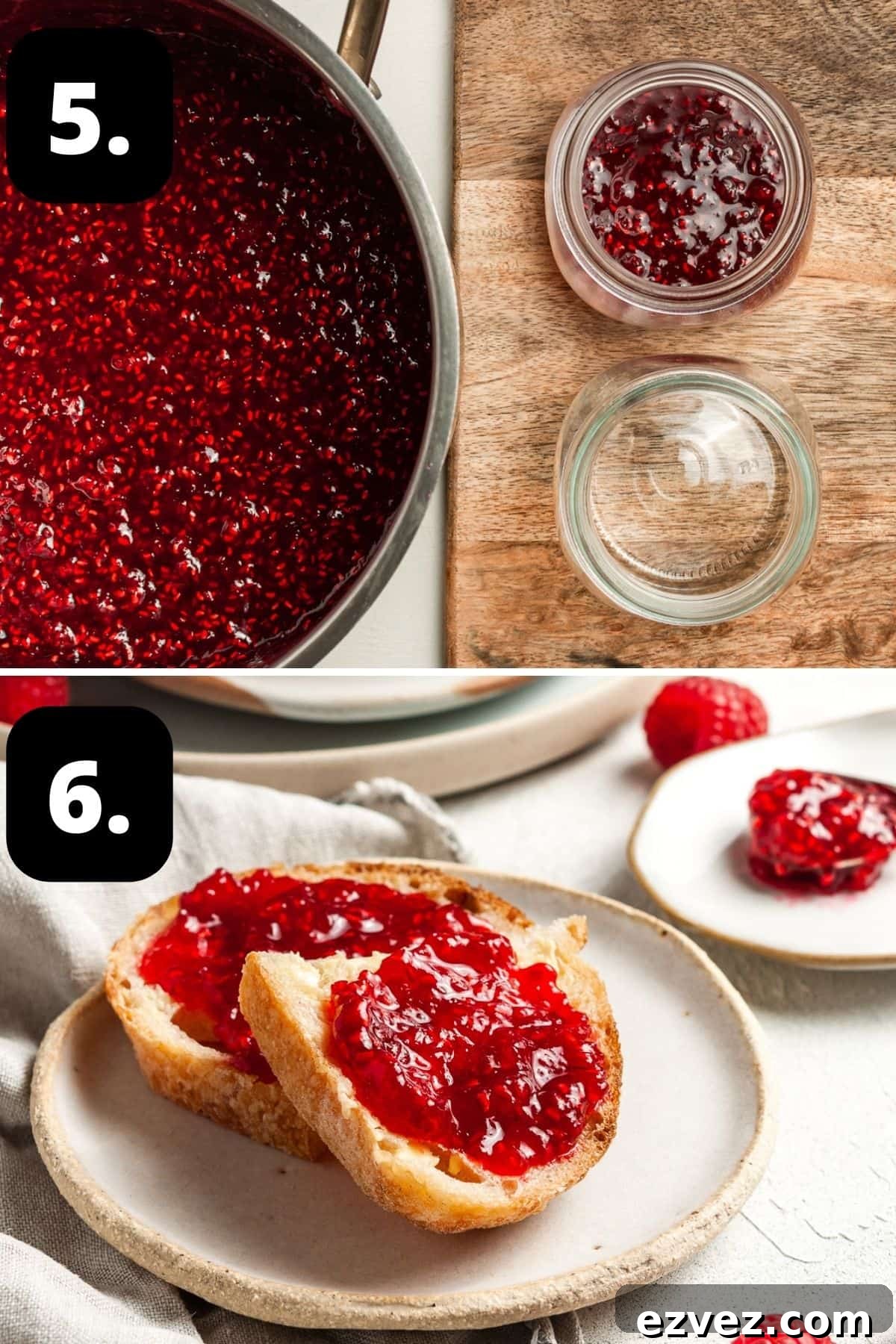
5 – Jar the jam:
Skim any scum from the surface if desired. Ladle hot jam into warmed, sterilised jars, seal immediately and allow to cool at room temperature. Wipe any spills from the jars before storing.
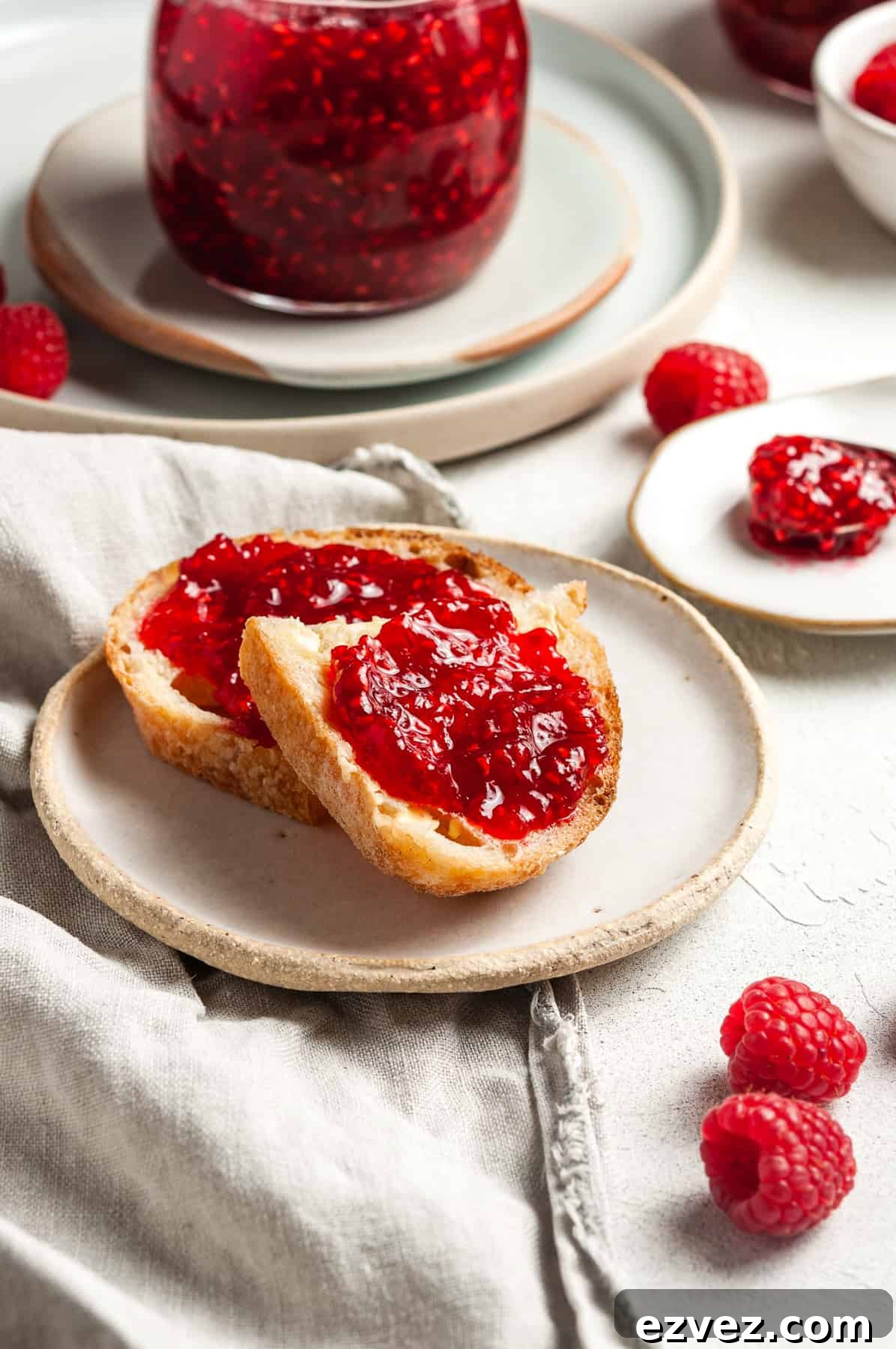
6 – Enjoy:
Serve with toast, scones, yoghurt, pancakes or as a filling for pastries. Once opened, refrigerate and use within 4–6 weeks.
Hint: We recommend using both the chilled plate wrinkle test and a thermometer for reliable results. Exact testing steps are in the recipe card below.
Equipment Needed:
Sterilising jars is essential for safe preserves. Wash jars and lids in hot soapy water and rinse well. Avoid lids with rubber inserts in the oven—air-dry those instead. Preheat the oven to 130°C (270°F) and warm jars for 15–20 minutes; keep them warm until filling.
- Large, wide saucepan (to allow rapid evaporation and reduce the risk of boiling over).
- Long-handled wooden spoon to protect your hands from splashes.
- A candy thermometer (optional) and two small chilled saucers for the wrinkle test.
Avoid aluminium, copper or iron pans as the fruit’s acidity can react with them and alter the taste.
Tips for Success, Storage and FAQs:
When jars are properly sterilised and the recipe is followed, unopened jam is shelf-stable for up to a year in a cool, dark place. After opening, refrigerate and use within 4–6 weeks. Always use a clean spoon.
Sugar is necessary for sweetness, setting and preservation. Reducing sugar can prevent the jam from setting and shorten shelf life.
Lemon provides acidity and pectin that help the jam set and balance sweetness, so it’s not recommended to omit it.
Pectin is a natural gelling agent in fruit. Adding lemon juice boosts pectin and acidity; combined with sugar and heat, it forms the gel that sets jam.
Yes—use good-quality frozen fruit that wasn’t overripe when frozen. There’s no need to thaw; proceed with the recipe and test for set as instructed.
Top Tip
Testing for setting point is crucial. Use both a thermometer (105°C / 220°F) and the chilled plate wrinkle test for the most reliable results.
Serving Suggestions:
Raspberry jam is versatile. Try it on:
- Toast, croissants or morning pastries.
- As a filling for jam bars or pastries.
- With buttermilk scones and cream or drizzled over goat cheese.
- Swirled into plain yoghurt or spooned over oatmeal.
- On pancakes, waffles, or as a tart glaze.
- As a thoughtful homemade gift.
Making jam is a simple, satisfying way to enjoy fruit at its best. I hope you enjoy this small-batch Raspberry Jam as much as we do.
Please let me know in the comments if you try it.
Alex xx
More Delicious Recipes For You To Try:
-
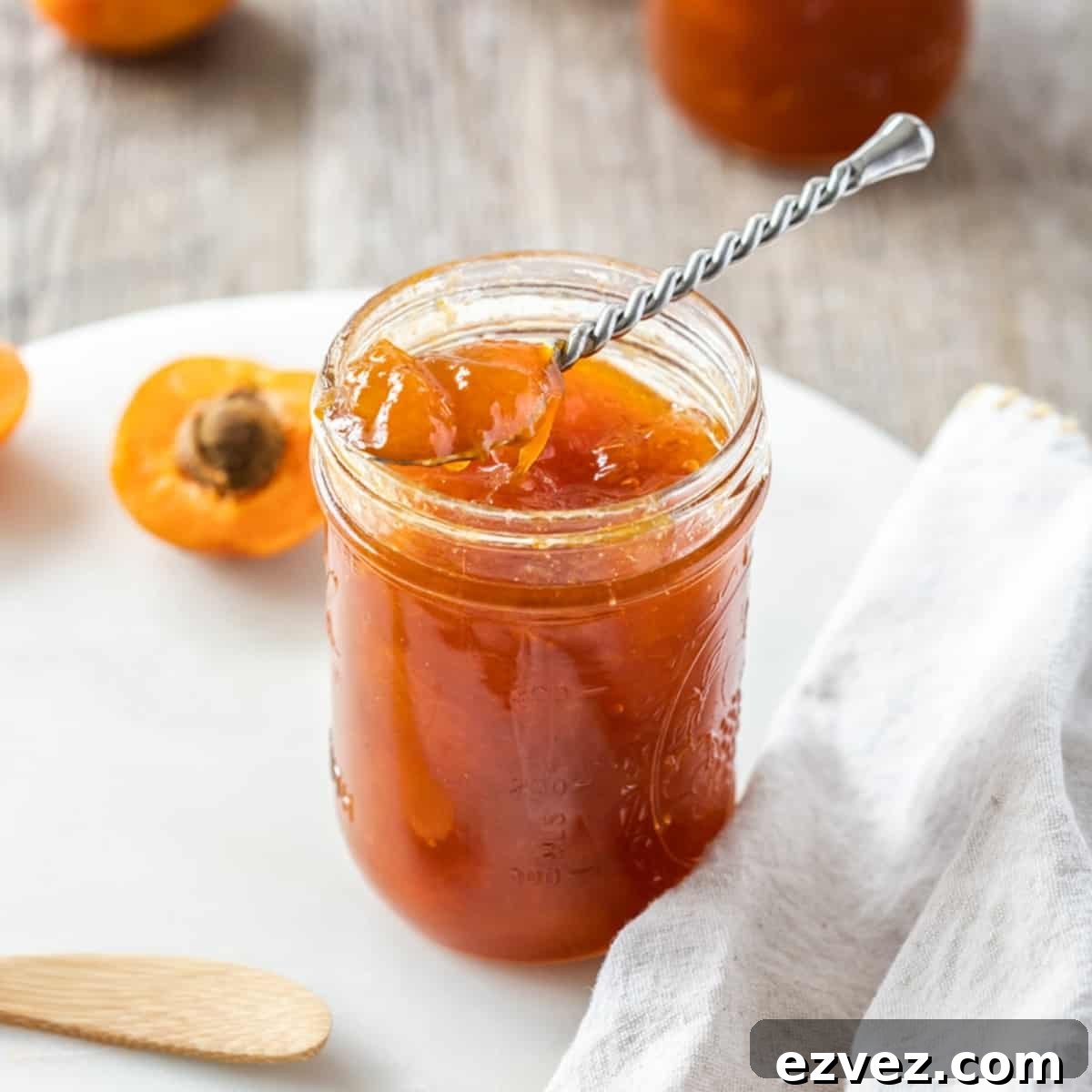
Apricot Jam
-
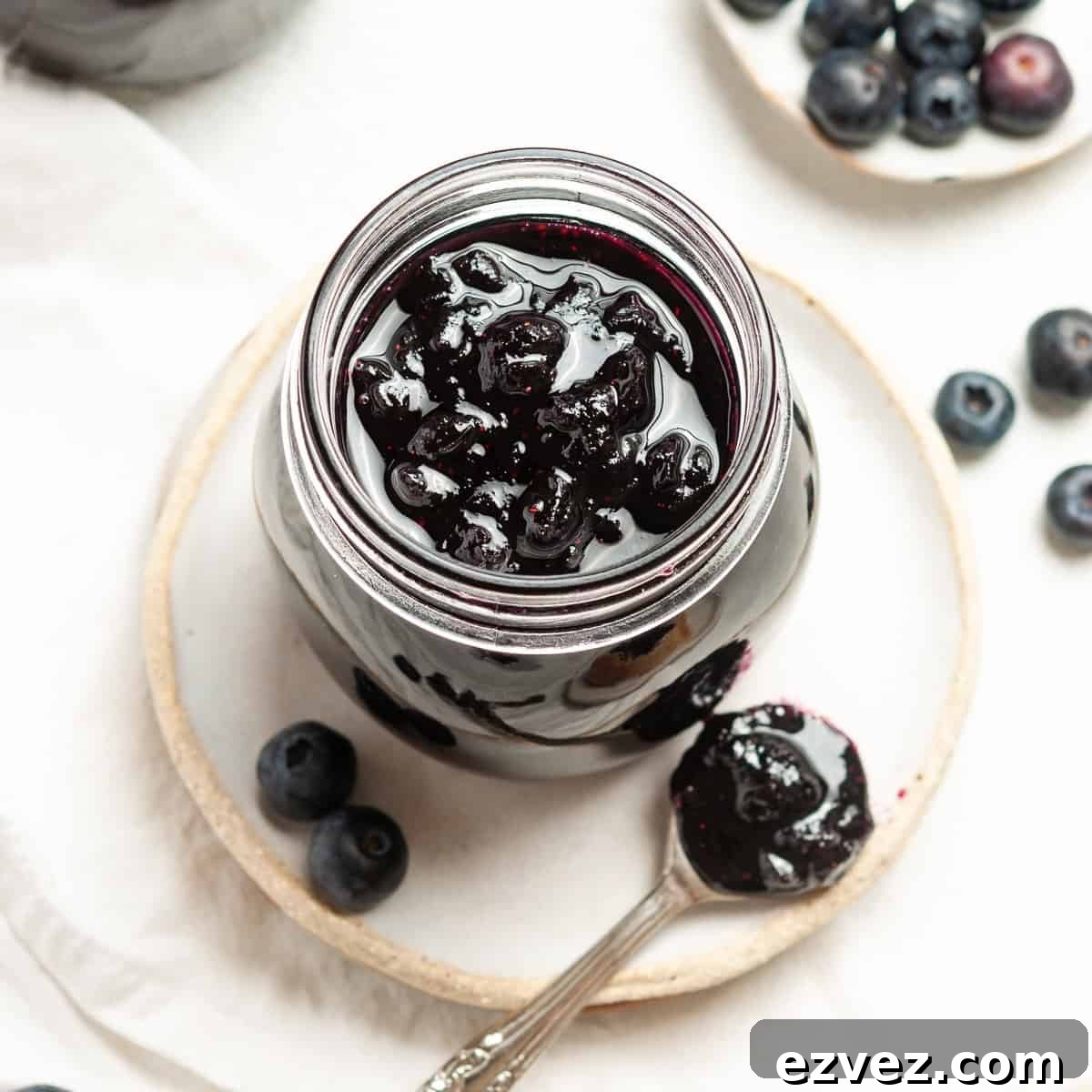
Blueberry Jam
-
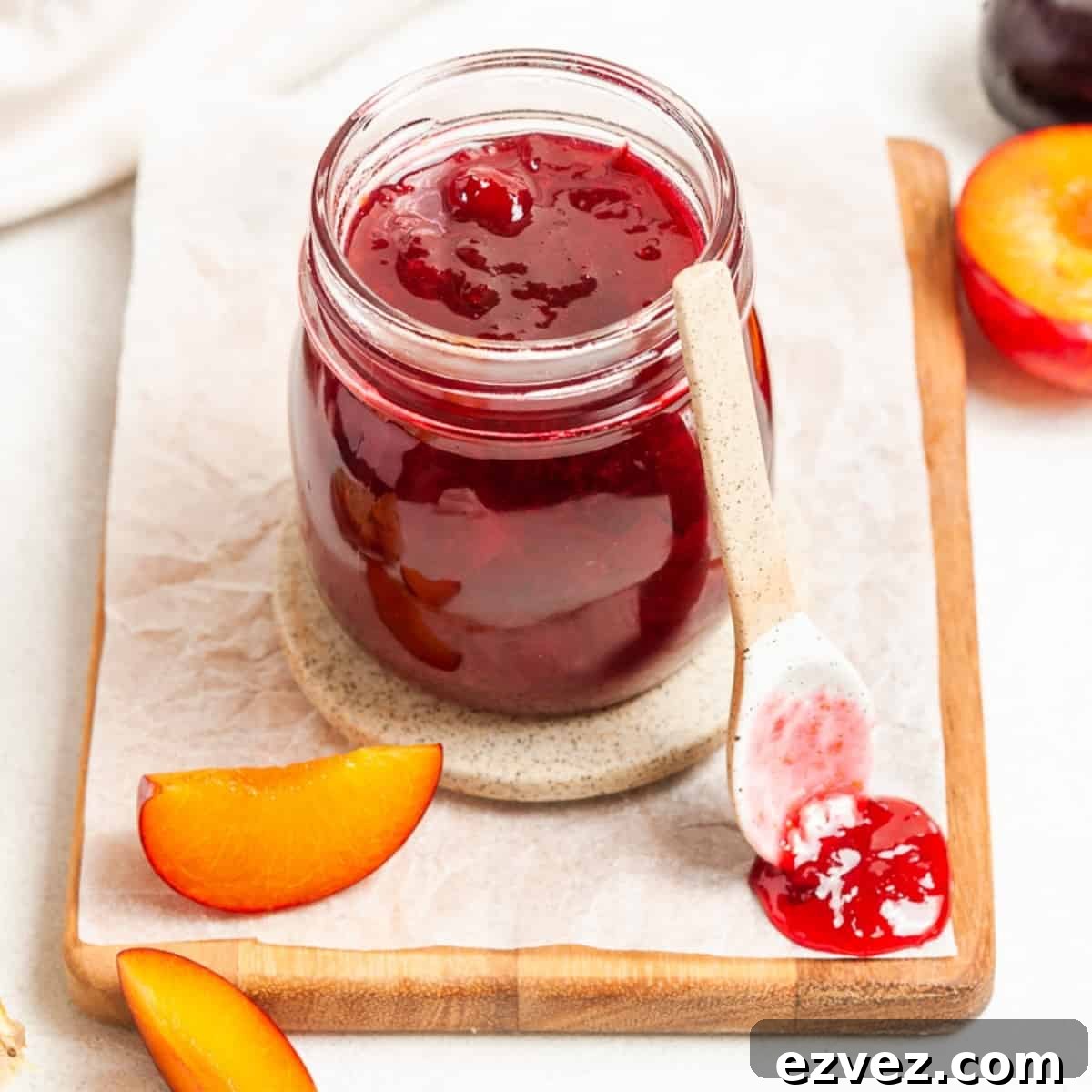
Easy Plum Jam
-
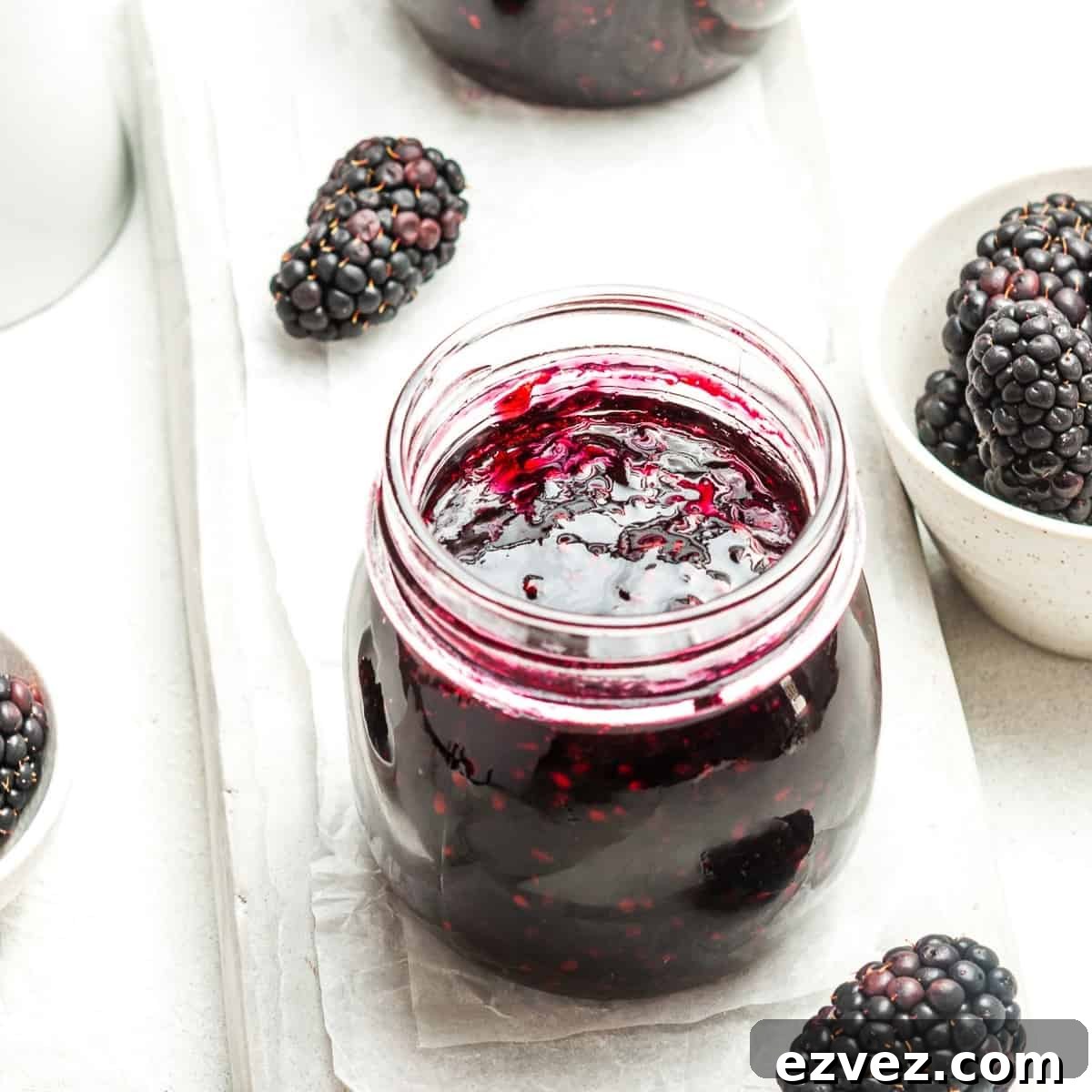
Blackberry Jam
Stay in touch!
Follow on social media and subscribe to the newsletter for more recipes and tips.
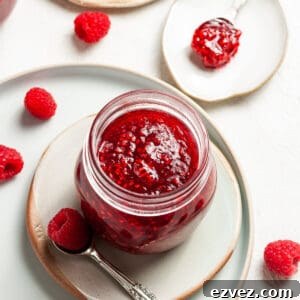
Raspberry Jam
Please note:
For best results weigh ingredients when weights are provided. Oven temperatures refer to fan-forced ovens.
Ingredients
- 500 g (17.5 oz) fresh raspberries
- 450 g (2 cups) white granulated sugar
- 2 tablespoon (40 ml) freshly squeezed lemon juice
Instructions
To Sterilise the Jars:
- Wash jars and lids in hot soapy water and rinse well. If lids have rubber inserts do not put them in the oven; air-dry instead. Preheat the oven to 130°C (270°F) and warm jars for 15–20 minutes; keep them warm until filling.
To make the Raspberry Jam:
- Place two small saucers in the freezer for testing the set.
- Gently wash raspberries and drain. Add raspberries, sugar and lemon juice to a large saucepan and stir with a long-handled wooden spoon.
- Heat on low, stirring until the sugar dissolves (5–8 minutes). Scrape down any sugar on the pan sides.
- Once dissolved, bring to a rolling boil and continue boiling vigorously for about 8 minutes, then begin testing for set. Total boiling time typically ranges 8–15 minutes depending on pan size and heat.
- Turn off the heat and spoon a small amount onto a chilled saucer. Let cool 30 seconds, then run your finger through it—if it wrinkles slightly it’s ready. If not, return to the boil and retest. Alternatively, set is reached at 105°C (220°F).
- Skim any scum from the surface, let the jam sit 5 minutes so the fruit distributes evenly, then carefully ladle into warm sterilised jars. Seal immediately and allow to cool. Store in a cool, dark place.
Notes
- Raspberries: Prepared weight is after removing blemishes. Use fresh, good-quality fruit. Frozen fruit that was frozen fresh can be used without thawing.
- Sugar: Do not reduce the sugar; it helps the jam set and preserves it.
- Lemon juice: Adds acid and pectin and balances sweetness.
- Tablespoon: The recipe uses a 20 ml Australian tablespoon. If using other measures, use 1 tablespoon + 1 teaspoon for each listed tablespoon.
- Sterilising jars: Proper sterilisation reduces the risk of spoilage.
- Chilled plates: Used to test the setting point quickly.
- Saucepan: Use a large, tall saucepan to allow vigorous boiling without boiling over. Avoid reactive metals.
- Wooden spoon: A long-handled wooden spoon keeps your hand clear of hot splashes.
- Setting point: Boiling time varies; my jam reached set about 6 minutes after vigorous boiling began.
- Storage: Properly made and sealed, jam is shelf-stable for up to a year. Refrigerate after opening. This recipe has not been tested with pressure canning methods.
- Nutritional information: Is an estimate based on a whole jar and may vary.
Leave a comment and rating
Nutrition Estimate:
|
Carbohydrates: 180 g
Nutritional Disclaimer:
The nutritional information is an estimate only and is derived from online calculators. For accuracy, calculate nutrition based on the exact ingredients and brands you use.