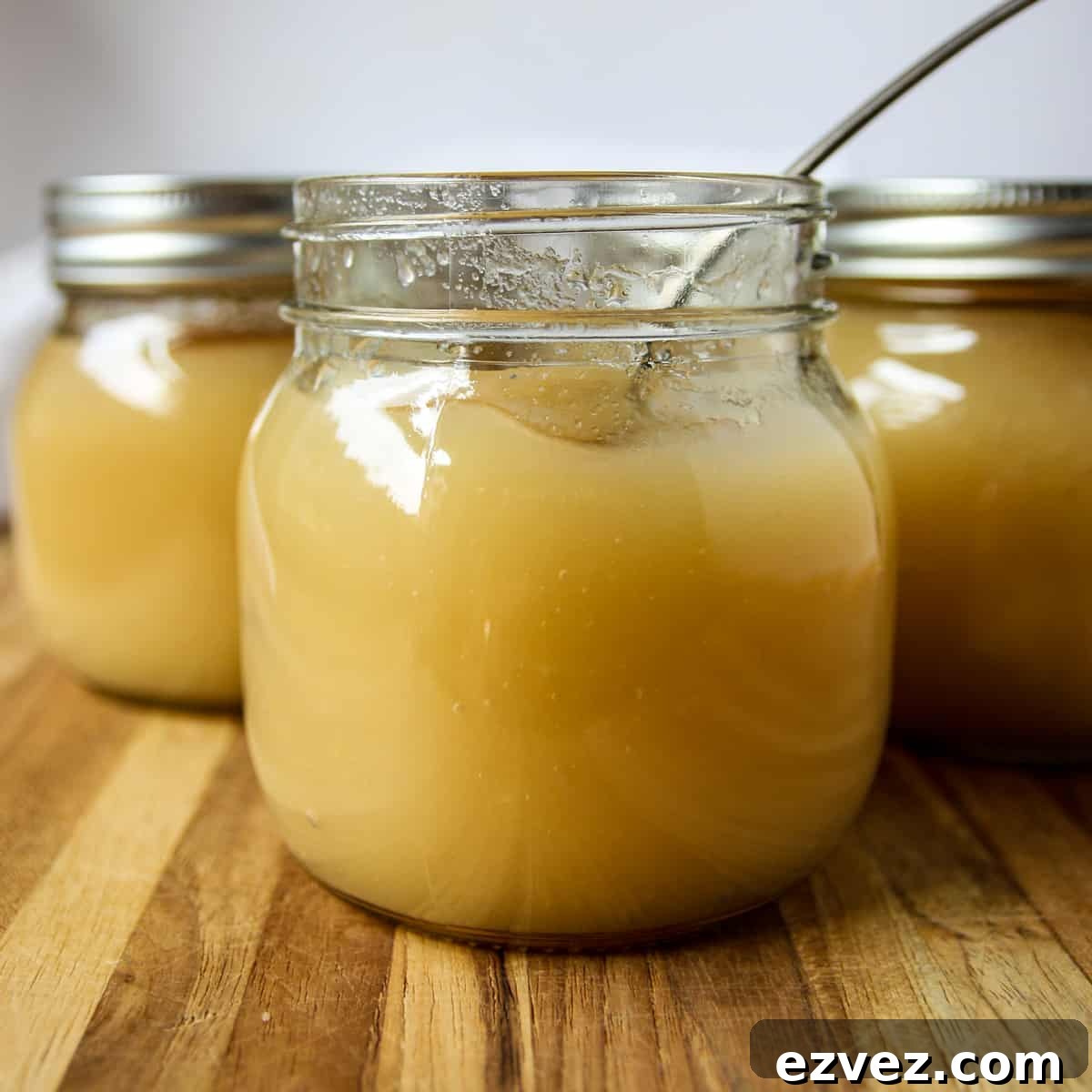
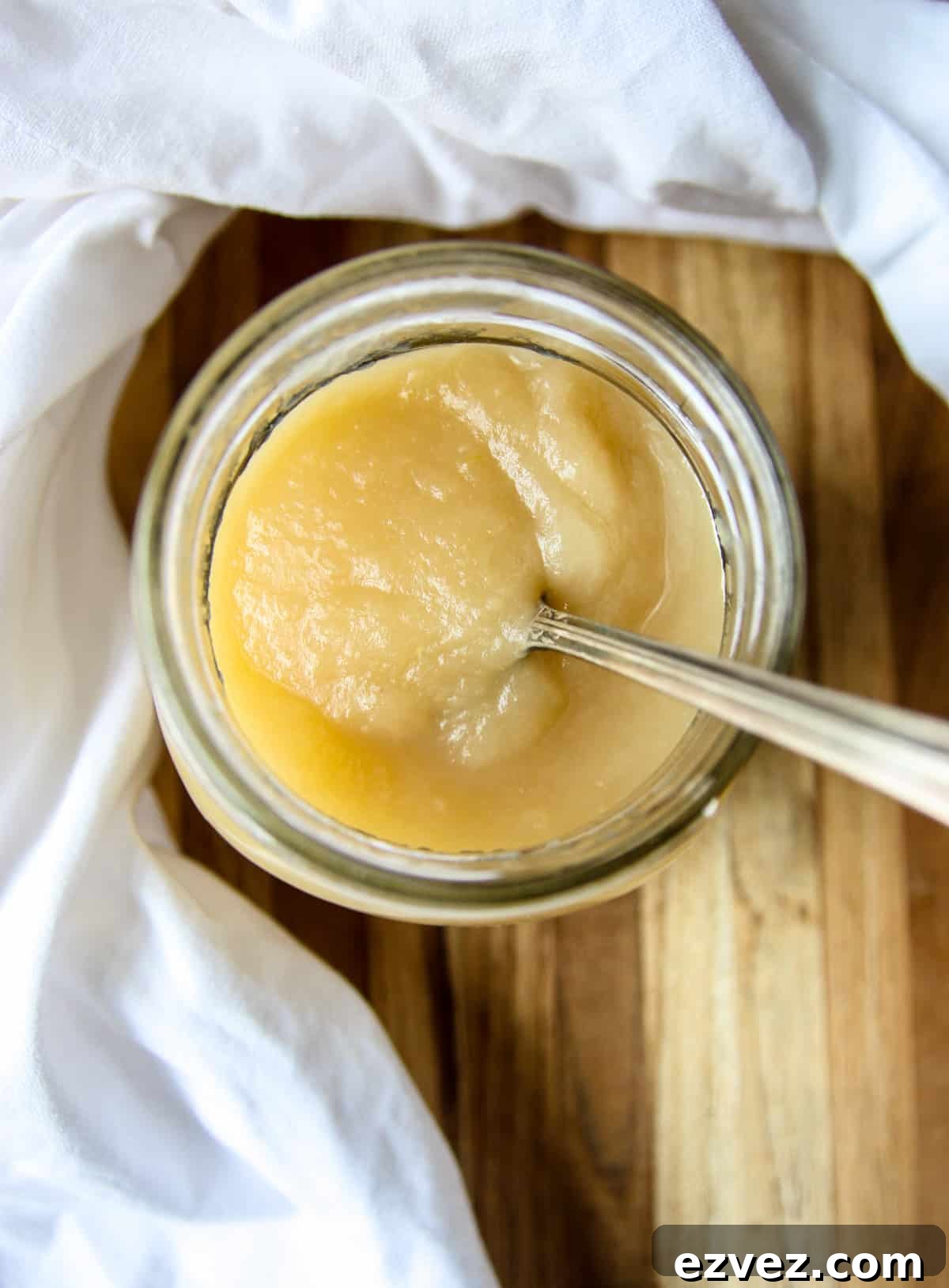
This easy homemade unsweetened applesauce is simple to prepare and relies on just apples and a little lemon juice to prevent browning. Making it without added sugar keeps it versatile—sweeten or spice it later as needed for recipes or serving.
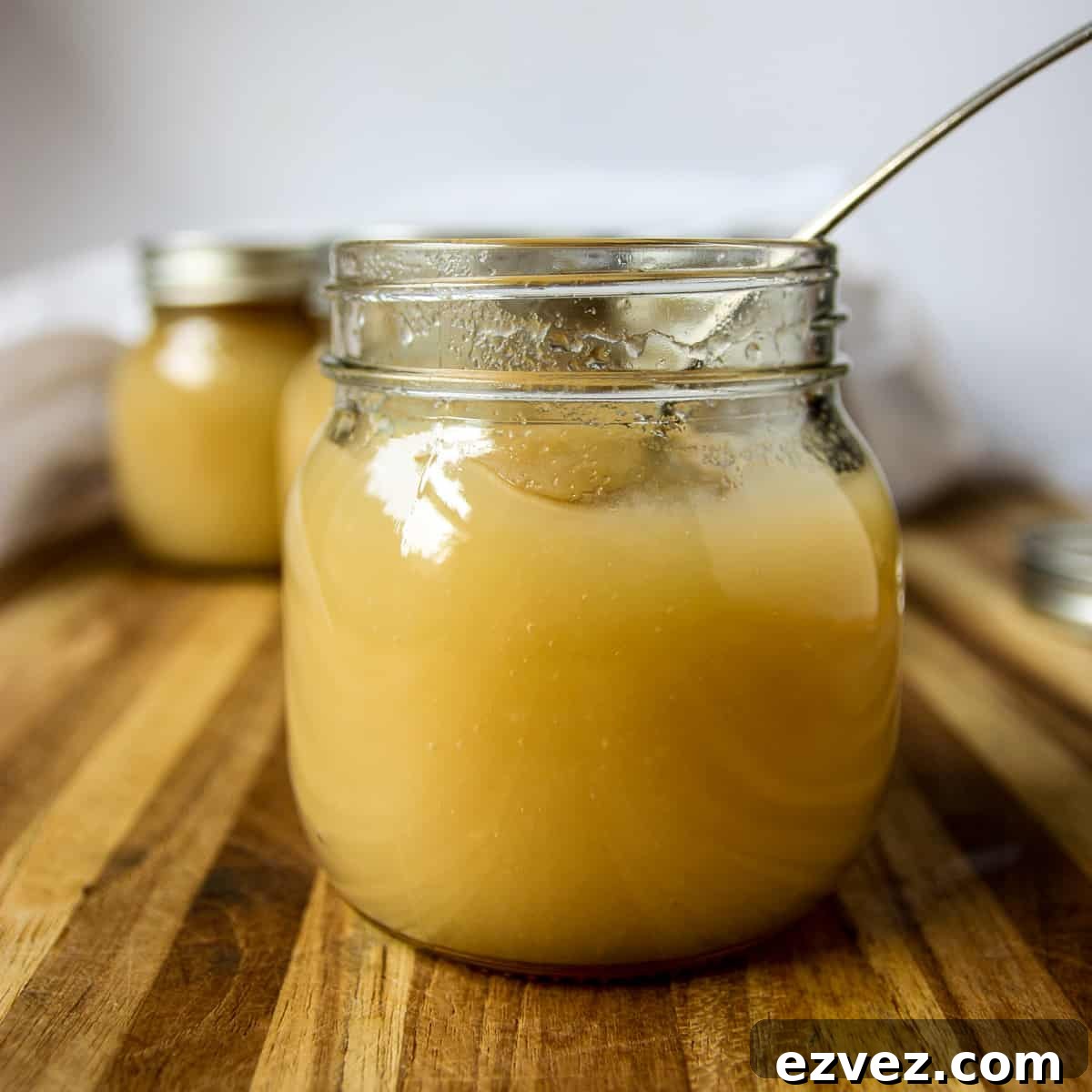
Homemade applesauce is quick to make and, when canned, stores in the pantry for months. It also makes a thoughtful homemade gift, along with other preserves.
Why You’ll Love This Applesauce Recipe
- Beyond a splash of lemon, this unsweetened applesauce contains only apples.
- It’s a refined-sugar-free applesauce, so it’s a healthier alternative to many store-bought varieties.
- Super easy to make—minimal hands-on time.
- When properly canned, it will keep in the pantry for up to a year.
- Handy in the kitchen: use it for baking, as a snack, stirred into oatmeal or yogurt, or as a topping for pancakes and ice cream. It’s also a classic pairing with pork chops or roasted pork.
- Great for babies and children, since it’s free of added sugars.
- Once you make this, you may prefer it over store-bought applesauce.
Ingredient Notes
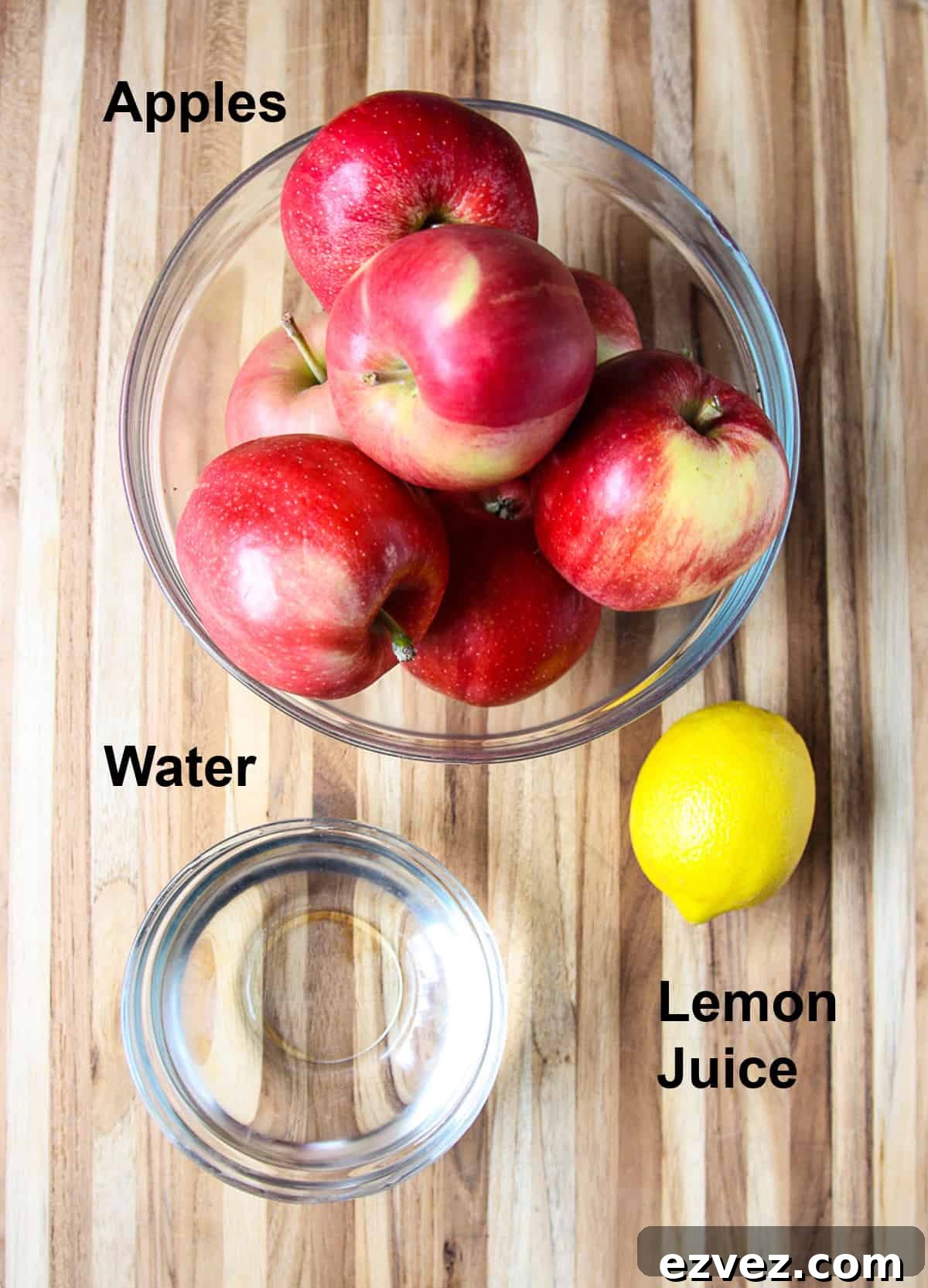
Apples — Because this recipe has no added sugar, using naturally sweet apples can improve the flavor. Good sweet varieties include:
Sweet Apple Varieties
- Ambrosia
- Honeycrisp
- Golden Delicious
- Red Delicious
- Crispin
- Fuji
Mixing sweet and tart apples yields more complex flavor. Tart options to combine with sweeter apples:
Tart Apple Varieties
- Granny Smith
- Pink Lady
- Gravenstein
- Cortland
- Macintosh
Use apples at peak ripeness and avoid bruised or overly soft fruit—the quality of the apples directly affects the taste of the sauce.
How To Make Applesauce Step by Step
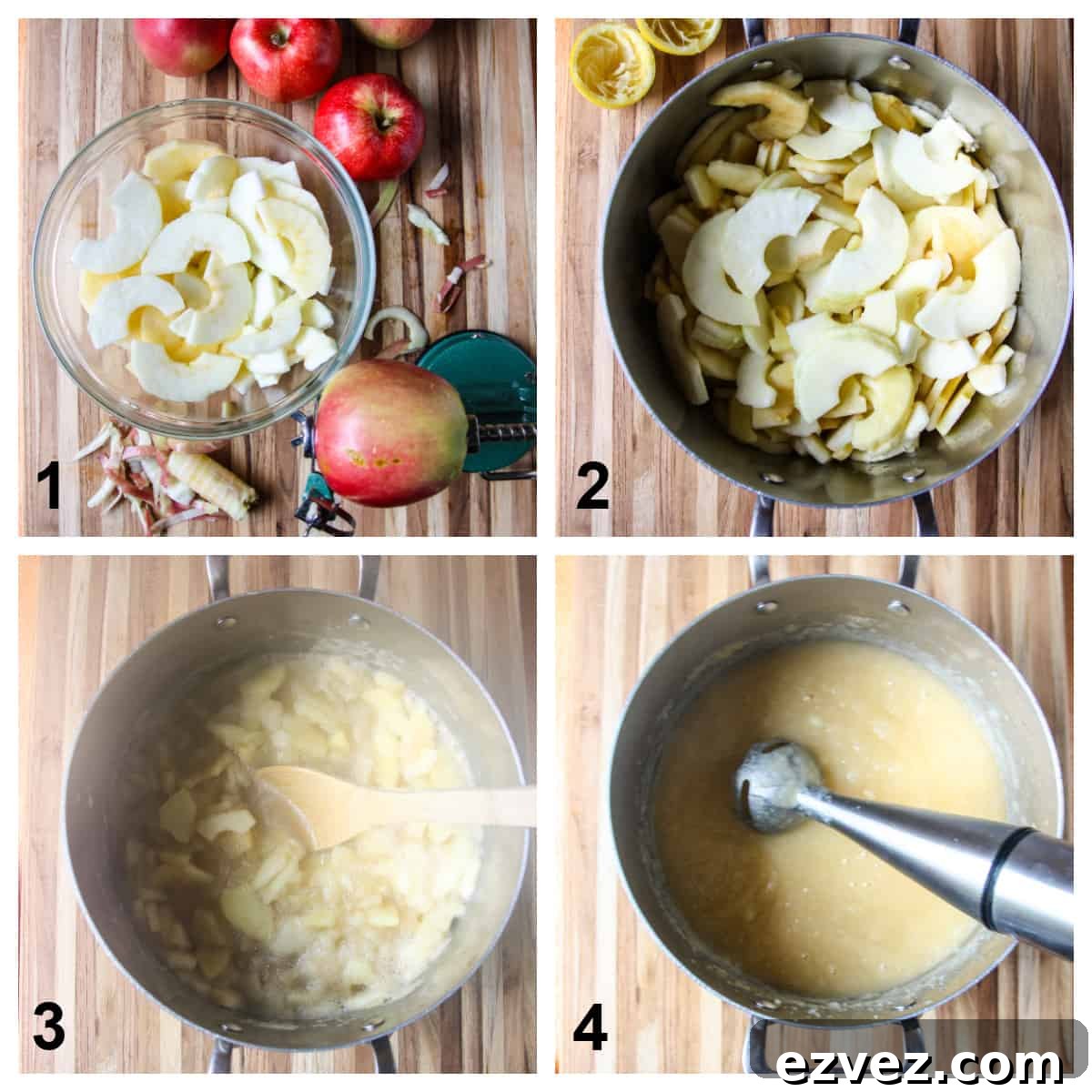
- Peel, core and slice (or chop) the apples.
- Place the apple pieces in a large, deep pot and toss with the lemon juice. Add the water.
- Bring to a boil over high heat, stirring to prevent sticking.
- Reduce heat to medium and cook, stirring occasionally, until apples are soft—about 10 minutes, depending on piece size.
- Puree the cooked apples with an immersion blender until smooth, or leave coarser for a chunkier texture.
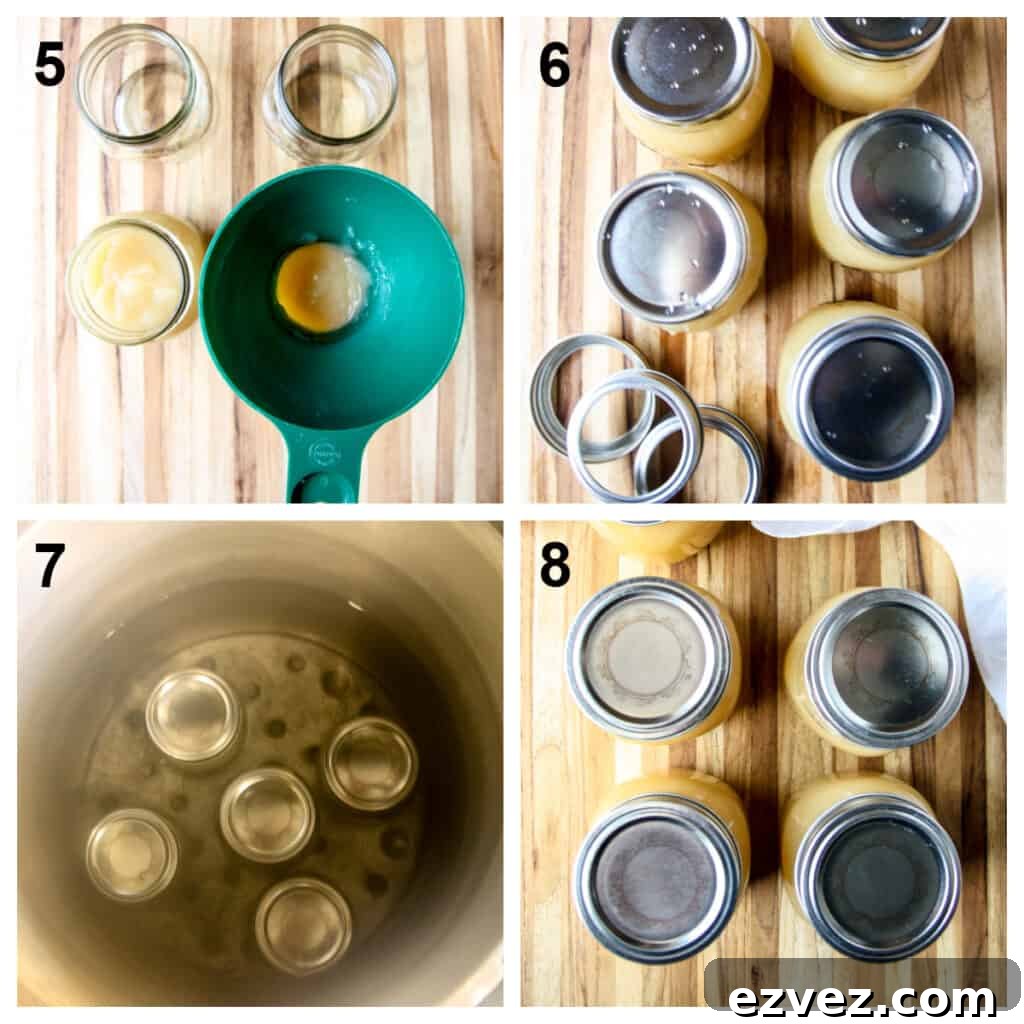
- Keep the sauce at a gentle boil while ladling it into hot, sterilized jars, leaving ½ inch headspace.
- Wipe jar rims with a damp cloth, apply lids and bands, and process in a boiling-water canner for 20 minutes.
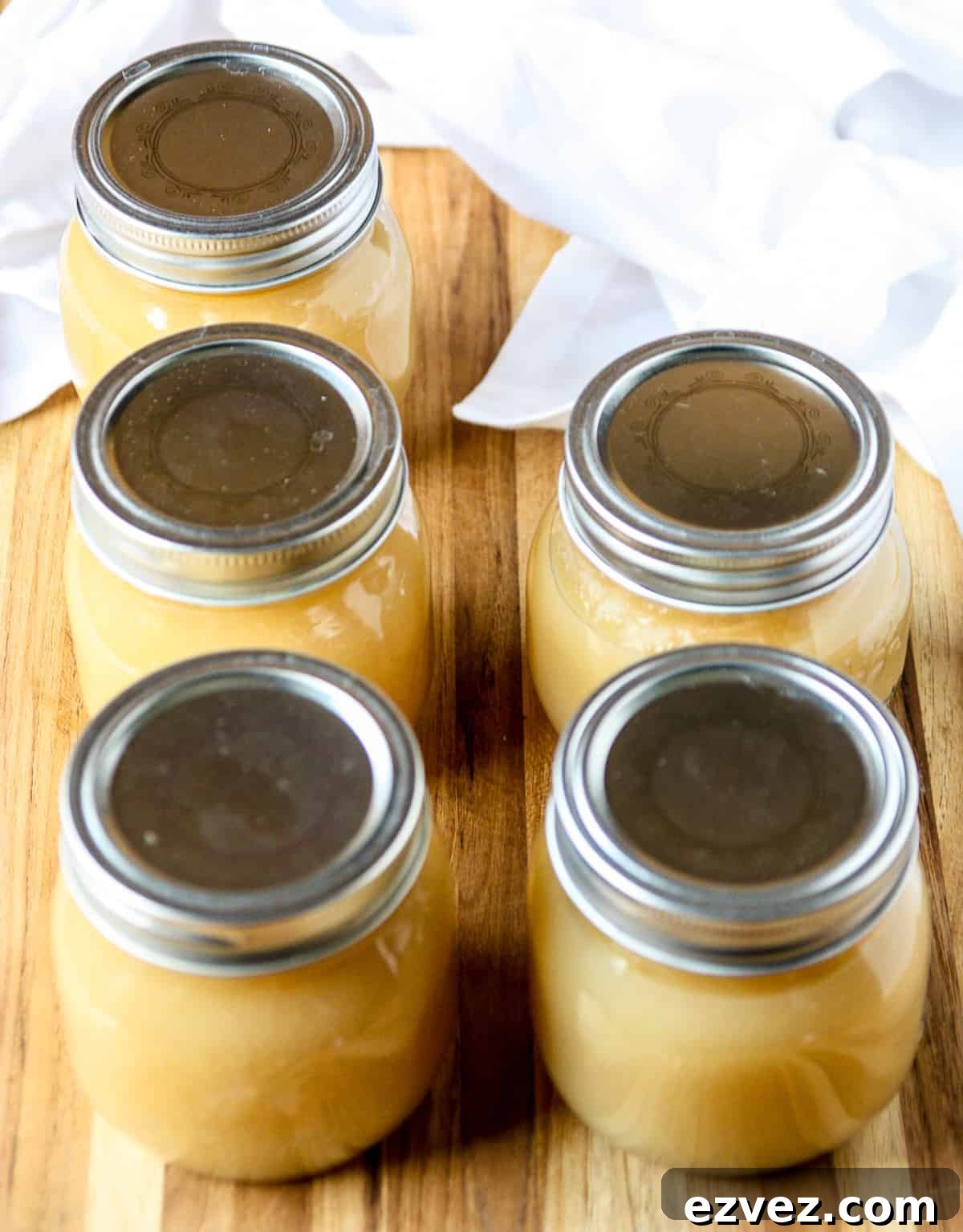
- Allow jars to cool undisturbed. Confirm lids have sealed (centers should be concave and not move when pressed). Label with the date and store in a cool, dark place.
Tips for Canning Applesauce
- Jars and bands can be reused, but always use new lids when processing.
- Inspect jars for chips or cracks and do not use damaged jars.
- Sterilize empty jars by simmering them in the canner for ten minutes before filling.
- Cooking time varies with apple piece size—larger pieces need longer to soften.
- Use a canning funnel to reduce spills when filling jars, and leave ½ inch headspace.
- Wipe rims clean with a damp cloth before applying lids to ensure a good seal.
Applesauce Canning FAQs
No. Leaving the peels on adds nutrients and texture, though the sauce will be chunkier. For a smooth puree preferred in baking, peel the apples.
Browning (oxidation) happens when cut apple surfaces contact air. Toss slices with lemon juice as you cut them or add the juice to the pot to slow oxidation.
Yes. Overcooking can diminish flavor. Cook until apples are just fork-tender.
After cooling you will often hear a pop as lids seal. Press the center of the lid—if it stays concave and does not move, it is sealed.
If a jar fails to seal, refrigerate and use the applesauce within 5–7 days or reprocess using a new lid.
Serving Suggestions
Serve it as a snack, spoon it over yogurt or oatmeal, spread it on pancakes, or pair it with pork dishes. It’s also a reliable ingredient in many baked goods.
Variations
- Change the fruit: Use pears or a mix of apples and pears.
- Spice it: Add cinnamon, nutmeg, ginger or cardamom for warm flavor.
- Sweeten if desired: If you prefer a sweet applesauce, add sugar in ¼-cup increments after pureeing and bring back to a boil, tasting until you reach the desired sweetness.
- Chunky texture: For chunky applesauce, coarsely crush half the cooked apples and puree the other half before combining.
Equipment
- Apple peeler/corer/slicer (optional, speeds prep)
- Citrus juicer for extracting lemon juice
- Immersion blender (for easy pureeing) or a countertop blender/food processor
- Canning supplies: canning funnel, jar lifter, rack and a large pot or water bath canner
- Half-pint jars with bands and new lids for processing
Recipe
Homemade Unsweetened Applesauce Recipe
Ingredients
- 6 pounds fresh apples (about 12 large apples), peeled, cored and sliced or chopped
- Juice of one lemon
- 1 cup water
Instructions
- Peel, core and slice or chop the apples.
- Place the apple pieces in a large, deep pot and toss with lemon juice.
- Add the water.
- Over high heat, bring to a boil, stirring to prevent scorching.
- Reduce heat to medium and cook, stirring occasionally, until apples are soft—about 10 minutes.
- Puree the apples with an immersion blender until smooth.
- Keep sauce at a gentle boil while ladling into hot, sterilized jars, leaving ½ inch headspace.
- Wipe jar rims with a damp paper towel, apply lids and bands, and process jars in a boiling-water canner for 20 minutes.
- Allow jars to cool, check that lids are sealed, and store in the pantry until ready to use.
Notes
Check jars for chips or cracks and discard any that are damaged.
Sterilize empty jars for ten minutes in the water bath canner before filling.
Cooking time depends on apple piece size—larger pieces take longer to soften.
Use a canning funnel to fill jars and leave ½ inch headspace.
If you don’t have an immersion blender, puree cooked apples in batches in a countertop blender or food processor, return to the pot and bring to a gentle boil before canning.
To add warm spice, simmer a cinnamon stick with the apples and remove it before transferring the sauce to jars.
Substitute apple juice or cider for the water for deeper apple flavor.
If you prefer not to can, the applesauce will keep in the refrigerator about a week or can be frozen.
To sweeten, add sugar after pureeing and bring back to a boil, adding sugar in ¼-cup increments to taste.
For a chunky texture, crush half the cooked apples and puree the other half before combining.
Nutrition
|
Calories: 236 kcal
|
Carbohydrates: 63 g