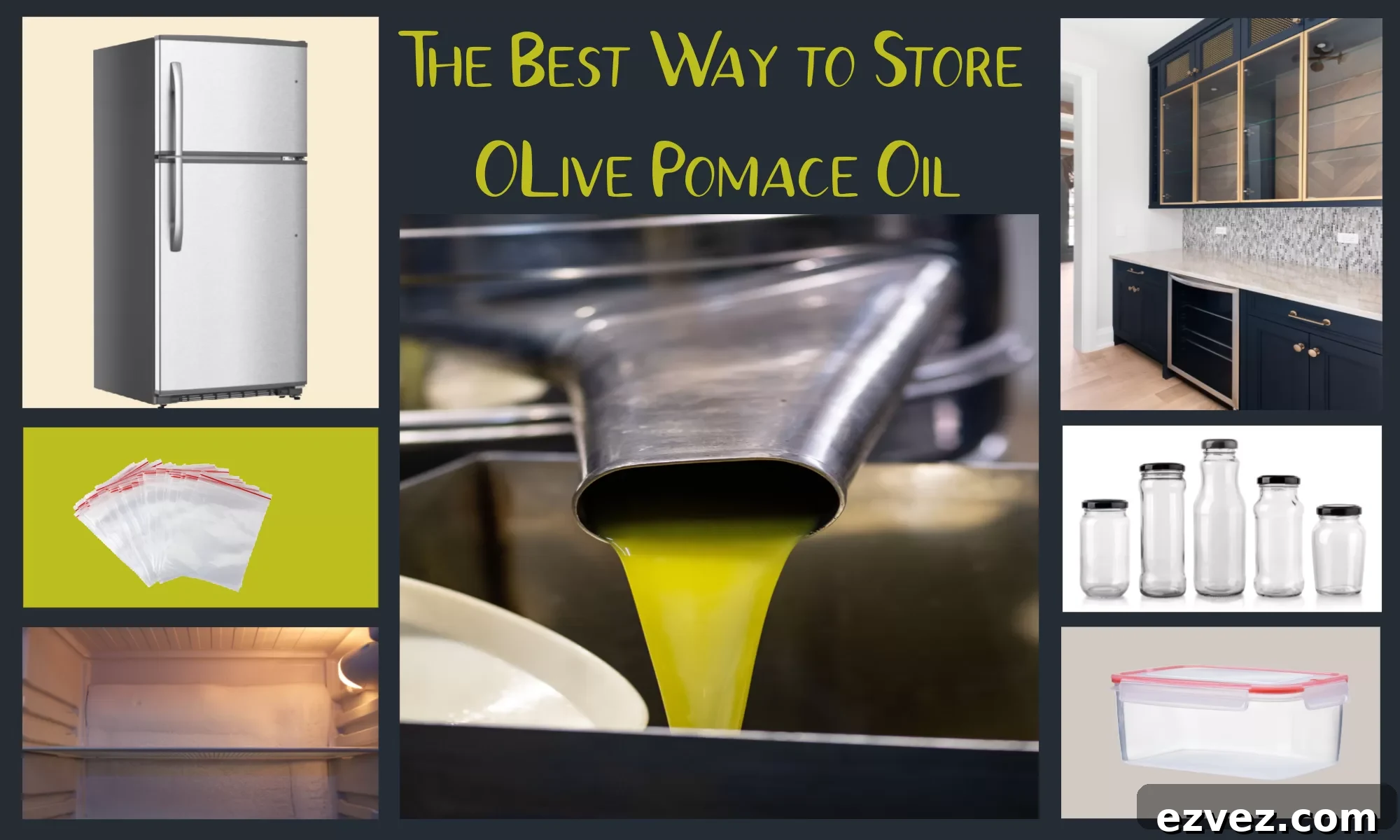
If you’ve never heard of olive pomace oil, you’re not alone. It isn’t as commonly used as extra virgin olive oil, but it has distinct characteristics and specific uses. You may wonder: is it stored the same way as regular olive oil? The short answer is yes—many of the same storage principles apply.
Olive pomace oil should be kept in a tightly sealed, opaque container away from direct heat and light, stored at a stable room temperature. Refrigeration is not required.
Below you’ll find straightforward guidance on what olive pomace oil is, the best storage practices, how long it lasts, and how to tell when it’s gone bad.
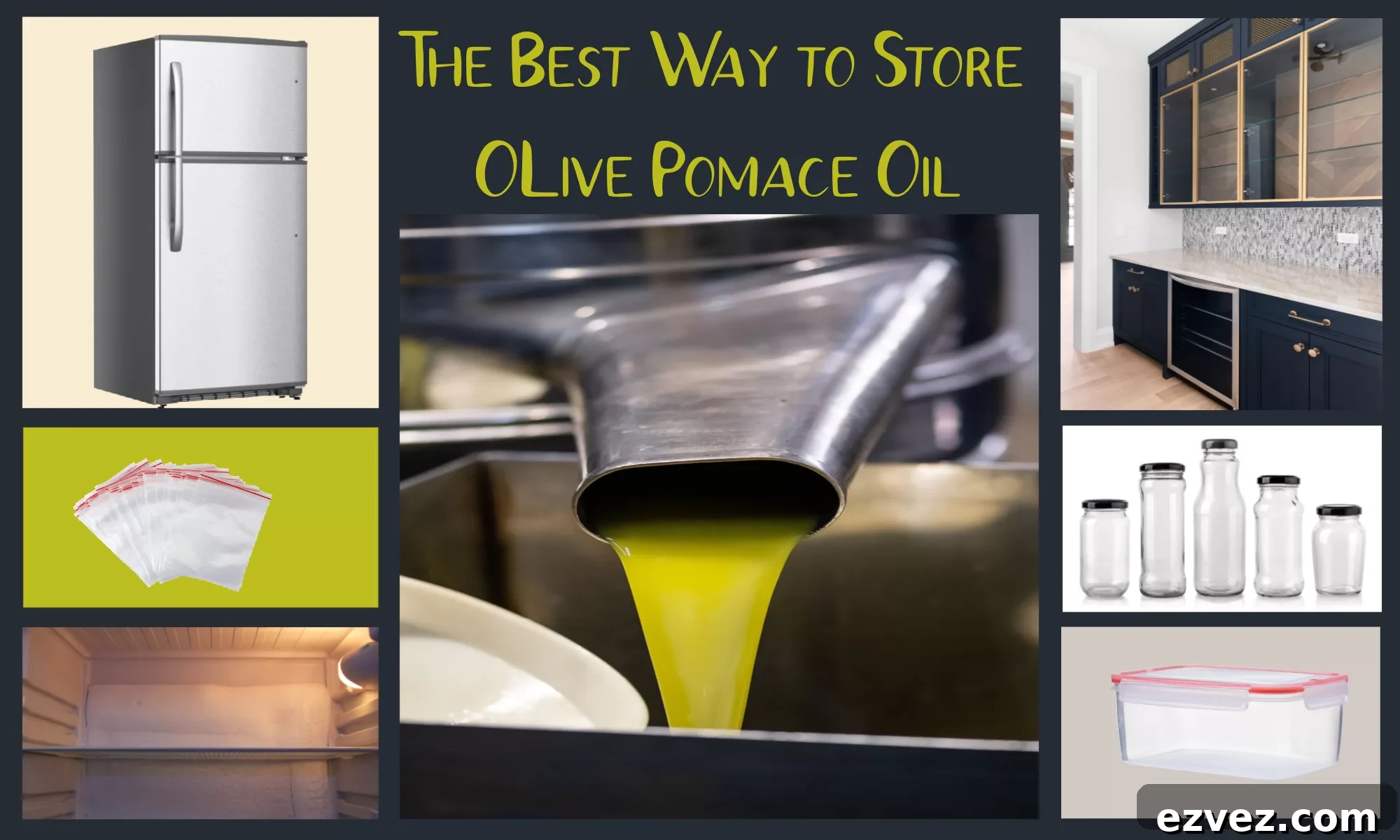
What is olive pomace oil?
Olive pomace oil is produced from the leftover pulp and pits (collectively called pomace) that remain after the initial pressing of olives. While the first pressing—especially when cold pressed—yields extra virgin and virgin olive oils, the remaining pomace still contains some oil. That residual oil is recovered through additional extraction processes, often involving heat and refining.
One practical advantage of olive pomace oil is its higher smoke point compared with many unrefined olive oils, making it more suitable for high-heat cooking. However, because heat and refining are commonly used in its production, olive pomace oil is generally considered less desirable than cold-pressed olive oils from a flavor and nutritional standpoint. Some countries have raised regulatory or safety concerns about certain refined pomace oils, so it’s worth choosing reputable brands and checking product labels.
Best way to store olive pomace oil
Follow these simple steps to preserve the quality of olive pomace oil:
- Keep the oil in a tightly sealed, opaque container. Glass or stainless steel containers are preferable because they limit light exposure and do not react with the oil.
- Store the container in a cool, dark place away from direct sunlight and sources of heat such as ovens, stovetops, or heating vents.
- Avoid large temperature fluctuations. Aim for a steady room temperature, ideally between about 40 and 85 degrees Fahrenheit.
Does olive pomace oil need refrigeration?
Olive pomace oil does not require refrigeration. When unopened and properly stored, many refined oils—including pomace oil—can last 18 to 24 months. Once opened, expect a typical shelf life of roughly 6 to 12 months. Refrigeration is not necessary and can cause some oils to become cloudy or to thicken temporarily; those changes are often reversible at room temperature and do not necessarily indicate spoilage.
Factors that influence olive pomace oil storage
Container
Oils are susceptible to oxidation, which leads to rancidity. Using an opaque glass bottle or a stainless steel container reduces light exposure and slows oxidation. Always close the container tightly to minimize oxygen contact and protect the oil’s aroma and flavor.
Temperature
Heat accelerates the breakdown of fats. Store olive pomace oil away from heat sources and maintain a stable ambient temperature. Avoid placing the bottle on or above the stove or near windows where sunlight can warm the oil.
How to spot spoiled olive pomace oil
Even with proper storage, oils can eventually go rancid. If you suspect the oil has spoiled, discard it. Common signs of spoilage include:
- A strong, unpleasant, or chemical-like odor. Fresh pomace oil should have a mild, neutral aroma; a sour or musty smell suggests rancidity.
- An off or bitter taste. If the oil alters the flavor of foods in an unpleasant way, it’s best to throw it out.
- Significant darkening of color. While color varies by batch and refinement, an unexpected or pronounced deepening in color can indicate deterioration.
FAQs:
Olive pomace oil is generally regarded as less favorable than extra virgin and virgin olive oils. Although the basic nutritional profile can be similar in terms of fats, pomace oil is more processed and usually extracted with heat. Because of the refining and extraction methods, it may lack some of the beneficial compounds found in less-processed olive oils.
Yes. Olive pomace oil typically has a higher smoke point than many unrefined olive oils, which makes it a practical option for frying and other high-heat cooking methods.