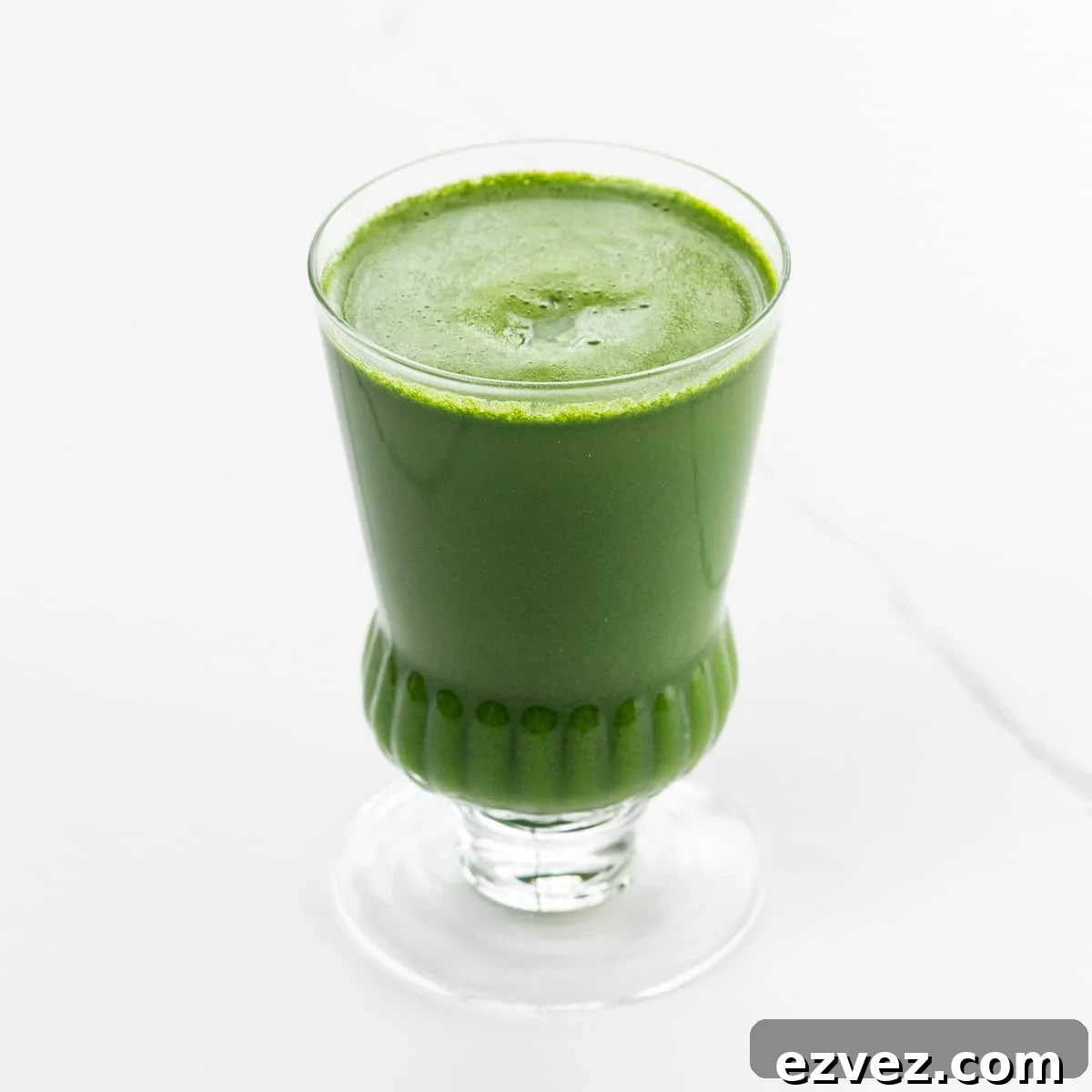
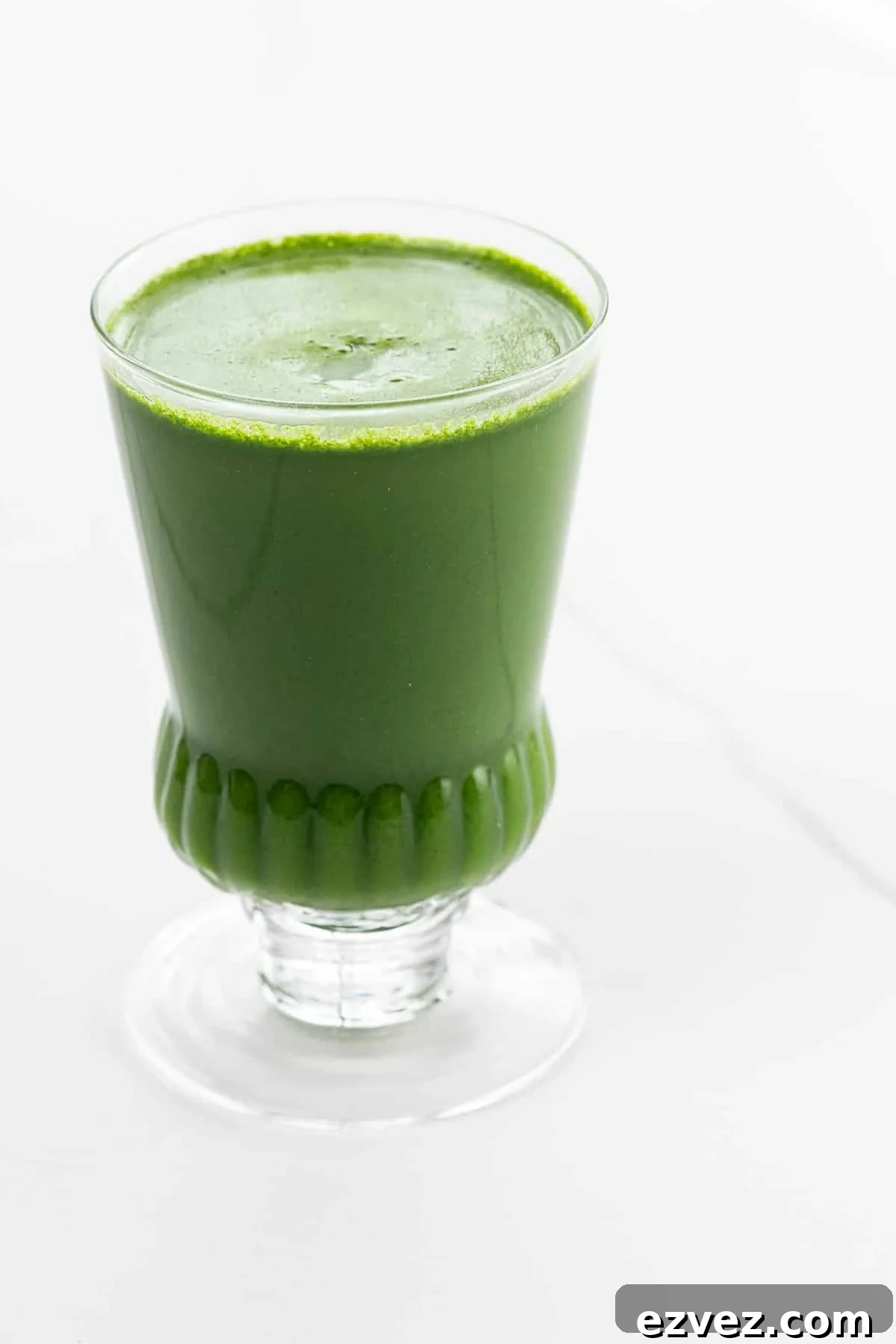
Kale juice should taste as good as it makes you feel. This recipe balances sweet, tart, spicy, and earthy flavors for a bright, refreshing drink.
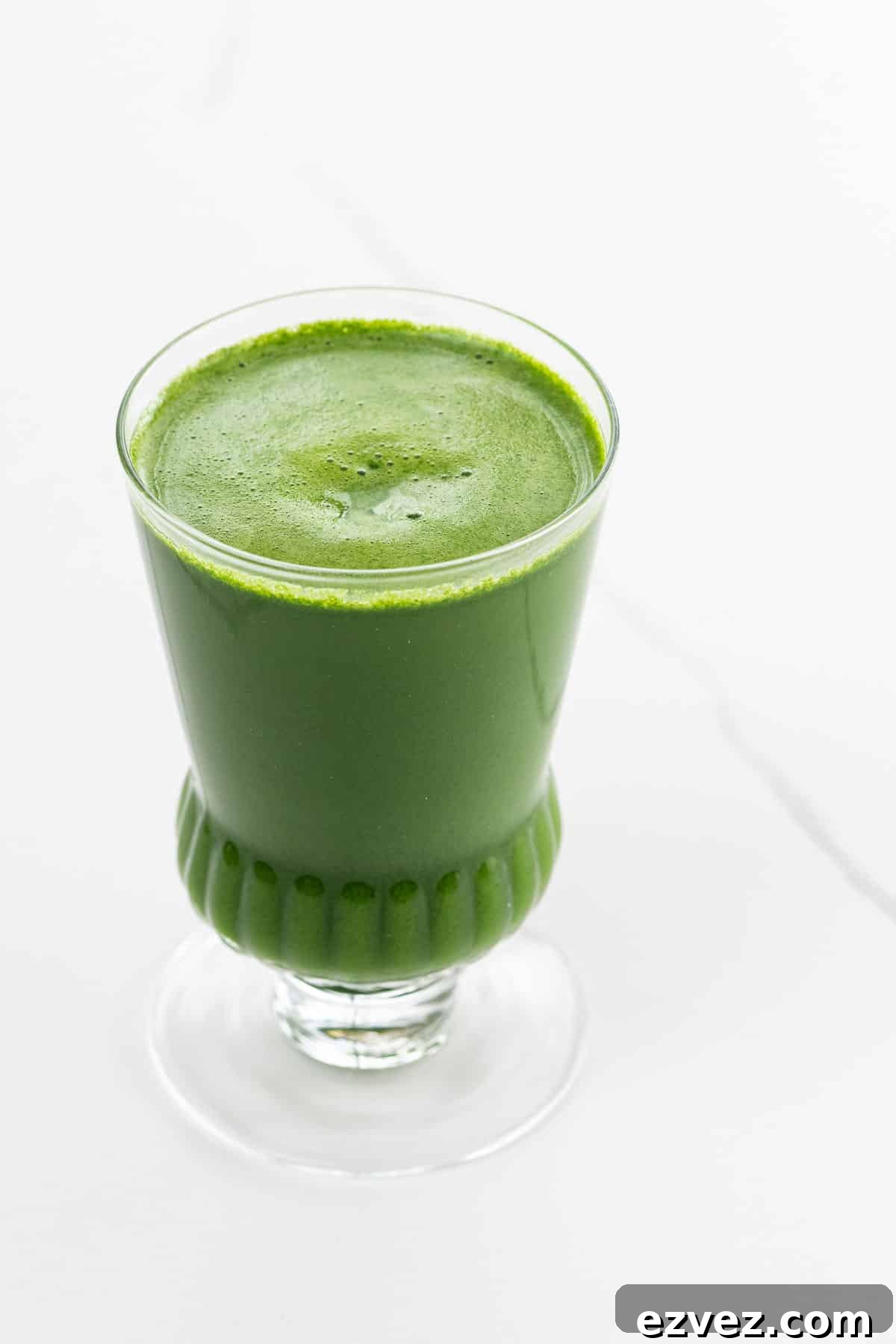
Why we love this recipe
Since getting my first juicer in 2012 I’ve developed many green juice recipes. This slightly sophisticated kale juice was one of the first I loved and still make regularly. It’s:
- Packed with nutrients
- Simple to prepare in most juicers
- Vibrant and well balanced
- Fresh and delicious
I first published this recipe in 2013 and have refined the instructions and quantities to serve one person.
What you’ll need
Here’s a quick look at the ingredients for this kale juice.
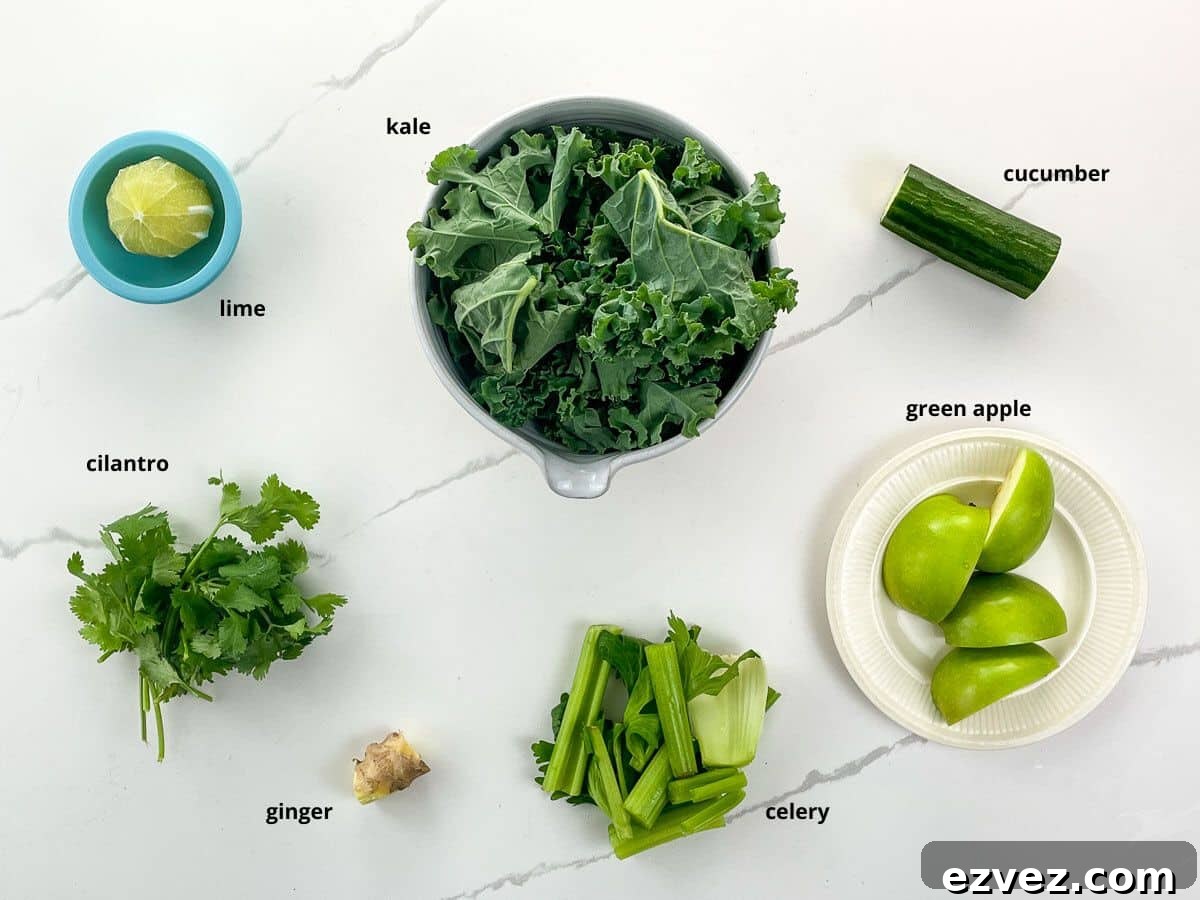
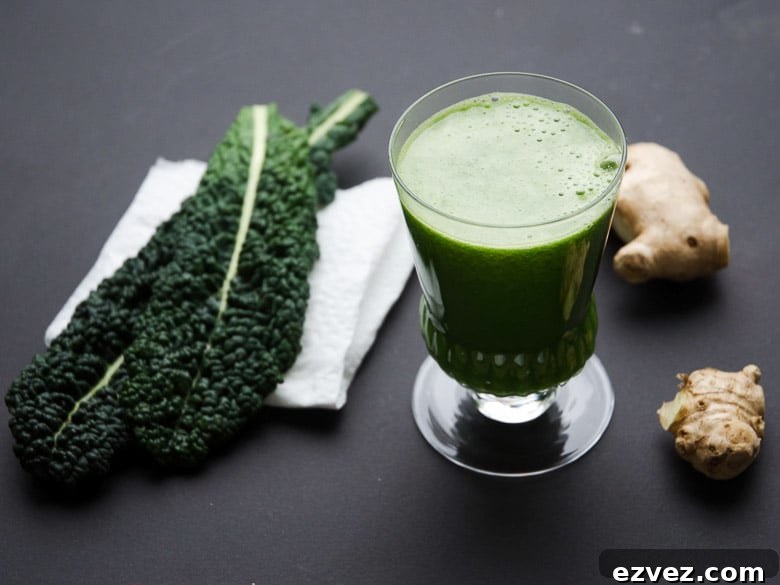
- Kale — Green curly kale has a mild flavor and yields plenty of juice. Use two large leaves, stems included.
- Green apple — A tart apple like Granny Smith adds bright sweetness and keeps the juice relatively low-glycemic. No need to peel; prepare according to your juicer’s instructions.
- Cucumber — Unwaxed English or Persian cucumbers are ideal because you can include the skin. They add freshness and volume.
- Cilantro — Adds brightness and a flavorful punch. Substitute parsley if you prefer.
- Ginger — A small piece brings spice and freshness. Omit if you don’t like it.
- Celery — Mild and very juicy; it increases yield and is best added last to flush the juicer.
- Lime — Adds tang and brightness. Trim the peel and pith before juicing the fruit.
How to make it
Every juicer behaves a little differently. Below is a general process that works with most machines; follow your juicer manufacturer’s guidance for prep and order of ingredients.
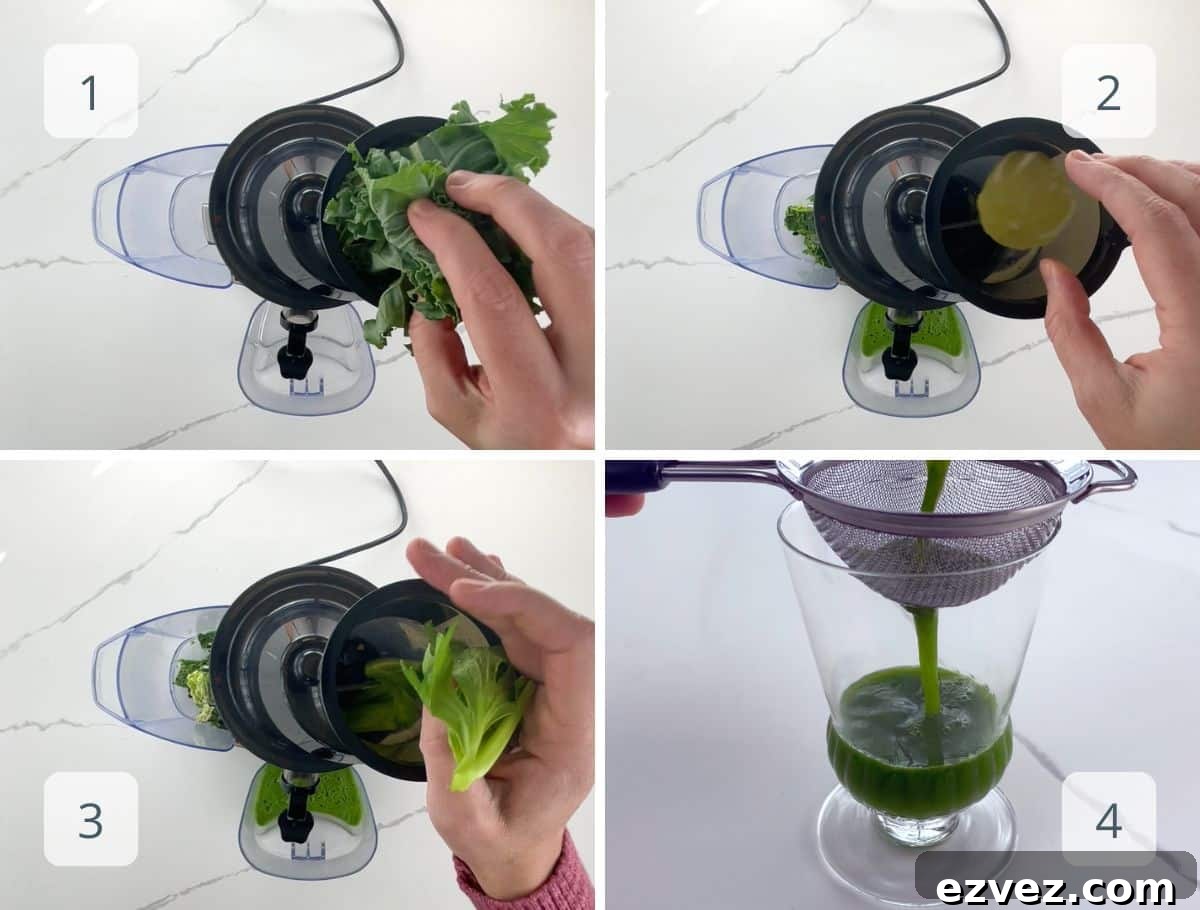
- Feed the leafy ingredients (kale and cilantro) through the juicer first, using the plunger if needed.
- Add the remaining ingredients in the order listed in the recipe card: cucumber, apple, ginger, lime.
- Finish with the celery to help flush the juicer and extract remaining juice.
- Stir the juice, strain through a fine-mesh sieve if you prefer a clearer drink, pour into a glass, and serve.
Best practices for making fresh juice
- Buy organic produce when possible. Juice concentrates everything in the ingredients, including both nutrients and residues.
- Prepare produce according to your juicer’s instructions. Generally, remove citrus peel and pith, wash vegetables well, and trim damaged ends.
- Juice ingredients in the sequence suggested to maximize yield. Ending with a very juicy item such as celery helps push other ingredients through the machine.
- For centrifugal juicers, roll leafy greens tightly and place them between firmer items like cucumber and apple to improve extraction. Nudge them through one small push at a time.
- If your juicer has multiple speeds, use slower settings for soft ingredients like greens, herbs, and citrus.
- Juicers vary in design and yield; with practice you’ll learn the best technique for your machine.
Expert tips and FAQs
Both centrifugal and masticating (slow) juicers work well. Masticating juicers generally preserve nutrients longer and reduce oxidation, which makes them better for batch juicing. Centrifugal juicers are fast and fine if you plan to drink the juice immediately.
If you have a masticating juicer, you can juice in larger batches and store juice in an airtight container in the fridge for two to three days. With a centrifugal juicer, it’s best to drink the juice soon after making it. Juice can be frozen, but thawed juice may separate and have a different texture.
More green juice resources
If you’re new to juicing or want to improve your technique, look for beginner guides that cover equipment, produce selection, and storage. Here are a few recipe ideas to try next: green lemonade, spinach-based juices, and savory green blends.
Kale Juice
Equipment
- Any juicer (masticating or centrifugal will work)
Ingredients
- 2 large leaves curly kale, including stems
- 1/2 packed cup (about 14 g) cilantro leaves and stems
- 1 4-inch piece English or Persian cucumber
- 1/2-inch piece ginger
- 1 lime, peel and pith removed
- 1 small green apple
- 2 ribs celery, including any leaves
Instructions
- Feed all ingredients through the juicer in the order listed.
- Stir well and strain through a fine-mesh sieve if desired.
- Pour into a glass and serve immediately.
Notes
- Use organic produce when possible to reduce exposure to residues.
- Substitute parsley for cilantro if preferred.
- Adjust or omit ginger to taste.
- Store juice in an airtight container in the fridge for 2–3 days if using a slow juicer; drink sooner if using a centrifugal juicer.
- Freezing is possible, but thawed juice may separate and change texture.
Nutrition
Approximate per serving: Calories: 92 kcal; Carbohydrates: 18 g; Protein: 2.8 g; Fat: 0.7 g. Use as an estimate only.