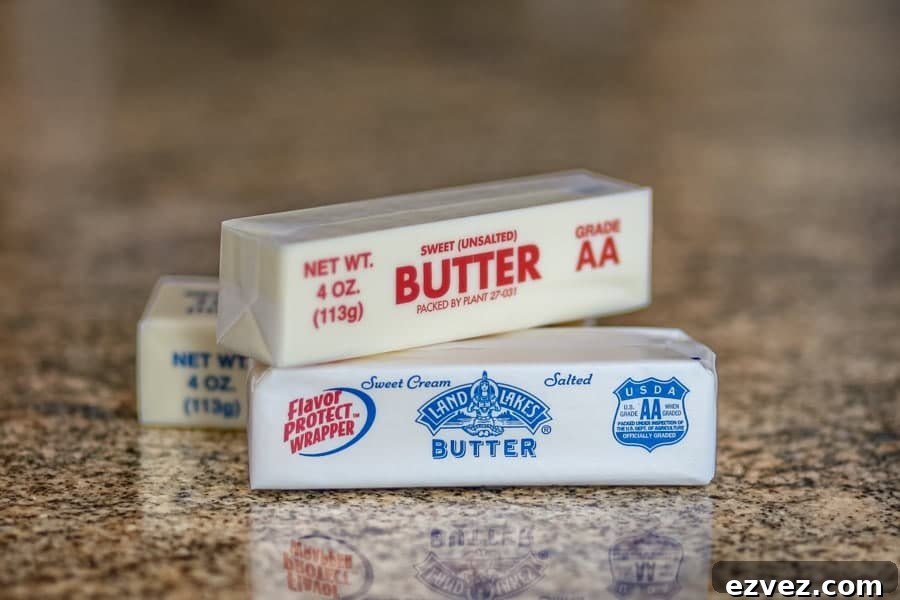
Every home cook eventually faces the same dilemma: a recipe specifies unsalted butter but your fridge only has salted, or you only have unsalted butter and need to add extra salt for flavor. Fortunately, in nearly all cases you can swap one for the other without compromising the final dish—if you know how to adjust the salt properly. This guide explains why recipes often call for unsalted butter, how to convert between salted and unsalted, when you should avoid swapping, and how best to store butter for freshness and consistent results.
Salted butter contains added salt, typically ranging from about 1/4 to 1/2 teaspoon per 1/2 cup (one stick). That added seasoning can affect delicate desserts and precise preparations, but in many baked goods and savory recipes the difference is easy to manage. Follow the simple rules below to make substitutions with confidence and keep your recipe balanced.
Why Recipes Call for Unsalted Butter
Most professional and home recipes specify unsalted butter because the salt level in salted butter varies widely by brand and region. Using unsalted butter gives you predictable control over seasoning, which is especially important in baking and fine pastries where small differences in salt can change the flavor. Starting with unsalted lets you add salt intentionally and taste as you go, ensuring consistent results each time.
How to Substitute Salted Butter for Unsalted
- For every 1/2 cup (one stick) of butter called for, reduce the added salt in the recipe by about 1/4 teaspoon to compensate for the salt already in salted butter.
- If a recipe does not include any additional salt, using salted butter is usually acceptable; the result may be slightly saltier but often still pleasing, especially in savory dishes.
- In most savory applications and many baked goods, the extra salt enhances overall flavor rather than detracting from it. Taste and adjust at key steps when possible.
How to Substitute Unsalted Butter for Salted
- If a recipe calls for salted butter but you only have unsalted, add roughly 1/4 teaspoon of salt per 1/2 cup (one stick) of butter to approximate the flavor of salted butter.
- This measurement is a guideline rather than an exact science. For many baked goods and nearly all savory dishes, you can add salt gradually and taste before final seasoning adjustments.
When You Shouldn’t Swap
Delicate pastries and candies: Preparations like puff pastry, laminated doughs, shortcrust pastry, buttercream, and sugar-based confections rely on precise balance. Because salted butter’s salt level is inconsistent, unsalted butter is preferable for predictable flavor and texture.
Clarifying butter and ghee: Unsalted butter is recommended when making clarified butter or ghee. Salt can accelerate browning and may leave behind salty or scorched milk solids, whereas unsalted butter yields a cleaner, more neutral end product.
How to Store Butter
Room temperature: Salted butter can be kept in a covered butter dish or crock for 1 to 2 weeks at room temperatures below about 70°F (21°C). If using a French butter crock, refresh the water every few days to maintain freshness. Unsalted butter is best stored cold and should only sit out briefly prior to use.
Refrigerate: For longer storage, keep butter tightly wrapped in its original packaging or in an airtight container in the refrigerator. Properly stored, butter will stay good for about a month and will retain its best quality and flavor.
Freeze: Butter freezes very well for extended storage—up to six months. Slice into sticks, half-sticks, or convenient portions before freezing so you can thaw only what you need. For baking, frozen butter can often be grated or cut frozen into dough.
To use: When thawing frozen butter, move it to the refrigerator overnight. For pastry applications that require cold butter, you can work with partially frozen or grated cold butter to preserve flakiness in the final product.
With these straightforward adjustments you can confidently substitute salted and unsalted butter in most recipes. Keep a consistent approach—measure, taste, and tweak—and you’ll avoid unwanted surprises while getting the flavor you want. Whether you bake sweet treats or cook savory meals, understanding how butter’s salt affects a recipe makes kitchen substitutions simple and reliable.