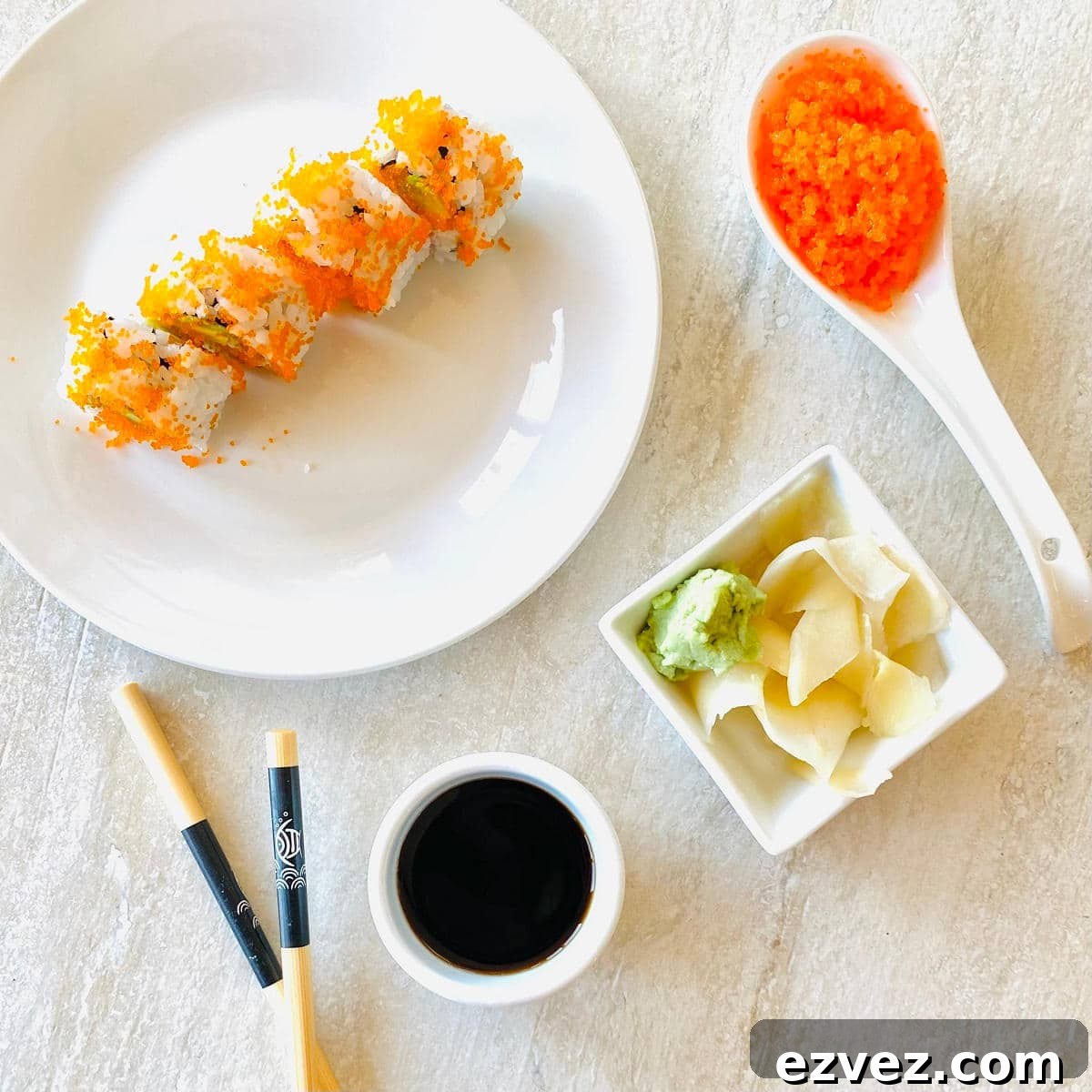
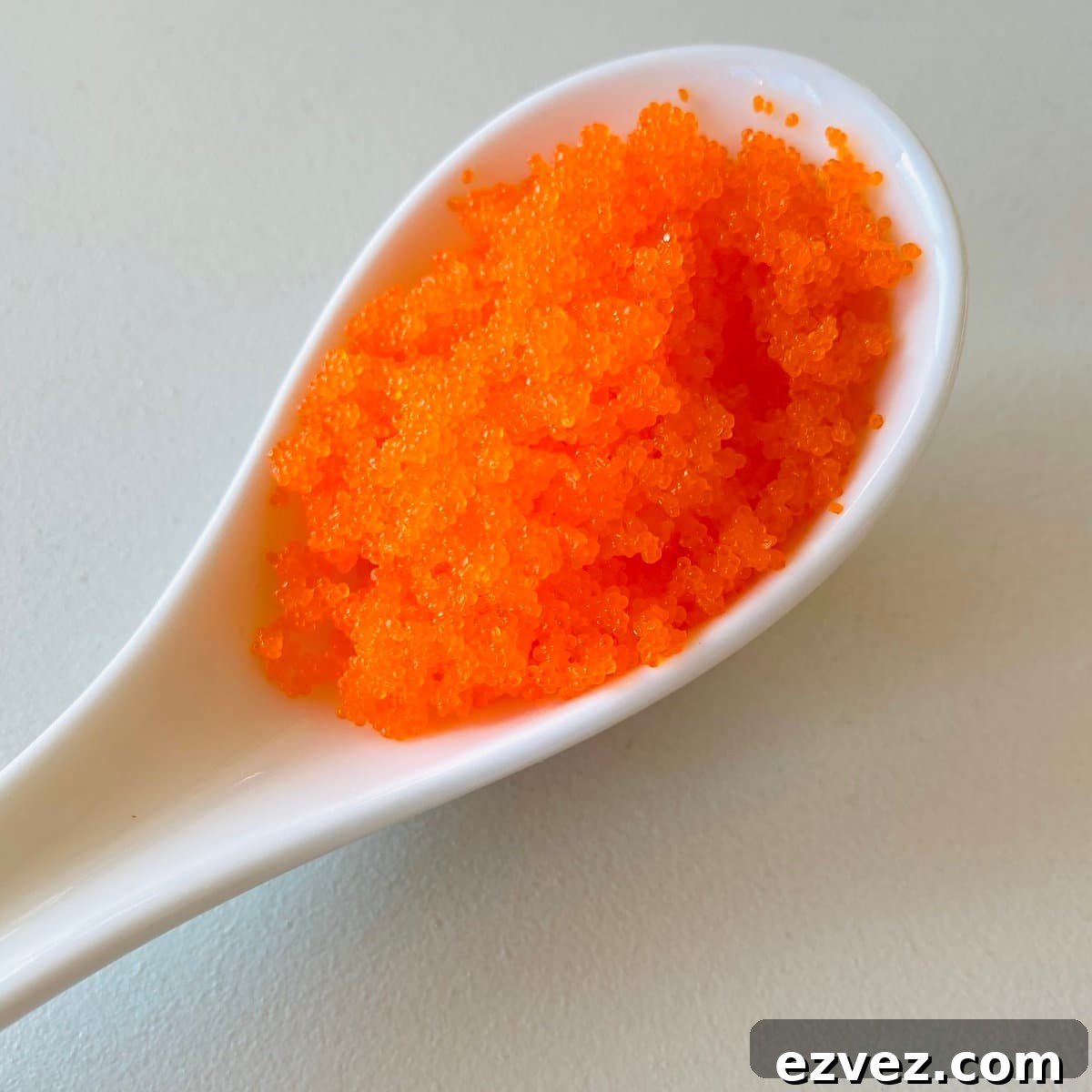
What is tobiko and how do you use it? This tobiko sushi recipe is an easy, delicious way to enjoy orange tobiko (flying fish roe). Below you’ll also find a clear overview of the different tobiko varieties—orange, black, green (wasabi), red and yellow—plus simple instructions to make sushi rolls topped or coated with tobiko.
This post may contain affiliate links which means I may receive commissions if you choose to purchase through this link (at no extra cost to you).
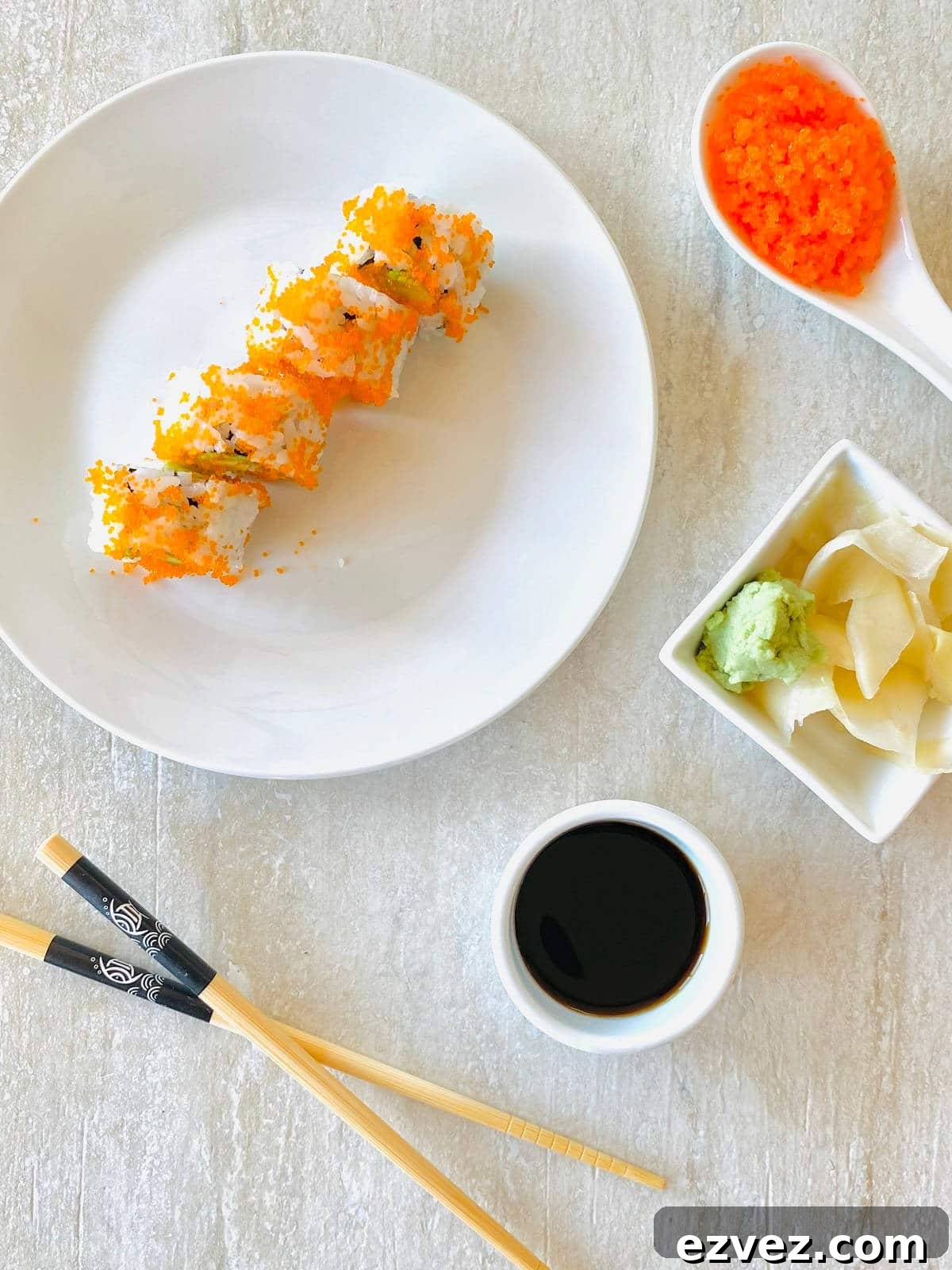
If you love sushi, tobiko makes a terrific addition. A classic tobiko sushi roll is typically filled with imitation crab (surimi), avocado and cucumber, then finished with a coating or sprinkle of tobiko. The bright orange eggs add color, light crunch and a briny, slightly smoky umami flavor that elevates even simple rolls.
Tobiko is naturally vibrant—orange is most common—but you’ll also find black tobiko (colored with squid ink), green tobiko (wasabi-flavored), yellow or golden tobiko (often yuzu-flavored) and red tobiko. Masago (capelin roe) is similar but the eggs are smaller; both are commonly used to coat California-style rolls.
Why this recipe works
- This is an approachable introductory sushi recipe that looks next-level when topped with tobiko.
- You can change the appearance and flavor by choosing different tobiko varieties or masago.
- It uses only a few simple ingredients and is a healthy, satisfying option for lunch or dinner.
Ingredients for tobiko sushi
Sushi Rice
Rice: Use short-grain Japanese sushi rice or medium-grain Calrose rice for the right sticky texture.
Seasoned rice vinegar: Use seasoned rice vinegar to flavor the rice evenly.
Water and salt: Clean rinsed rice, water and a small amount of salt to taste.
Tobiko Sushi
Tobiko or masago: Tobiko (flying fish roe) is available in multiple colors. If tobiko is hard to source, masago can be used as a substitute.
Nori sheets: Roasted seaweed sheets for wrapping the roll.
Imitation crab (surimi): Also called crab sticks or kamaboko, commonly used in California-style rolls.
Cucumber and avocado: Fresh cucumber cut into matchsticks and ripe avocado slices.
Pickled ginger and wasabi (optional): For serving and additional flavor if desired.
Optional sauces and toppings
- Spicy sriracha mayo
- Bang bang sauce or eel (unagi) sauce
- White or black sesame seeds
Instructions to make flying fish roe sushi
How to make sushi rice
Rinse the rice in a fine mesh strainer until the water runs clear to remove excess starch. Shake off excess water.
Add rinsed rice, water and a pinch of salt to a rice cooker or Instant Pot and cook according to your appliance instructions. For Instant Pot, use high pressure for about 6 minutes and allow a full natural release.
Transfer cooked rice to a bowl, drizzle with seasoned rice vinegar and gently fold to incorporate. Avoid mashing the grains; you want slightly separate, shiny rice that still holds together.
How to roll Tobiko Sushi
Cover a bamboo rolling mat with plastic wrap to keep it clean and prevent sticking. Place a sheet of nori on the mat with the shiny side down.
Wet your hands and gently spread a thin, even layer of sushi rice over the nori, leaving a 1-inch strip at the far edge for sealing. Use about 1 cup cooked rice per full nori sheet.
Flip the nori so the rice side faces down. Along the near edge place two imitation crab sticks, 2–3 slices of avocado and 3–4 thin cucumber matchsticks in a line about an inch from the edge.
Use the bamboo mat to lift the edge of the nori over the filling, tucking the filling with your fingers and rolling away from you to form a tight cylinder. Pull back the mat and continue to press and shape the roll until it seals.
Using a sharp knife dipped in water, slice the roll in half, then cut each half into three pieces. Wipe the knife between cuts to keep slices clean.
Top or roll your tobiko sushi with tobiko flying fish roe
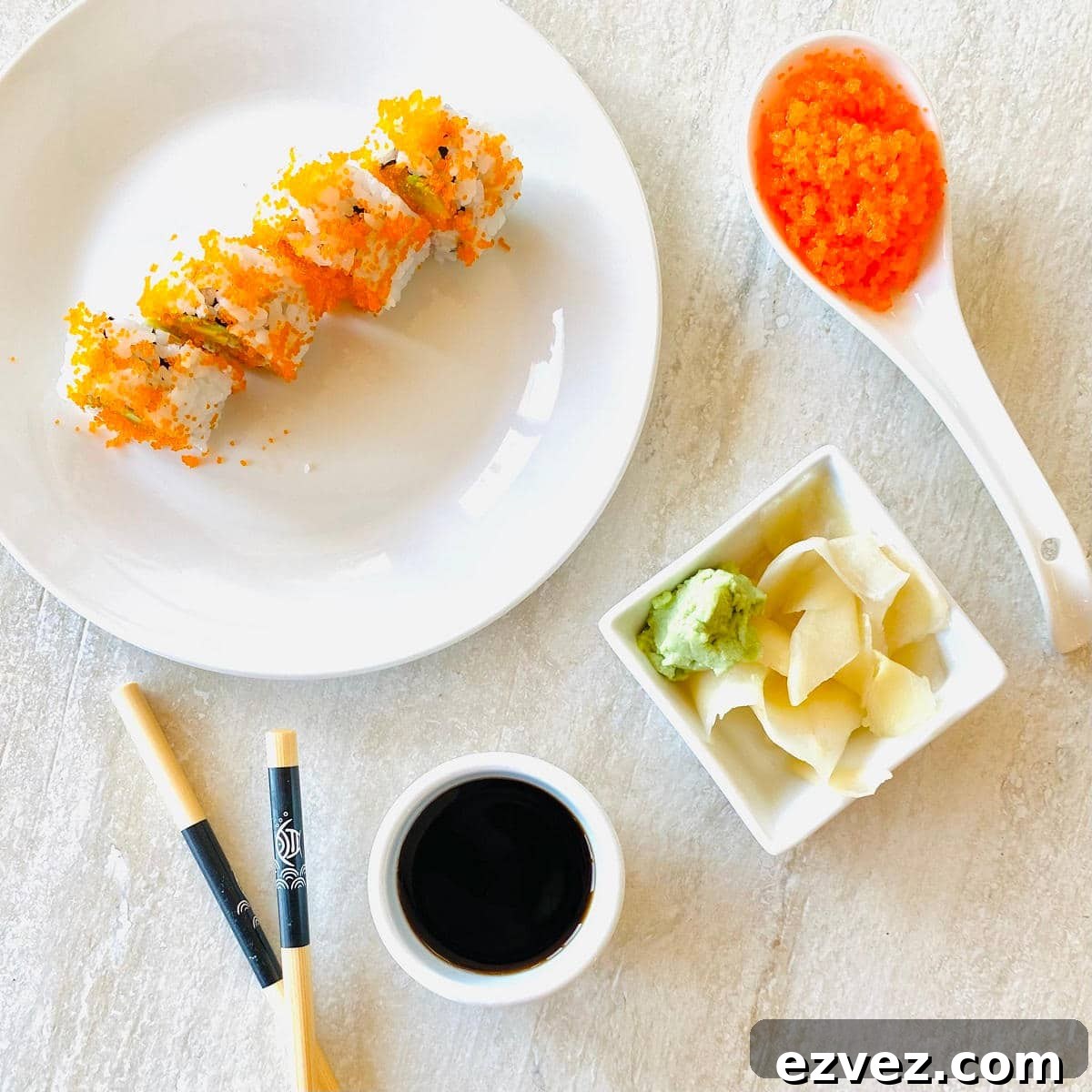
To finish, either sprinkle tobiko on top of each sushi piece or spread an even layer of tobiko on a plate and gently press the cut roll pieces into the roe so they are coated. You can use orange, red, black, green (wasabi), yellow or masago depending on flavor and appearance preferences.
Leftovers and storage: best eaten immediately; these rolls are not recommended for storage.
What is tobiko?
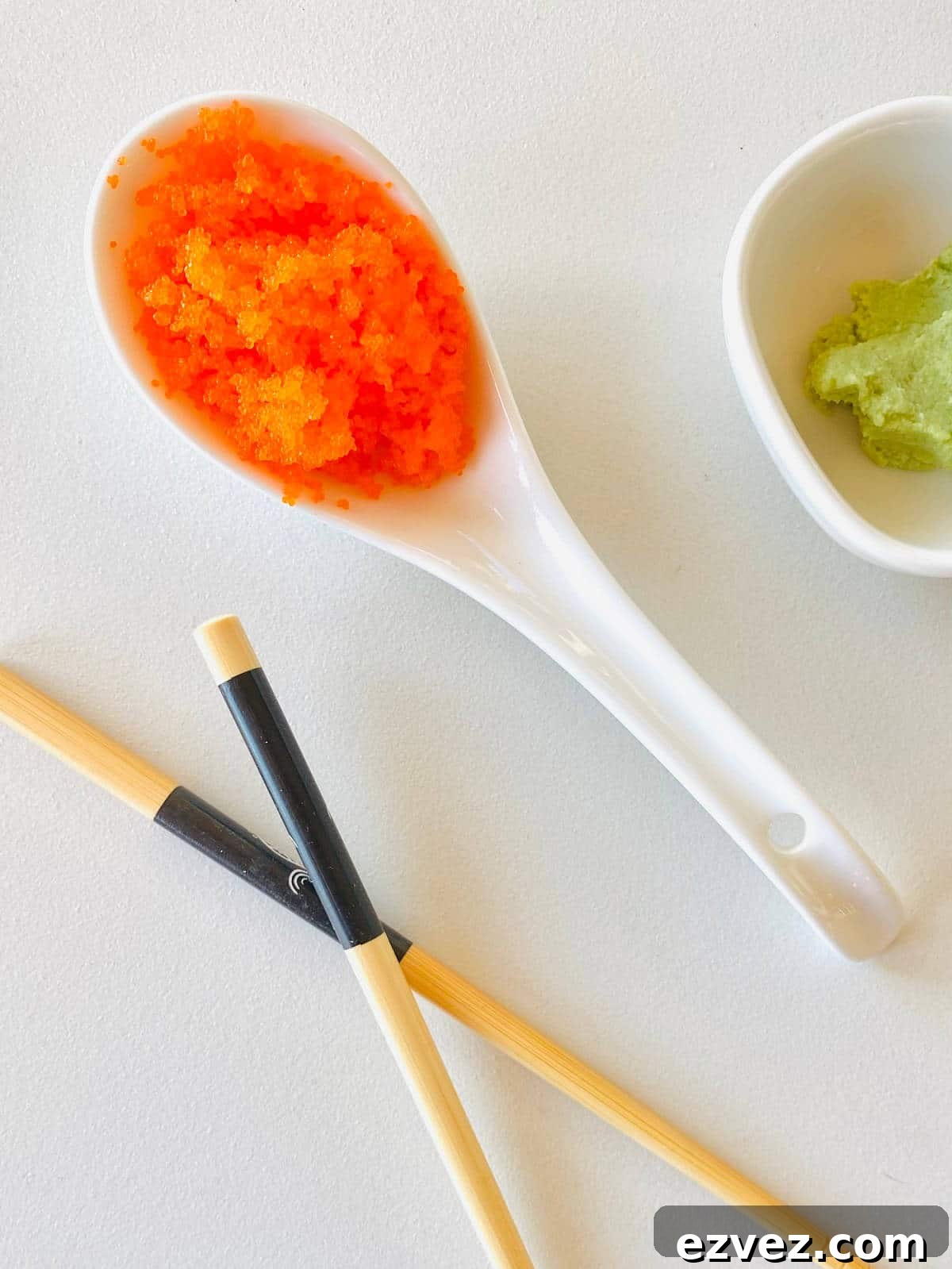
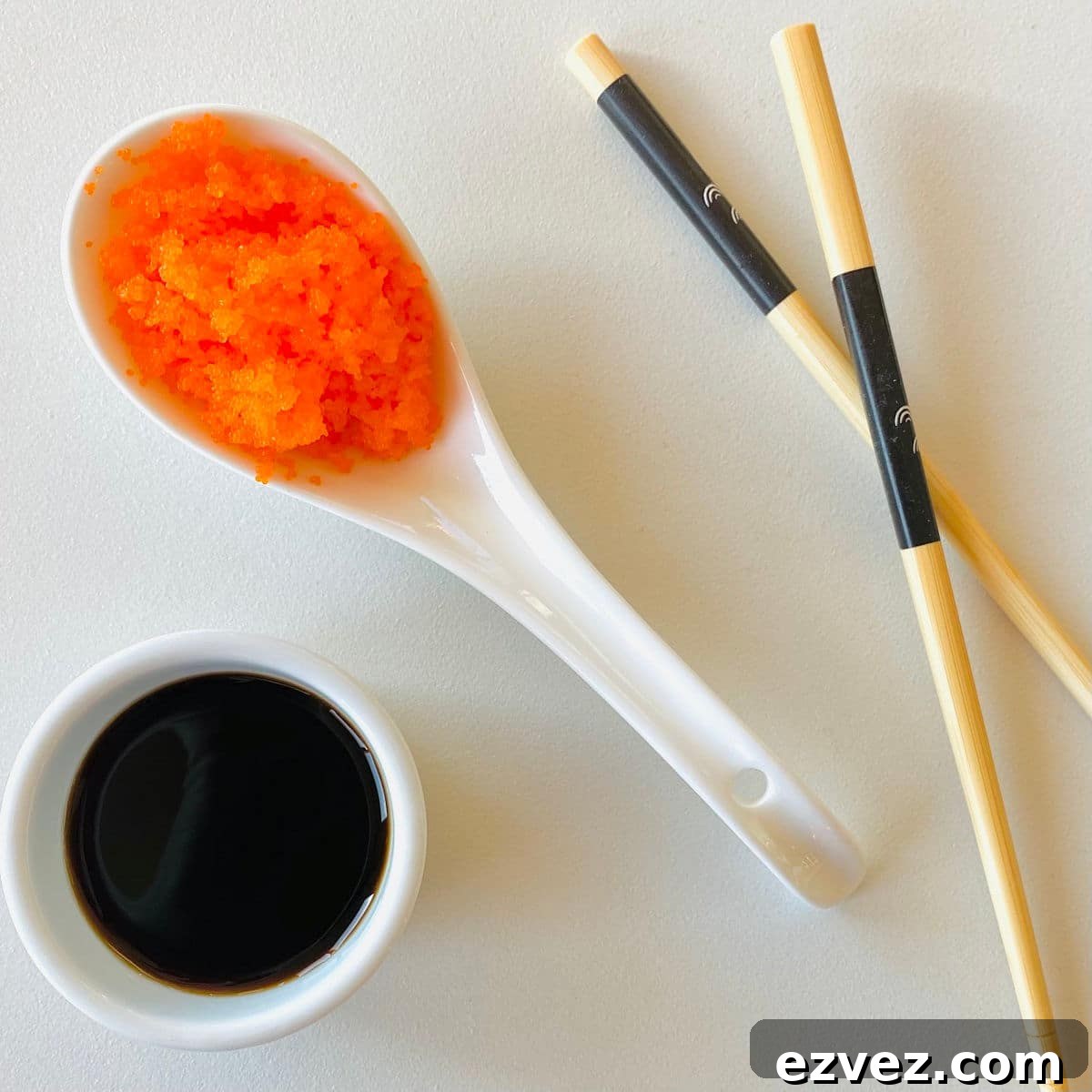
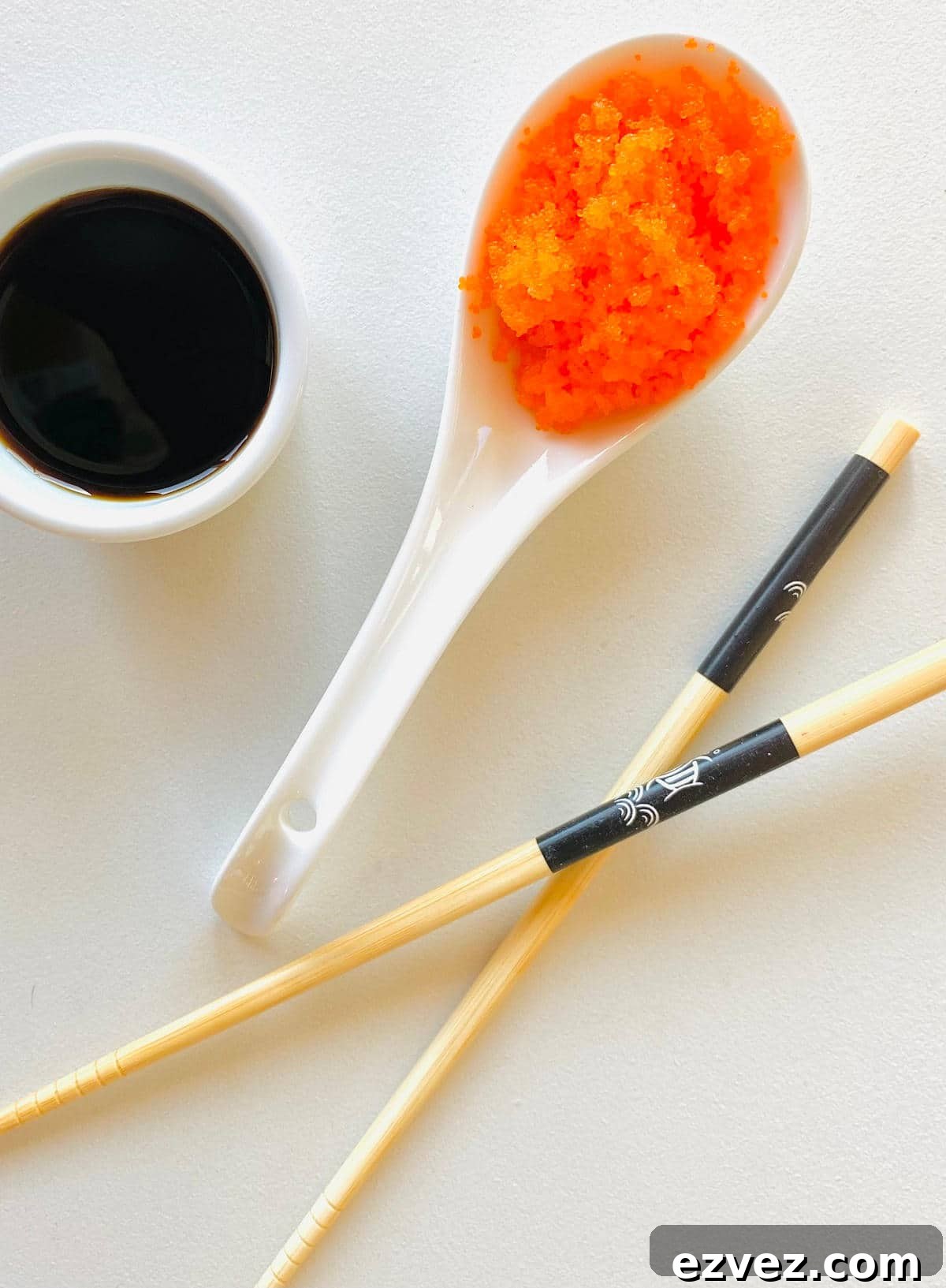
Tobiko is the Japanese term for flying fish roe. The eggs are slightly larger than masago and smaller than salmon roe, with a pleasant crunch, mild briny flavor and subtle smokiness. While naturally orange, tobiko is often colored or flavored: squid ink for black, wasabi for green, citrus like yuzu for yellow/golden, and other seasonings for red hues.
FAQ and expert tips
Black tobiko is flying fish roe colored with squid ink to achieve a dark hue and subtle savory notes.
Red tobiko is flying fish roe colored to give a red appearance; it adds vibrant color to sushi.
Green tobiko, often called wasabi tobiko, is flavored or colored with wasabi to impart a mild heat and green tint.
Wasabi tobiko is the same as green tobiko—flying fish roe combined with wasabi for color and a hint of spice.
Looking for other delicious Asian-inspired recipes?
- Asian Steak Marinade
- Air Fryer Potstickers
- Air Fryer Frozen Egg Rolls
- Wagyu Beef Recipe
Hungry for more? Subscribe to my EMAIL NEWSLETTER and follow on social channels for the latest recipes and updates.
I love hearing from readers—comments, feedback and ratings are always appreciated!
Tobiko Sushi
Equipment
-
Instant Pot (for sushi rice) or rice cooker, bamboo sushi mat, plastic wrap
Ingredients
Sushi Rice
- 1 cup small or medium grain white rice
- 1 cup + 1 tbsp water
- 2 tablespoon seasoned rice vinegar
- 1 teaspoon salt
Tobiko Sushi
- 1 sheet nori (seaweed paper)
- 2 sticks imitation crab meat (surimi)
- 2-3 slices cucumber (cut into matchsticks)
- 2-3 slices avocado
- pickled ginger (optional)
- wasabi (optional)
- 2 tablespoons tobiko (flying fish roe) or masago
Optional Sauces and Toppings
- spicy sriracha mayo
- bang bang sauce
- eel sauce
- white or black sesame seeds
Instructions
How to make sushi rice
- Rinse the rice in a fine mesh strainer until water runs clear and shake off excess water.
- Add rinsed rice, water and 1 teaspoon salt to an Instant Pot or rice cooker and cook (Instant Pot: high pressure 6 minutes, full natural release).
- Transfer rice to a bowl, add seasoned rice vinegar evenly and gently fold to combine without smashing the grains.
How to roll Tobiko Sushi
- Cover a bamboo mat with plastic wrap and place nori on top.
- Wet your hands and spread about 1 cup of cooked rice evenly over the nori, leaving a 1-inch sealing edge.
- Flip the nori so rice is down, then arrange surimi, avocado and cucumber lengthwise near the edge.
- Roll tightly with the bamboo mat, pressing to shape. Slice with a wet knife, wiping between cuts, into six pieces.
Add Tobiko
- Sprinkle tobiko on top of each piece or press cut pieces into a shallow layer of tobiko on a plate to coat the exterior.
Notes
- Use orange, red, black, green (wasabi), yellow tobiko or masago depending on flavor and appearance preferences.
- Leftovers and storage: best eaten immediately; not recommended for storage.
Nutrition
|
Carbohydrates: 175g