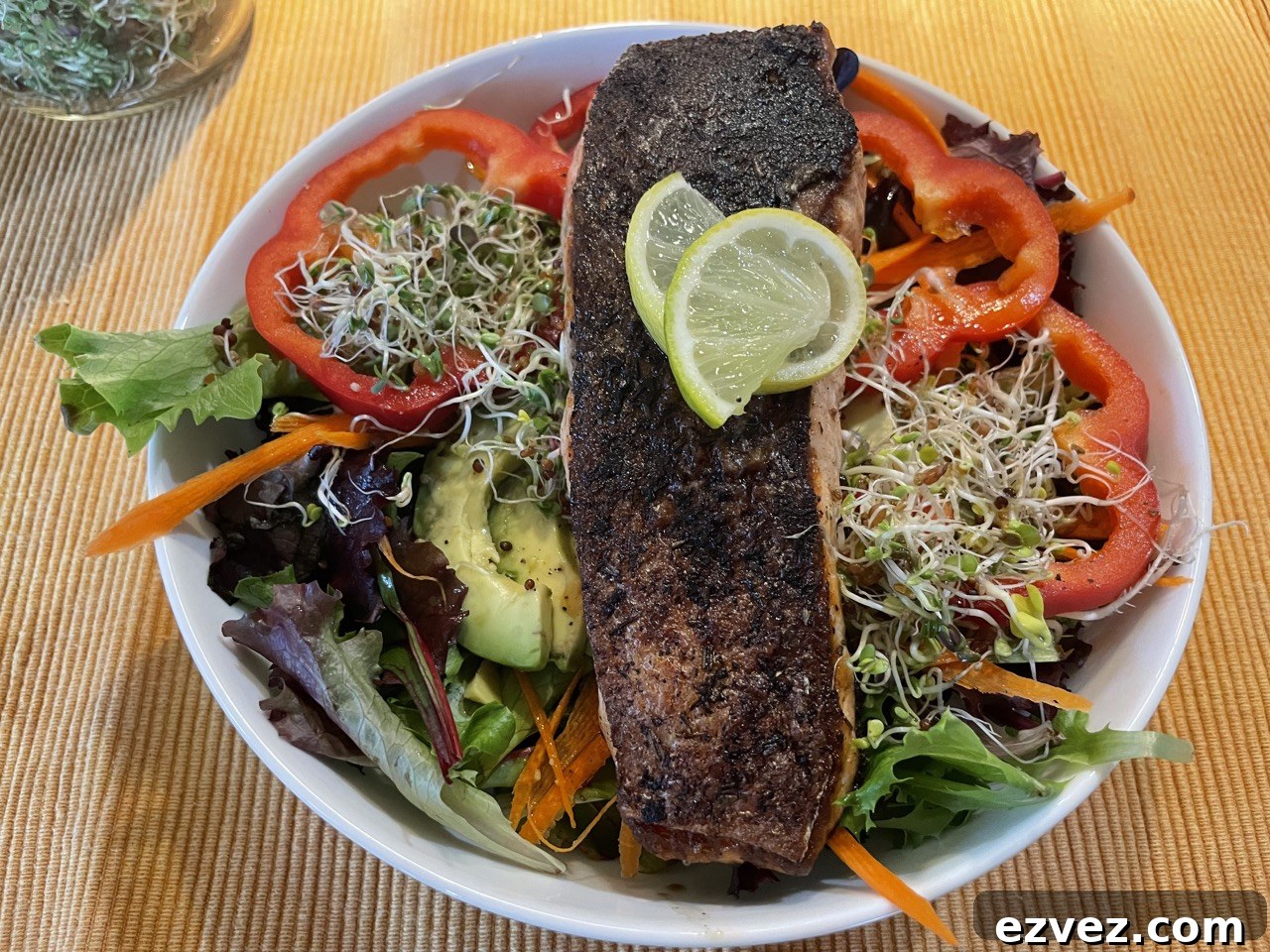
Fish oil is very beneficial, especially as we get older. Research shows that omega-3 rich fish like salmon can support heart health, help manage blood pressure, regulate triglycerides and cholesterol, and may ease symptoms of inflammatory conditions. Eye care professionals also report that omega-3s can help with dry eyes. Along with taking supplements, I aim to include salmon with crispy skin in my family’s meals frequently. My daughters love the crackling skin and always reach for the biggest piece—unless it isn’t cooked properly, in which case they generously hand it over.
Great salmon has two key features: a crisp, seasoned skin and tender, juicy flesh. Overcooked salmon becomes dry; perfectly cooked salmon will be slightly soft and translucent in the center, with natural oils still visible in the flesh.
Tips for making crispy skin salmon salad
Buying the salmon
I prefer fresh salmon to frozen because fresh fillets have a cleaner aroma and are often sold with the skin attached. When buying fillets from a fishmonger, choose pieces from nearer the head rather than the tail. Tail cuts are thinner and cook quickly, which can result in overcooking. Plan on roughly 170 g (6 oz) of fillet per person.
If the fishmonger can scale the fish for you, great—if not, remember to scale before cooking. I prefer salmon without scales on the finished fillet.
Seasoning the salmon
A simple all-purpose seasoning works well—about a little less than a teaspoon per 6 oz fillet. If you can, season the fillets and let them rest skin-side down on paper towels in the refrigerator for about 30 minutes. Chilling the fish while it dries out a bit helps the skin crisp up when cooked.
Cooking the salmon
A well-seasoned cast iron skillet is ideal because it retains heat evenly and helps create a good sear. Heat the skillet to medium; too hot and the skin will burn before the fish cooks through. If the pan isn’t seasoned, use a small spray of oil to prevent sticking, although the salmon will render fat as it cooks.
Start by placing the fillet flesh-side down (skin up). Partially cover with a lid that vents or leave space for steam to escape—excess moisture in the pan prevents crisping. Reduce heat to medium and cook until the sides of the fillet look half cooked (about three minutes, depending on thickness). Flip the fillet so the skin cooks against the pan for the final stage, which crisps it without overcooking the meat. Total cooking time for both sides is typically 5–6 minutes for standard fillets. Use tongs for handling and a spatula to lift the fillet from the pan to avoid tearing the skin.
Plating the salmon
To keep the skin intact, slide a spatula carefully under the fillet and plate it skin-side up so the crispness is preserved. Spoon some of the rendered salmon oil back over the skin before serving to maximize flavor and the healthy oils.
Serve the salmon over a bed of mixed greens and dress with a lemon vinaigrette—the bright acidity of lemon pairs beautifully with seafood and complements the richness of the salmon.

CRISPY SKIN SALMON SALAD WITH LEMON VINAIGRETTE
Equipment
- Cast iron skillet
Ingredients
- 680 g salmon fillet with skin (about 170 g / 6 oz per person)
- 4 tsp all-purpose seasoning (adjust to taste)
Instructions
- De-scale the fillet if necessary—most reputable fishmongers will do this for you.
- Cut the salmon into individual portions and pat dry with paper towels.
- Generously season the fillets and place them skin-side down on paper towels in the refrigerator for 30 minutes to dry.
- Preheat the cast iron skillet until hot. If the pan is not well seasoned, lightly spray a little oil to prevent sticking.
- Sear the salmon flesh-side down first (skin side up). Do not overcrowd the skillet.
- Partially cover to reduce splatter while allowing steam to escape. Reduce heat to medium and cook until the sides are about halfway cooked (around 3 minutes, depending on thickness).
- Flip the fillets and finish cooking skin-side down so the skin crisps. Take care not to overcook—the flesh should remain slightly translucent in the center.
- Remove the salmon and plate it skin-side up to retain crispness. Serve on a bed of salad and dress with a lemon vinaigrette. Spoon a little of the rendered salmon oil over the skin before serving for extra flavor.